New Record on the 34th Floor of Olivia Star! The 4th Pomeranian Firefighters’ Stair Climb Behind Us

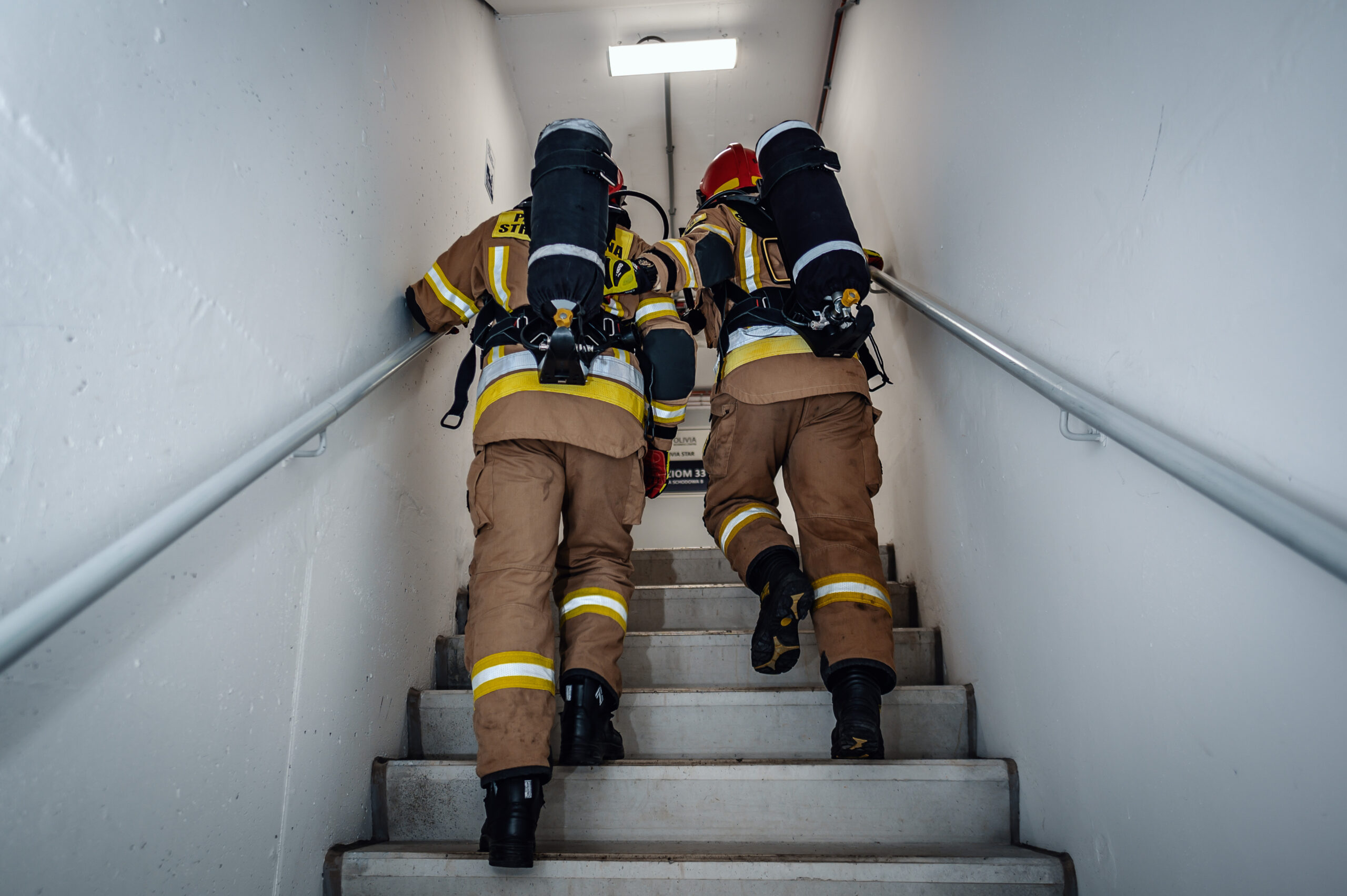
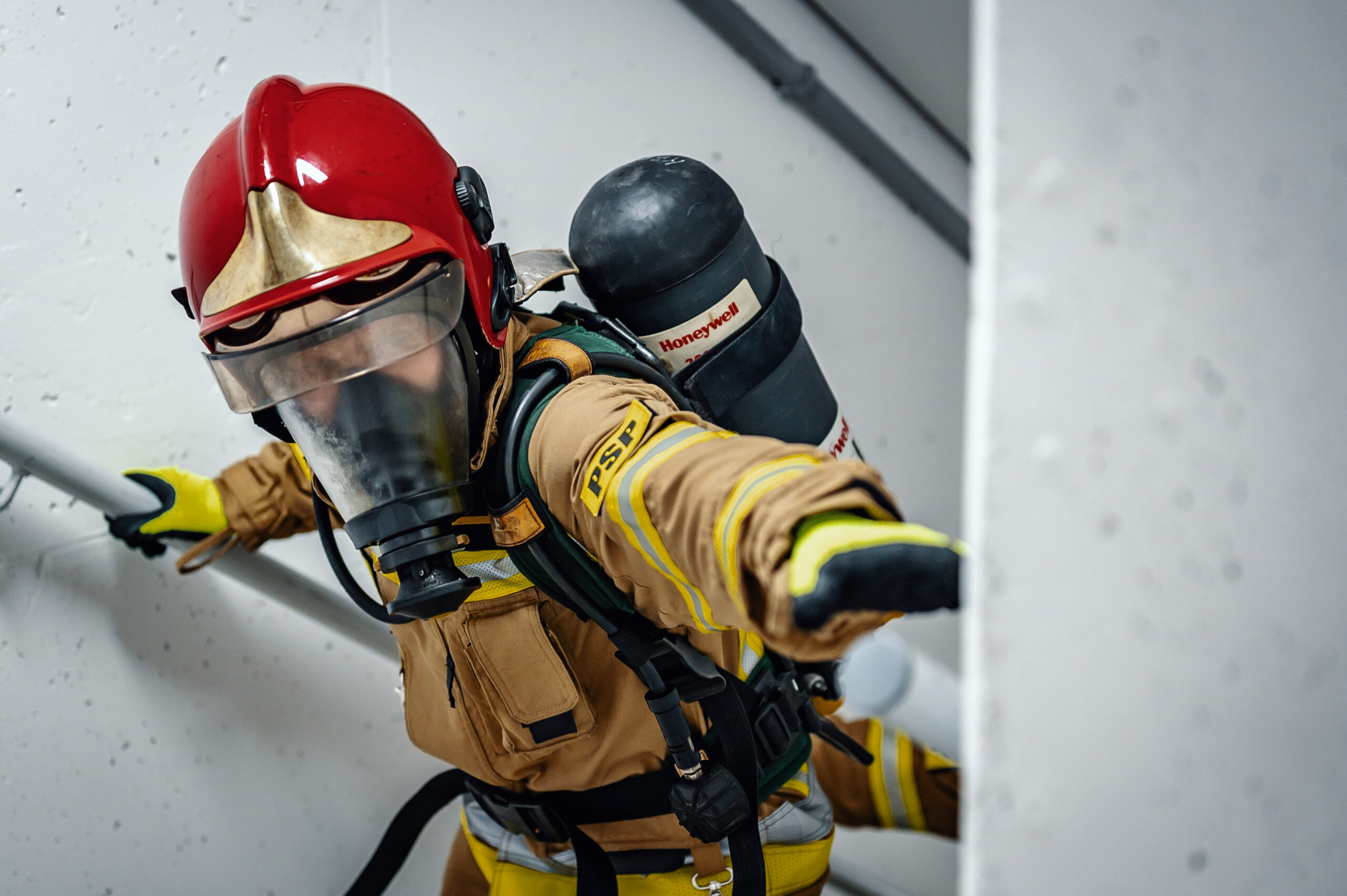
34 floors, 768 stairs, approximately 20 kilograms of firefighting equipment, and tremendous sporting excitement. The 4th Pomeranian Firefighters’ Stair Climb and the 9th Pomeranian Voivodeship PSP Firefighters’ Stair Climb Championships took place at Olivia Star. This year’s edition brought a new competition record. The best result was achieved by Józef Hiller and Damian Wicki from KP PSP Wejherowo, who climbed to the 34th floor of Olivia Star in a time of 5:40.44.


The previous record was 6:04, which means it was improved by as much as 23.56 seconds. Interestingly, Józef Hiller was also a co-author of the previous record. The Championships took place at Olivia Star for the sixth time. Competitors competed in two-person teams and covered the course in full equipment used during rescue and firefighting operations. Each of them wore approximately 20 kilograms of firefighting equipment.


In addition to the effort involved in climbing 34 floors, there were the height, pace, and the need to cooperate with a partner. This type of competition is therefore not only a sporting challenge, but also a form of training useful during actual operations conducted in high-rise buildings.


Results of the 4th Pomeranian Firefighters’ Stair Climb and the 9th Pomeranian Voivodeship PSP Firefighters’ Championships


Women’s/Mixed Classification

  1. SA PSP Kraków, Otylia Bielecka / Dominika Gozdur, 8:46.62
  2. KM PSP Gdynia, Katarzyna Tuniewicz / Mieczysław Derek, 9:30.70
  3. CS PSP Częstochowa, Angelika Kłudziak / Kinga Chrapek, 9:31.30


OSP/ZSP/WSP Classification

  1. OSP Kosakowo, Paweł Wójcik / Grzegorz Brzeziński, 7:11.24
  2. OSP Żukowo, Mateusz Dampc / Sebastian Szymański, 8:09.81
  3. OSP Gdańsk-Sobieszewo, Dominik Kowalczyk / Cezary Wolecki, 8:56.18


9th Pomeranian Voivodeship PSP Firefighters’ Stair Climb Championships

  1. KP PSP Wejherowo, Józef Hiller / Damian Wicki, 5:40.44
  2. KM PSP Gdynia, Andrzej Zaborowski / Patryk Piotrowski, 5:52.78
  3. KP PSP Wejherowo, Tomasz Plicht / Jakub Narloch, 6:34.45


Overall Classification

  1. KP PSP Wejherowo, Józef Hiller / Damian Wicki, 5:40.44
  2. KM PSP Gdynia, Andrzej Zaborowski / Patryk Piotrowski, 5:52.78
  3. KP PSP Zgorzelec / KM PSP Legnica, Łukasz Łukiewicz / Michał Milian, 5:52.97


We congratulate all the competitors who took on this demanding challenge, and the winners on their new record and excellent results.


Speednet on the 31st Floor of Olivia Star

The Office in 2026? An Example Speednet demonstrates that less can mean better and more efficient. The IT company, which previously leased two floors in Olivia Star optimized its space by moving to a smaller but more prestigious office on the highest office floor north of Warsaw. The company’s new office perfectly reflects the market transformations currently taking place in the office leasing segment. Business centres such as Olivia Centre, of which Olivia Star is a part, are gaining a significantly greater mix of tenants, also building their stability and resilience to turbulence in individual sectors of the economy, while the entire office centre community creates a more diverse ecosystem and space for cooperation, which was previously impossible during the period of dominance by selected industries.


Speednet is a strategic technology partner for financial institutions that want to deliver digital products faster, modernize legacy environments, and develop IT systems without compromising security, regulatory compliance, and operational stability. It helps regulated organizations shorten time-to-market, fill competency gaps, solve integration and technology challenges, and responsibly and securely implement innovations and use AI in daily work.


The company has been operating in a hybrid model for several years, and as the way of working changed, so did its office space requirements. In spring 2026, Speednet moved its Tri-City headquarters from the 19th and 20th floors of Olivia Star to the 31st floor—to a smaller but much better-suited space for the current work model. This is an excellent example of the direction in which the office segment is currently transforming. This example shows how many possibilities that previously seemed impossible or difficult are now everyday reality. It is also an example of how many opportunities are associated with choosing a large business centre as an office location and how flexibility in approach to leasing results in a lasting and partnership-based relationship between the office space manager and the tenant.


About why the company decided on this change, what the role of the office looks like today in a technology organization, and what makes employees want to come to it despite the possibility of remote work, Karolina Zarusińska, Head of Employer Branding at Speednet, explains.


Where did the need to move to the 31st floor of Olivia Star from the 19th and 20th floors come from?

We leased our previous office from 2021, which was when the labor market—especially in the IT industry—was changing very dynamically. Over those few years, the hybrid model became firmly established with us. We learned to work effectively in distributed teams, while at the same time we began to recruit specialists more broadly from outside the Tri-City as well.


Today, flexibility is an important element of our organizational culture. Some people work mainly remotely, some appear in the office regularly, and some choose it depending on projects, meetings, or simply the need to work with the team.


At a certain point, it became clear that two floors of approximately 1,000 m² each were no longer space corresponding to our real needs. We had already been subleasing one of the floors to a friendly company. At the beginning of this year, our needs, the needs of our tenant, and another company looking for larger space in Olivia Centre met at the perfect moment. As a result, a kind of triple relocation took place, and it appears that each party found a solution better suited to their current way of working.


We ended up on the 31st floor of Olivia Star—in a space decidedly more intimate, but at the same time very functional. And from the perspective of several months, we can say that it was a very good decision.
What is the area of the new office and how do you use it today?

The new office is approximately 480 m². We have about 40 workstations, all operating on a hot desk system. With our current hybrid model, this number corresponds very well to actual office attendance.


Instead of one large open space, the area has been divided into two smaller workstation zones—one intended mainly for technical teams, and the other for support departments. We also have three conference rooms, two separate rooms, a functional server room, and—decidedly the most important from the perspective of office life—a large social zone.


We wanted the space to be tailored not to the number of people employed in the company, but to how we actually use the office today. We no longer treat it solely as a place where you come for eight hours and sit at an assigned desk. Increasingly, it is a space for meetings, collaborative work, integration, or knowledge exchange.


What style prevails in the new office? What did you emphasize during its preparation?

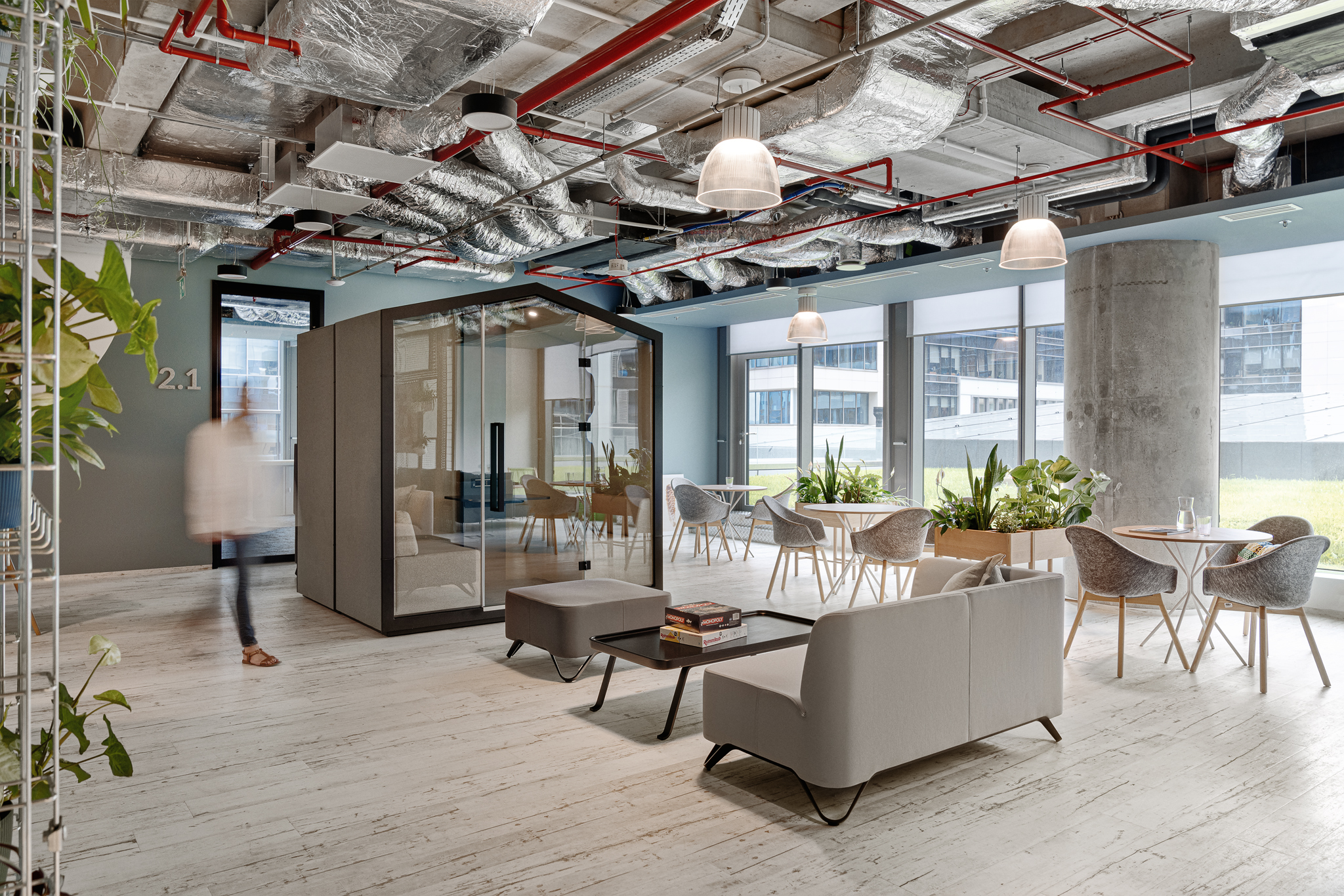
We were somewhat fortunate because we ended up in a space that had already been very interestingly designed by Design Anatomy. Many elements from the original arrangement remained, giving the interior character—including the kitchen, green walls, planters, materials, and finishing details.


Of course, we adapted the layout to our needs, primarily by increasing the number of workstations, but we wanted to preserve the character of this space.


We also approached the relocation itself very pragmatically. We did not want to furnish the new office from scratch just because we were changing floors. We used the furniture we already had. Some of the equipment that we were unable to use in the smaller space we sold, and a considerable portion we also donated to charity.


New elements we decided on after the move included acoustic booths, which are simply very practical with hybrid work and a large number of online meetings.
Are there any unconventional solutions or places that are particularly worth describing?

Our social zone is definitely the heart of the new office. And we ourselves are a bit surprised at how warmly it has been received by everyone.


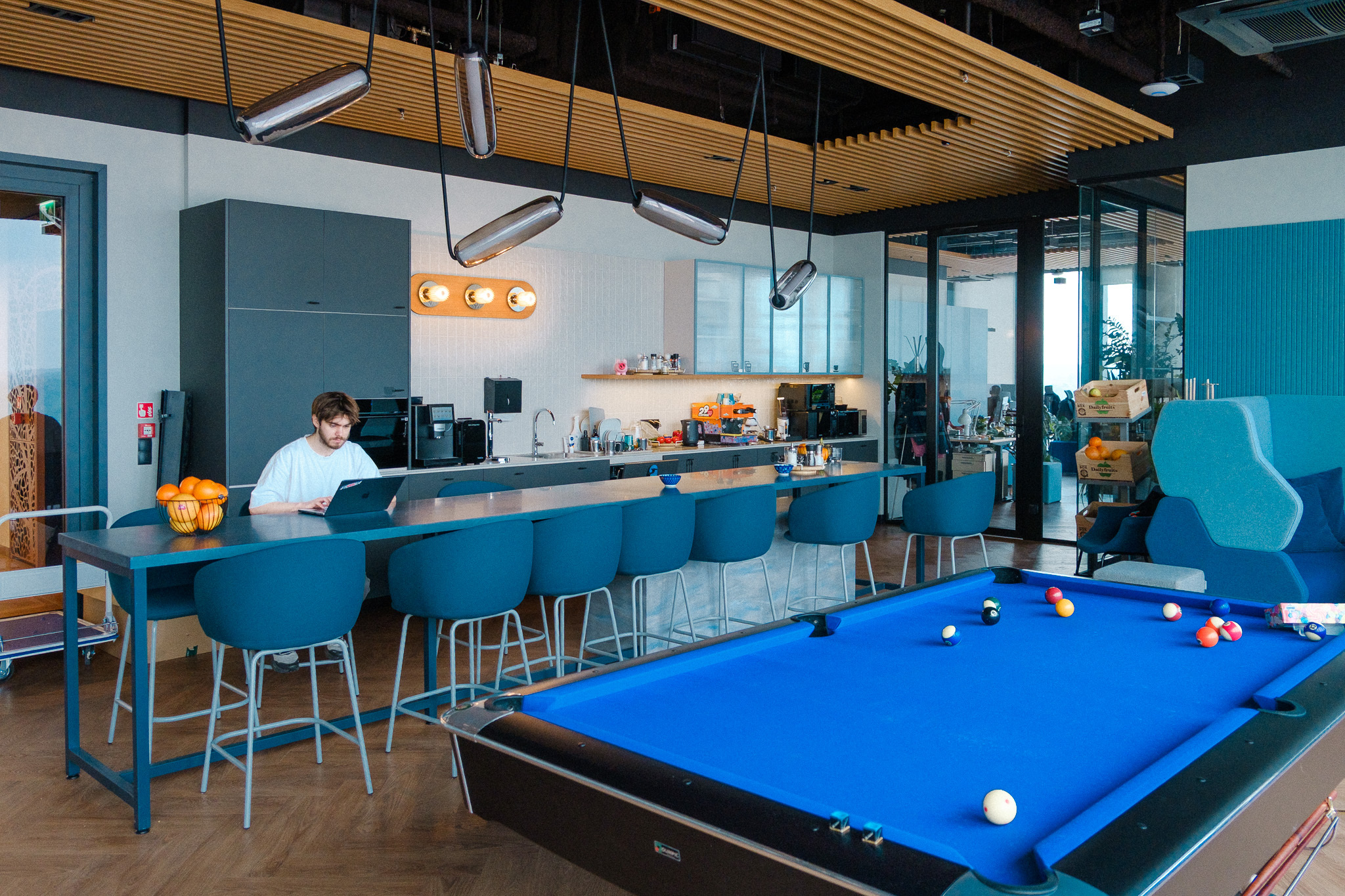
It is a combination of a kitchen, a large bar counter, seating areas, poufs, a pool table, and table football. You can have lunch together here, hold a less formal meeting, work with a laptop away from your desk, or simply meet with people you do not see every day with the hybrid work model.


Importantly, the space can be very easily adapted to different events. Since April, two larger events have already taken place here. The first was another edition of our company “MasterChef,” during which we prepared tartare and sushi together with the CEO. The second was kobido massage workshops organized for the women on our team. With both events, we were able to transform the everyday office space into an event venue in just a few moments.


The new office is also very green.

Definitely. It is much greener than our previous office.


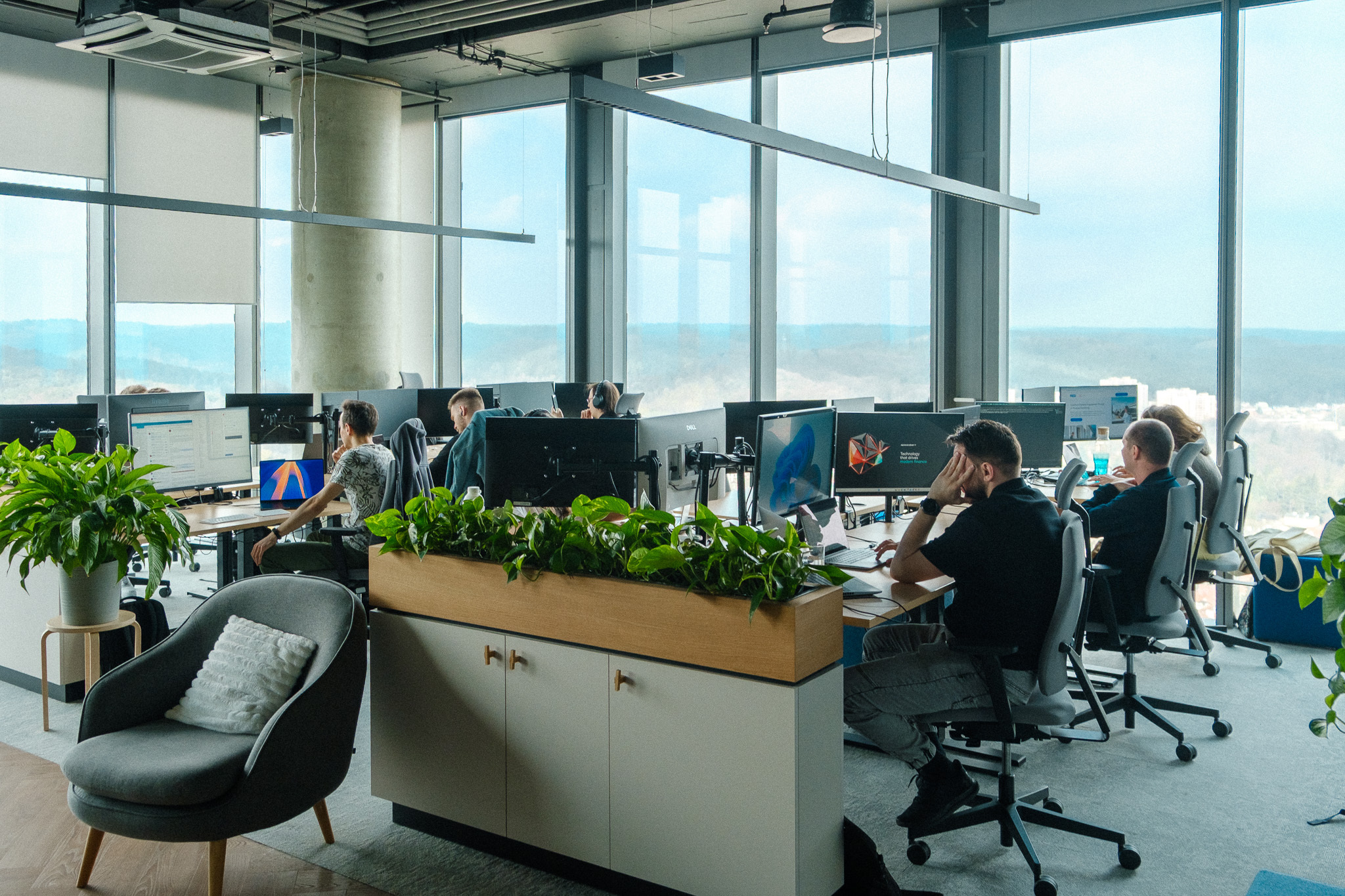
We have three green walls, and the individual workstation zones are separated by large planters. Plants have also been placed in the conference rooms. Some of them are still settling in and growing, so we expect the effect will be even better over time.


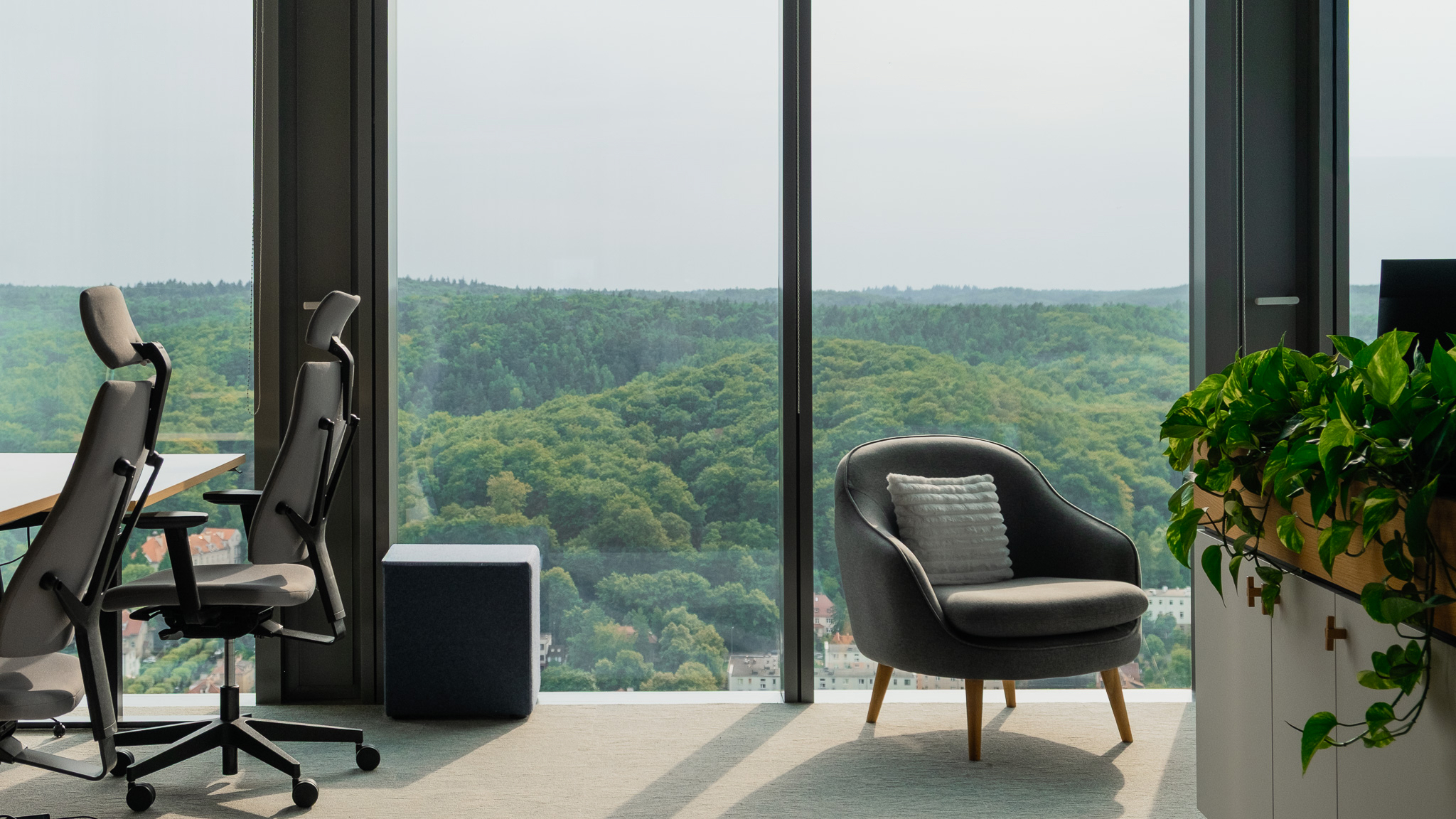
It is actually quite an interesting contrast: on the one hand, we are on the 31st floor, with huge windows offering a panorama of the Tri-City and a view toward the Bay of Gdańsk, and on the other hand—inside we are surrounded by a lot of greenery. You could say we managed to avoid having to choose between a sea view and a view of plants.

How do the employees themselves rate the new office?

The best proof is probably their own words.

“Working in an intimate space full of greenery, filled with natural light thanks to huge windows with a view of the entire bay, is a work privilege that cannot be replaced by Fruit Thursdays. If I were to leave my job, it would only be with the awareness that I will probably never work in such a comfortable place again.”

Tymoteusz Olszewski
Head of AI

“Open space? I was skeptical. But it turns out that a well-designed space, plants that handle irrigation better than I do with mine at home, and the 31st floor did the trick. At this height, ‘working in the cloud’ takes on a completely new meaning—and it turned out that this space really rebuilt our relationships anew.”


Marta Nowocińska
People Performance Partner

“What I appreciate most is that the office is not one huge open space. The division into smaller parts gives a much more intimate atmosphere. In addition, the social heart zone naturally encourages meetings with people. A shared lunch at a long table, a quick game of table football, or a moment of conversation in the relaxation zone make integration happen on its own, somewhat incidentally—without the need to organize a special event.”


Weronika Dudko-Konopka
Employer Branding Specialist

And perhaps this last aspect is the most interesting for us. With hybrid work, the office must give people something more than just a workstation—a comfortable desk can be arranged at home as well. The value of the office becomes primarily the people, the possibility of spontaneous meetings, and a space that facilitates such meetings.

Is the new office fully ready?

Almost, although we still have a few ideas.


We want to recreate, among other things, a wall with photos from company events that we had in the previous office and which was one of its most beloved elements. Over the years, quite a lot of shared stories have accumulated, and we want this to be visible in our new space as well.


We also plan our “dinosaur wall”—of course in the best sense of the word. This is a place dedicated to people who have been at Speednet for over 10 years. We already have 40 (!) such people, so there is definitely someone to feature on it.


This is an important element for us because we want the new office not to be solely an impressive space on the 31st floor. It should also tell the story of the company and the people who have created it over the years.


And what is the biggest highlight related to the move?

Probably the very fact that we currently work in the highest-located office in northern Poland is already quite a good highlight.


However, what we like most is a certain paradox of this move. We moved to an office with significantly less space, and at the same time we have the feeling that we gained more space to be together.


And perhaps the little things that cannot be planned when designing an office show this best. Recently, for an entire week, practically every day someone brought homemade cake to work. Seemingly nothing major, but it is precisely such situations that make the space come alive and become a bit more “ours.”


The new office simply better corresponds to what the workplace is for us in 2026. It does not have to be a daily obligation to remain an important element of company life. It should make it so that when we do decide to meet on site, we really want to stay a bit longer—even if sometimes the additional motivation is a piece of homemade cake.

 

Value Sharing – A New Trend in Management Cadre Development

Organizations that have focused on creating shared value systems within their management cadre operate more effectively and achieve their goals more efficiently.


As Monika Jasińska emphasizes in her article “Quality of Teamwork in Difficult Situations,” published in the journal “Nowoczesne Systemy,” the cooperation of the management cadre is crucial for success and the so-called organizational resilience (i.e., the ability to operate effectively during various types of crises, including, for example, market turbulence). This refers to action based on clear and shared principles, psychological safety, and effective communication. To achieve a state of entrepreneurial creativity and efficiency, it is essential to operate according to uniform standards. According to the author of the study, this principle is significant for teams facing time pressure, uncertainty, and crises.


Research therefore shows that one of the key factors in organizational resilience and growth is developing a shared vision, values, and communication principles and ensuring that all managers operate according to the same standards—while maintaining individual style and a degree of operational flexibility. This is an important signal for companies that have relied on full autonomy for managers building their own teams: proper autonomy means respecting the individuality of each leader while simultaneously implementing unified and coherent principles across the entire enterprise.

The research findings are also confirmed by managerial practice and experiences often drawn from the spectacular rises and falls of companies. Numerous analyses have been produced on the difficult but essential cooperation of the management cadre—says Marta Moksa, Director of O4 Coworking at Olivia Centre. Essentially, every success story (e.g., Netflix) and failure (Lehman Brothers) can be reduced to building so-called “tough love in the boardroom,” which can be translated as “tough, masculine camaraderie in the boardroom.” In the book “The CEO’s Boss” by William Klepper, published by Columbia University, several analyses of director cooperation are presented—examples to emulate and cautionary tales. Companies flourish and emerge from crises when their management cadre has a functioning social contract, proper alignment, and constitutes a cohesive, effective team.

The dynamics of market changes force organizations to adapt to reality just as quickly, and the fact that certain mechanisms, standards of conduct, or team management methods worked just a few years ago does not mean they will work indefinitely. Therefore, one of the most constant truths about team management is change. At Bayer, with the implementation of a new operating model, the role of the leader has also changed, placing greater emphasis on empowerment, shared responsibility, and effective action under conditions of uncertainty and change—says Anna Switaj-Zawadka, Capability Community Lead Projects at Bayer. That is why developing leadership competencies, exchanging experiences, and building a common leadership language are so important. Cooperation, trust, and the ability to engage teams are today key factors in organizational success, and sharing best practices helps leaders effectively meet these challenges.

Experience shows that key to the success of enterprises is a well-cooperating team of managers who share the same set of goals and values. According to Tuckman’s model, a team must change in accordance with successive stages of business development. And the truth is that every business has the shape of the letter S—first slow development, then dynamic growth, safe stagnation, and crisis, from which one enters the next slow development phase. There is no business in the world whose stages look different. And that is precisely why the effective functioning of the leadership cadre as a team is of such enormous importance. Examples of companies such as Procter & Gamble, Johnson & Johnson, BP, and Hewlett-Packard show that proper distribution of roles in the board, but above all shared organizational culture, common goals, and common methods enable survival of any crisis.


The significance of uniform values among the management cadre is also discussed by Katarzyna Laskowska, Director of the Entrepreneurship Development Department at the Pomeranian Development Agency: In small and medium-sized companies, the way leaders manage people very quickly translates into the daily work of the entire team. That is why it is worthwhile for owners, leaders, and managers to develop together, exchange experiences, and build a common approach to communication, responsibility, and decision-making. The more coherent the management approach, the fewer misunderstandings, the smoother the cooperation, and the greater the chance that the company will grow without losing a good atmosphere and people’s engagement.


Krzysztof Ratajczyk, Controlling Team Lead at Ergo Finance Global Business Services, speaks similarly on this topic: It is worthwhile to develop managers together, because then it is easier to establish a coherent approach to team management. Standards based on shared experiences help avoid situations in which each leader operates according to different principles. For employees, this means greater predictability, and for the organization, higher efficiency.


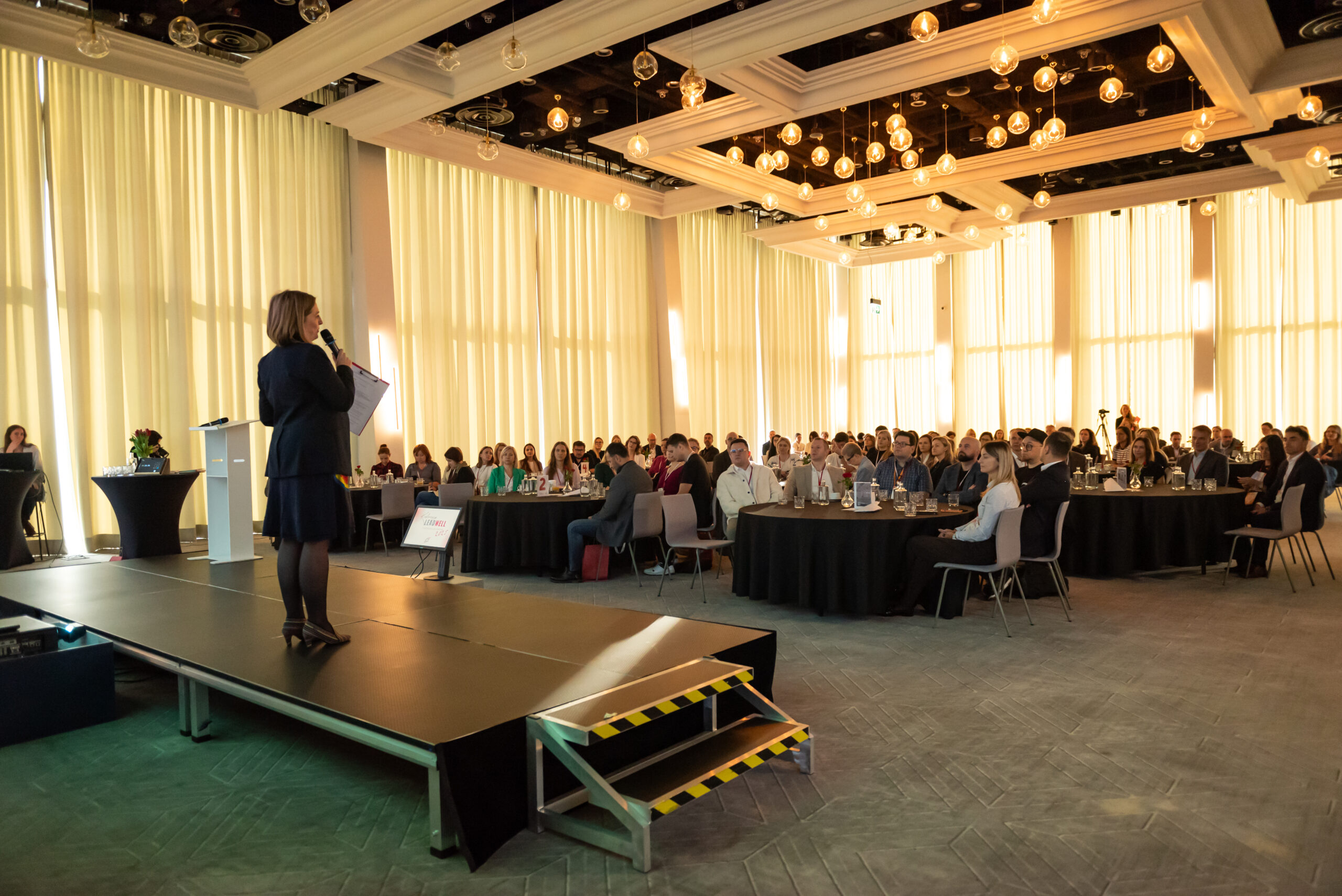
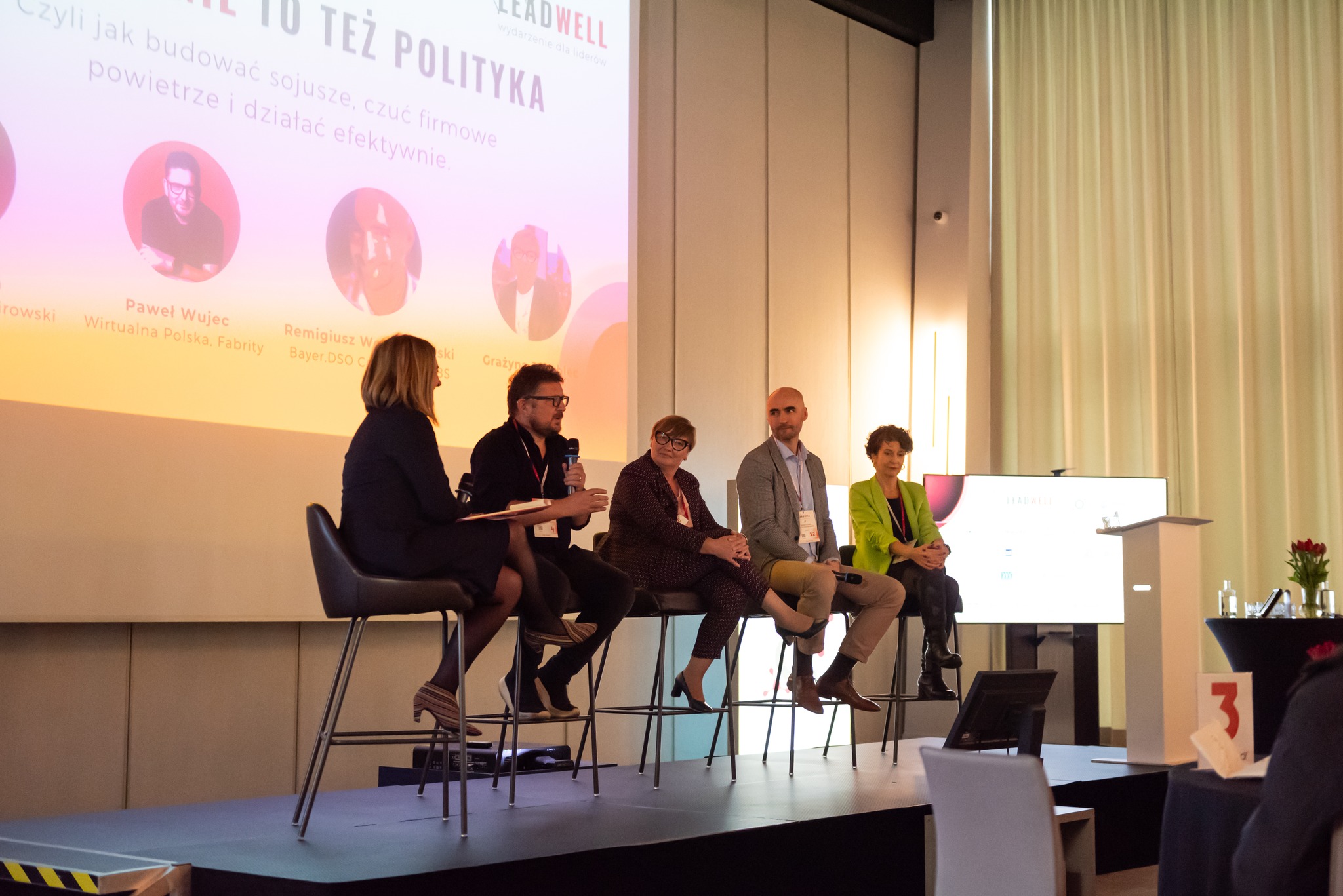
As he points out, Marta Moksa there is no single, universally effective management model, but when coherent values are shared by the management cadre, companies emerge from crises more easily: There is no single, simple way to build an effectively functioning team. The process of building a strong team consists of many elements—among them are educational experiences: joint learning of new leadership competencies, co-participation in discussions about the personal development of each member, and use of similar leadership tools. This knowledge formed the basis for developing the theme of the third edition of the LeadWell conference, which will take place this autumn at Olivia Centre in Gdańsk. It will be an excellent opportunity to discuss management effectiveness and new insights drawn from research and the concrete experiences of practitioners. The conference will provide ample opportunity to share real experiences in this area.


The fundamental idea that guided Marta Moksa, who together with Martyna Czarnobaj-Borowska is the creator of the conference program, was the conclusion that companies develop faster when leaders learn from one another, and the greatest value comes from knowledge about real events, successes, and failures, reported by their actual participants. In my opinion, there was a need for a space for free exchange of knowledge among leaders whose experience constitutes invaluable value for people carrying out similar tasks in their daily work. We wanted to create a field for unconstrained, valuable exchange of thoughts that would allow others to grow and avoid the pitfalls that their colleagues encountered earlier. We believe that the best solutions and conclusions come from dialogue and the opportunity to learn from one another, and that a strong community of leaders translates into business quality. I believe that with this event we are genuinely contributing to improving the working capabilities of managers and the development of companies.

The value of the conference is also discussed by Joanna Oksiucik, Site Lead in Gdańsk from the Risk Operations department at Amazon Corporate Operations, a participant in last year’s edition: Working with distributed employees, diverse team needs, and the rapid pace of change present new challenges for leaders. Trust, good communication, and the ability to build engagement regardless of where we work are becoming crucial today. LeadWell is for us a space for exchanging experiences, inspiration, and conversation about how to lead effectively today.

The third edition of the LeadWell conference will take place at Olivia Centre in Gdańsk on October 21–22, 2026.

Olivia: A Stable Business Partner

Early July brought one of the most significant sales in the Tri-City real estate market. Olivia Star, the tallest building in northern Poland, was acquired by Strabag Group. This is an important step in the development of Olivia Group, and the next will be the commissioning of the Olivia Pulse apartment building.


The sale of Olivia Star was immediately announced as the largest transaction of its kind this year outside Warsaw. This simultaneously strengthens the position of Poland’s largest business center, in which one of the largest investment groups in the European real estate market decided to invest. The acquisition of Olivia Star confirms the stability and success of Olivia Group, solidifying Olivia Centre’s status as a stable project developing towards a mixed-use model. The transaction proves that the largest entities in the real estate market want to be a part of it.


Olivia Star: A Star on Gdańsk’s Map

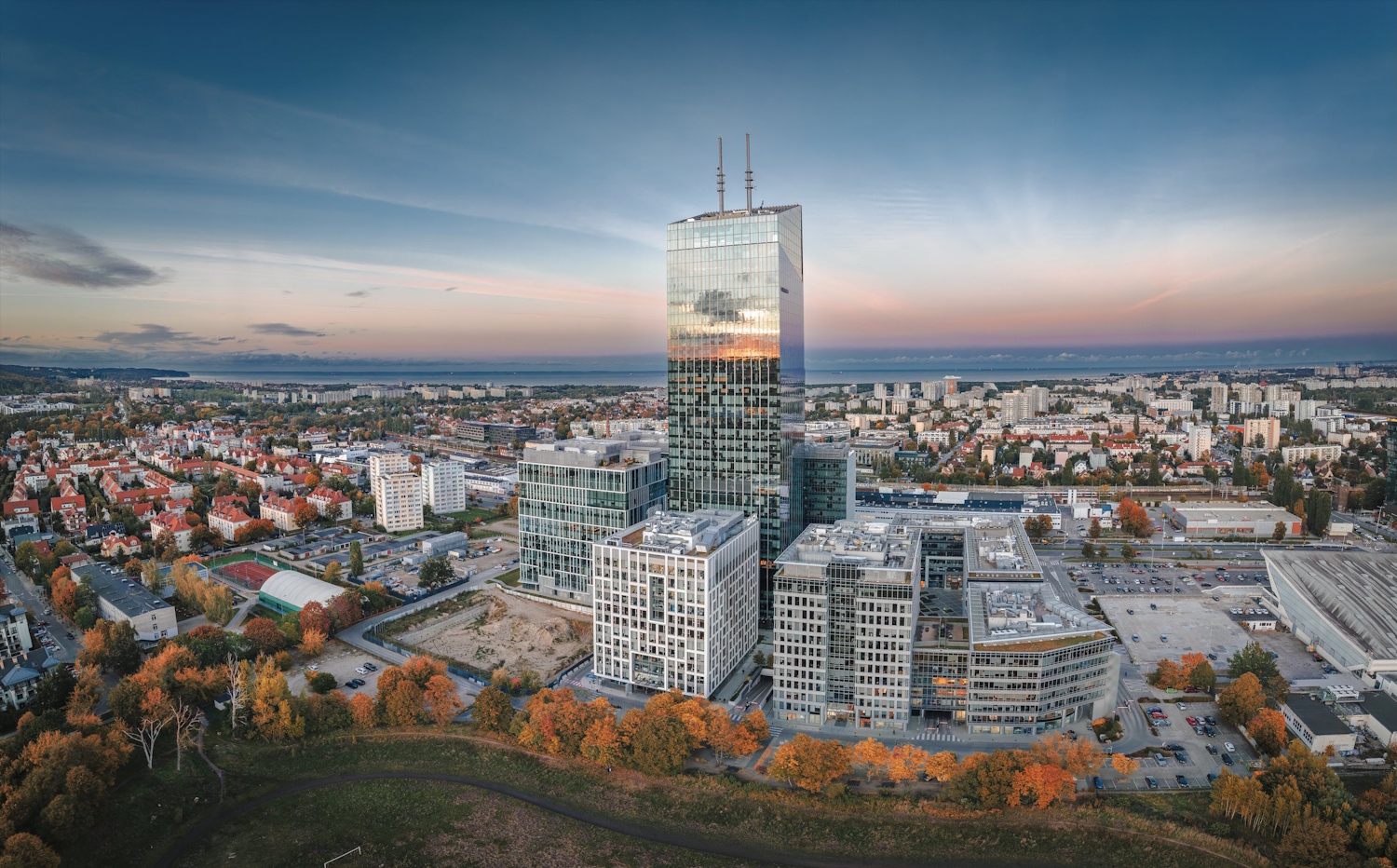
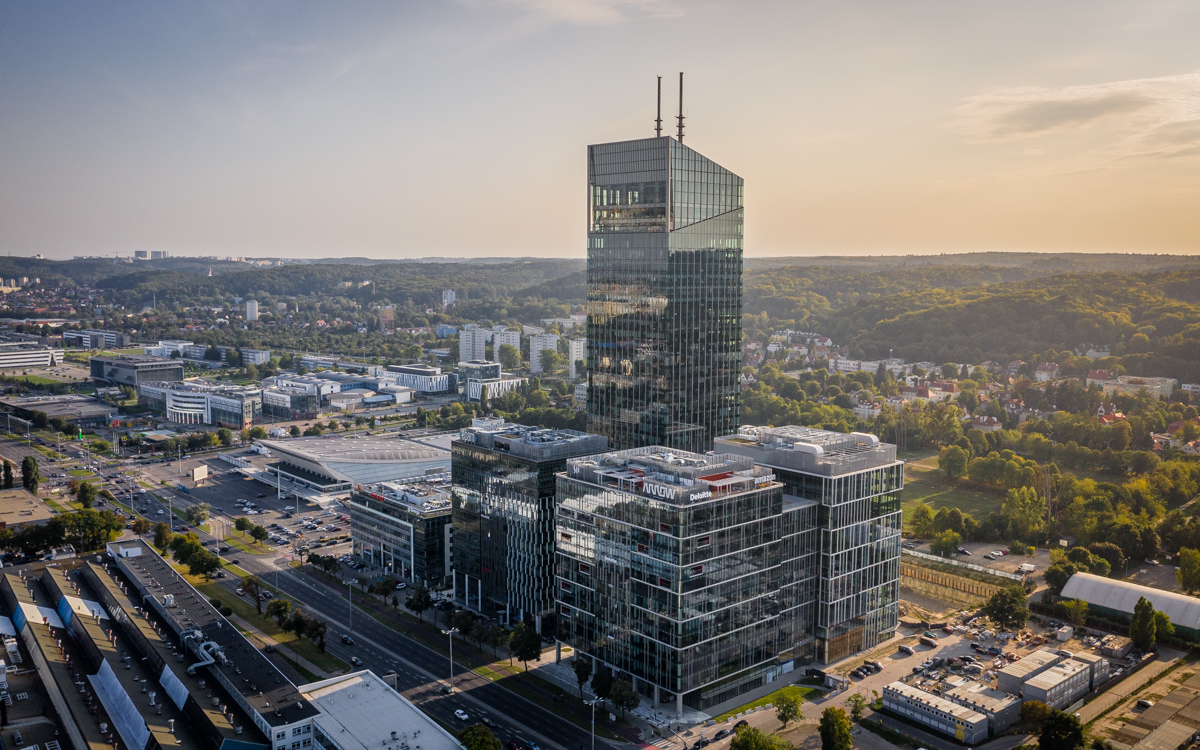
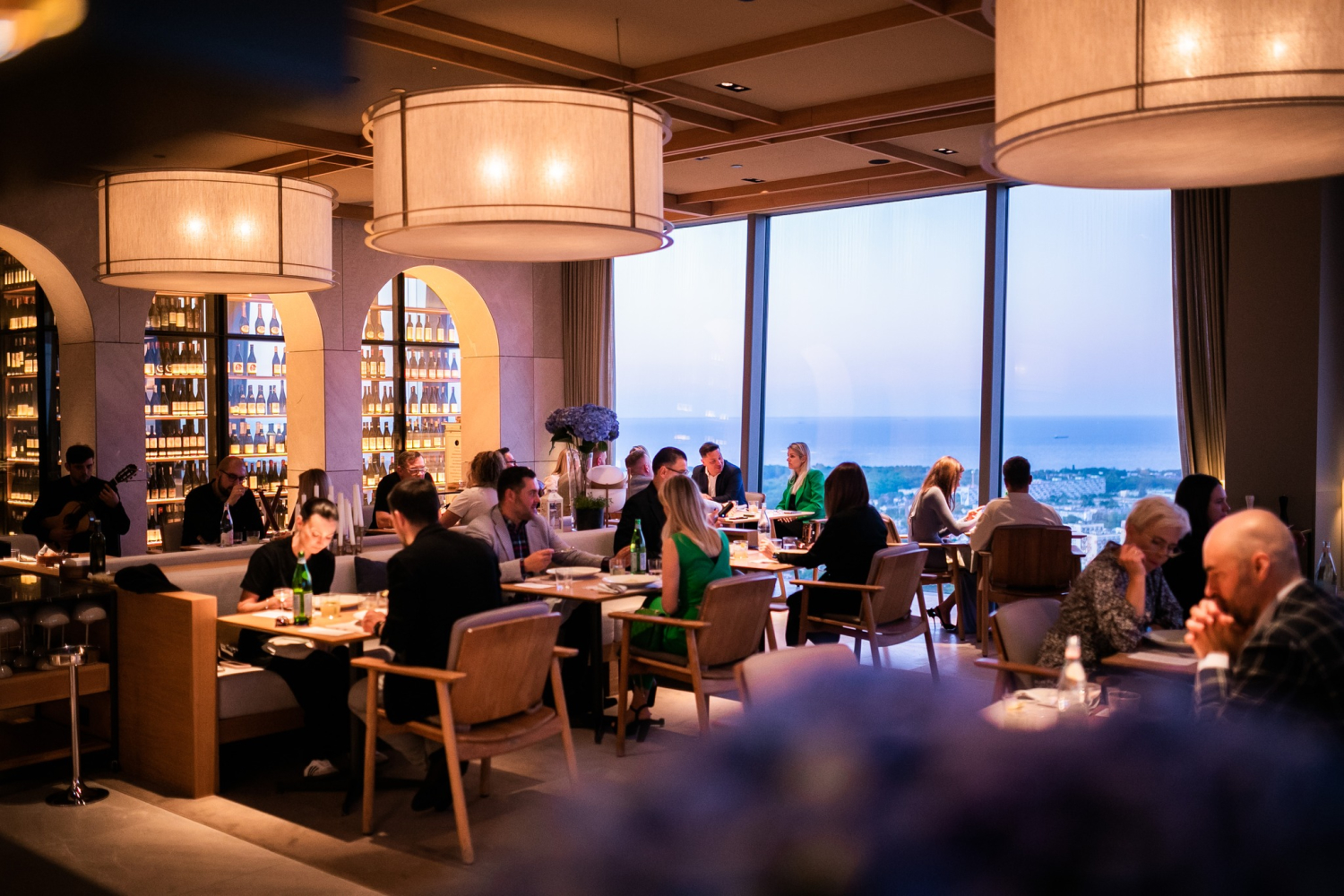
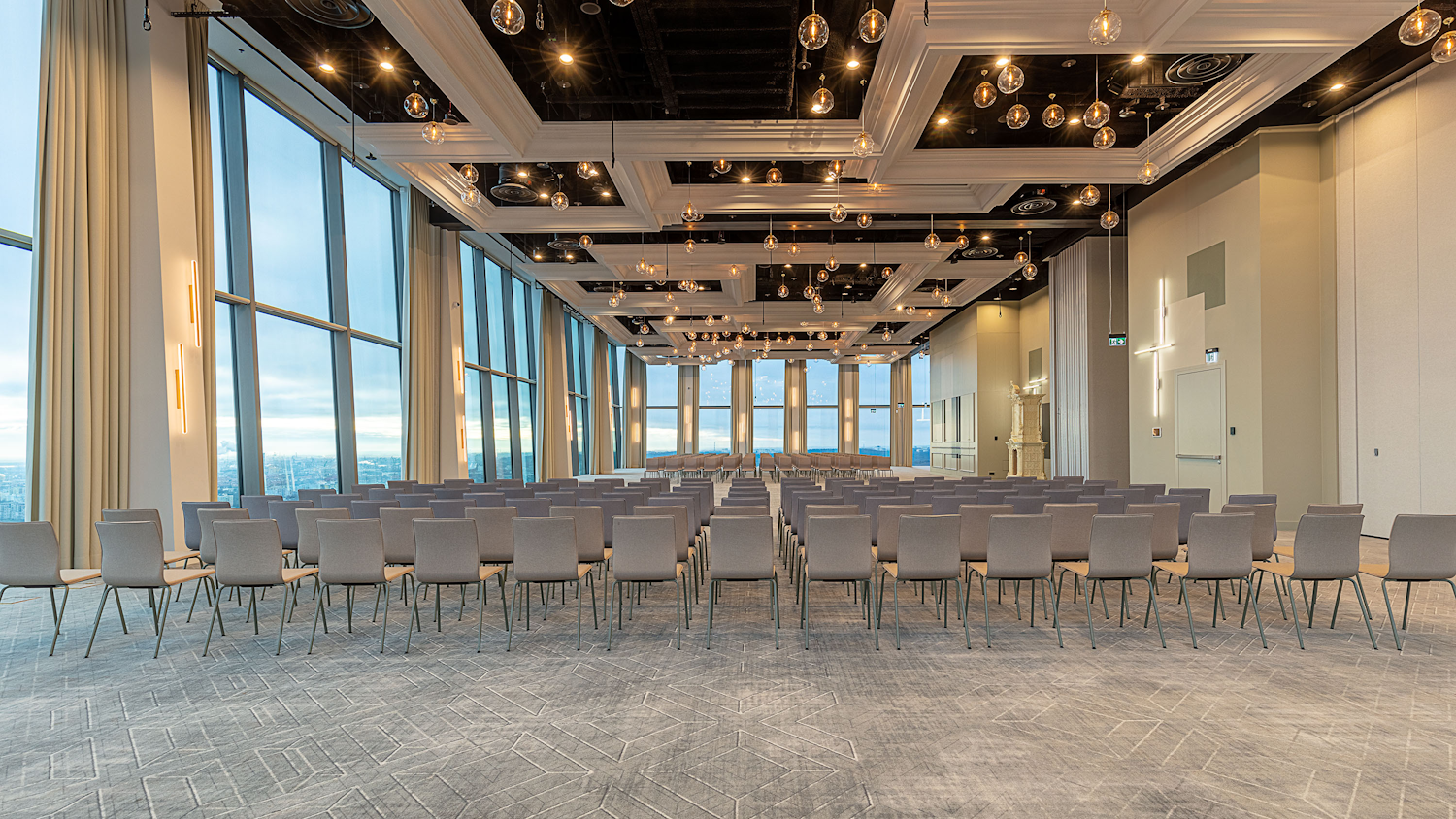
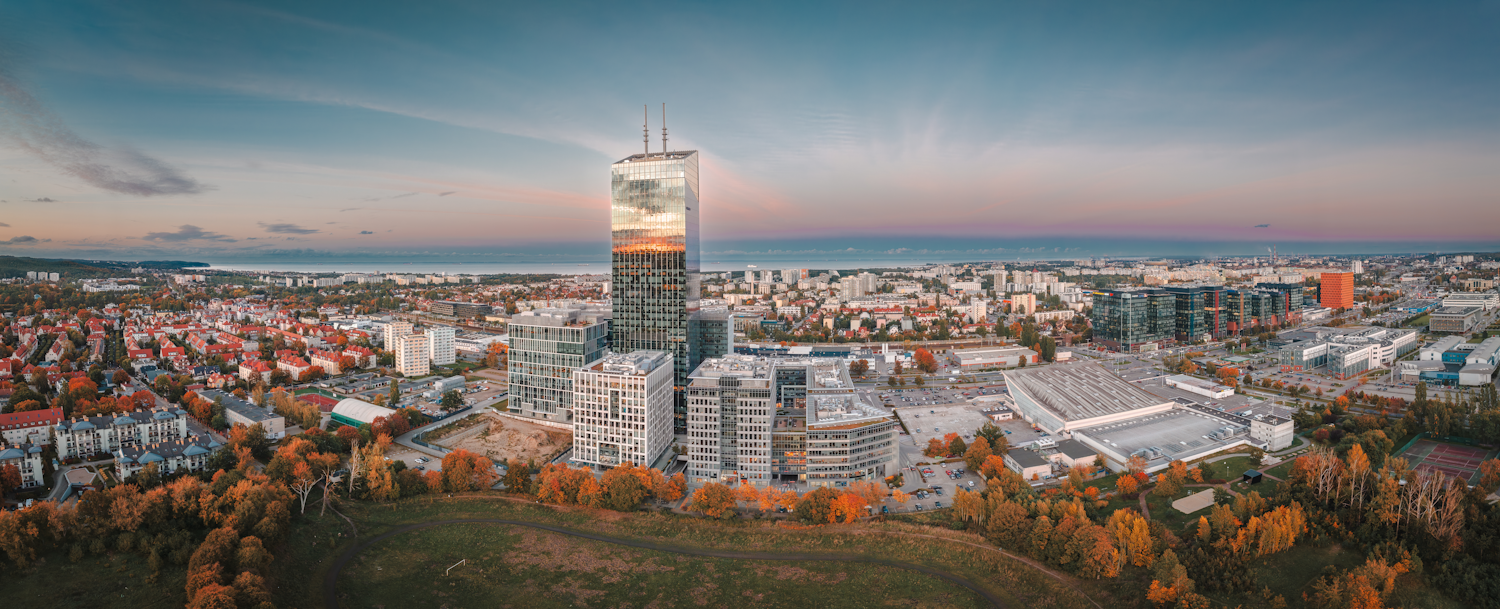
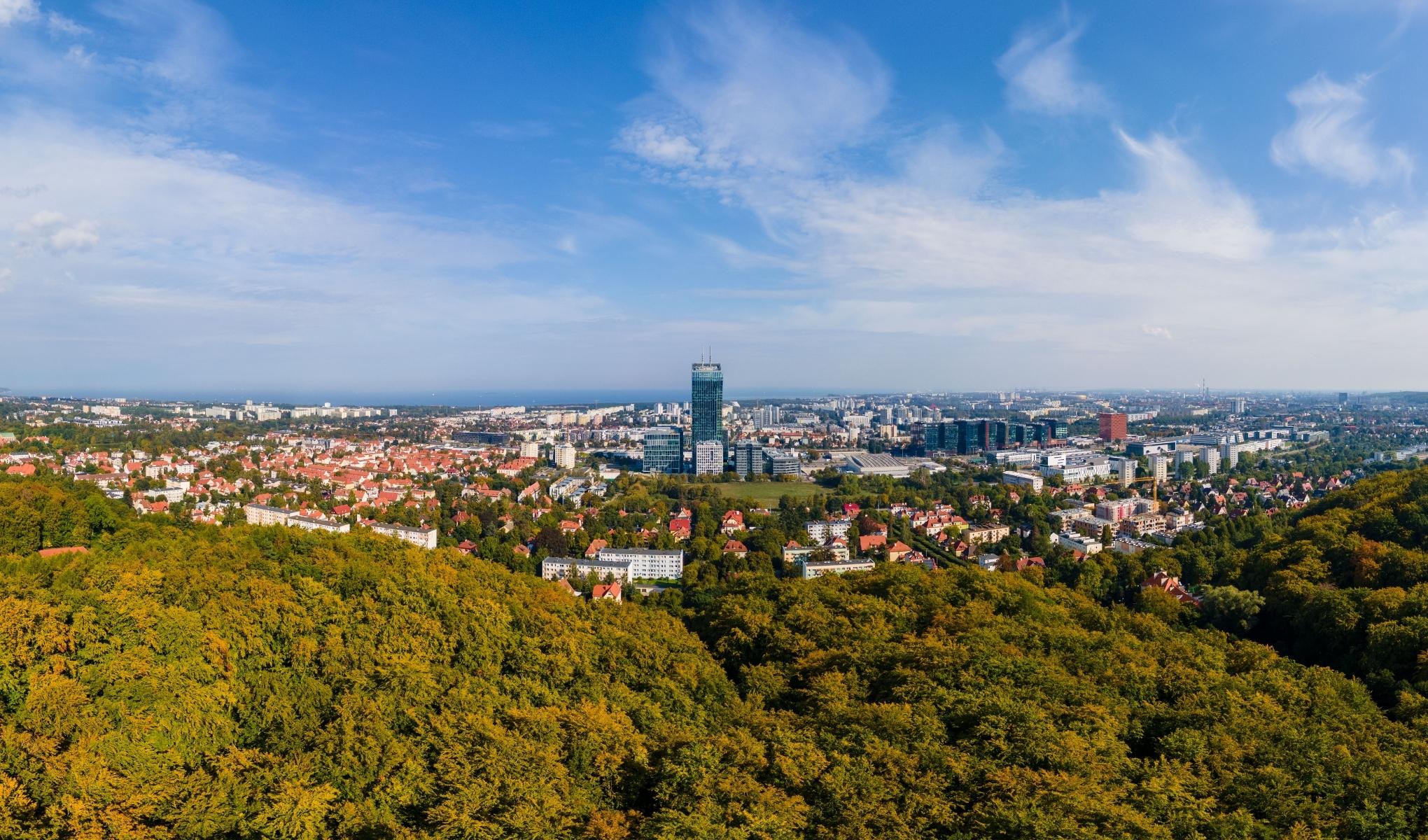
The tallest building in northern Poland was commissioned in 2018, stands 180 meters tall, and provides approximately 45,000 sq m of office space across 31 floors. Additionally, the building features an observation deck on the 32nd floor, which has been one of the Tri-City’s most popular attractions since 2019. The 33rd floor houses two prestigious restaurants, recognized with numerous international awards, including the highly renowned Michelin star. On the top 34th floor, there is an event and conference hall for 450 people, offering not only an exceptional space for all forms of cultural, business, and entertainment events, but also a breathtaking view of the entire Tri-City, the Hel Peninsula, the Tri-City Landscape Park, and Gdańsk Bay.


As representatives of Strabag Group emphasize, Olivia Star stands out for its high ecological and environmental responsibility parameters and aligns with the international real estate standards that the company is interested in. The property combines an excellent location, a very high occupancy rate, and strong ESG parameters, making it perfectly suited to our long-term investment strategy, says Verena Weingarten, Invest Manager, STRABAG Hold Estate. Strabag Group is a company with a long history in the real estate market and a well-established position both within and beyond Europe. With the sales agreement, Olivia Group was granted full management of the facility for at least 7 years, which confirms the high quality of services offered to residents and the desire to maintain it in the coming years. For Olivia residents, this transaction only means a strengthening of its position and potential, as well as a confirmation of the project’s stability and the willingness of a leading European group involved in the broad real estate market to participate in its development.


The Next Step in Olivia Centre’s Development

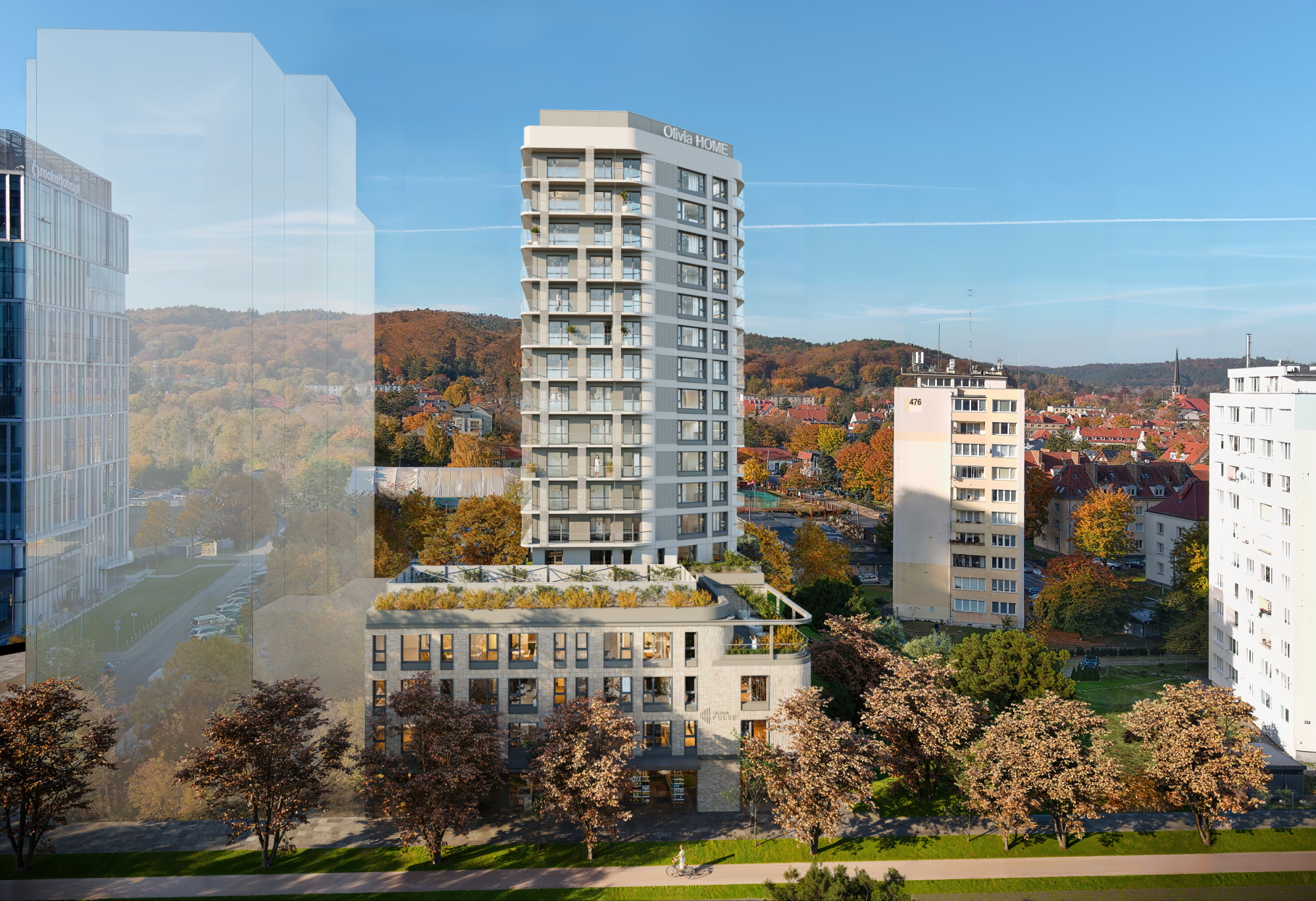
Olivia Centre continues to evolve, and will soon be enriched by Olivia Pulse – the first building offering 245 investment apartments, which will meet the needs of tenants wishing to live near the business heart of Gdańsk. This is another stage in the project’s development, which from the very beginning has been a source of pride for Gdańsk residents, a workplace for professionals, and a space for leisure. Thanks to Olivia Pulse, the center will reach a new level of maturity, welcoming its first permanent residents.


For our Group, attracting such a significant investor as STRABAG confirms the high position and standard of the entire center – says Ewa Nowicka, Sales Director and Board Member of Olivia Home, the developer responsible for the Olivia Pulse project. The transaction was preceded by thorough analysis and audits, which is a very important signal for Olivia Home and our clients, demonstrating stability and trust in our Group’s services. The fact that such a significant investor chose Olivia Group confirms the security and certainty of our investments, and now every apartment buyer within Olivia Pulse can become part of our project.


Since the commissioning of Olivia Star, the center has become a fully vibrant, multifunctional ecosystem, a place extending far beyond traditional office space rental. It boasts extensive service and retail facilities, including medical and educational institutions, a fitness club, and a diverse gastronomic offer, which future Olivia Pulse tenants will benefit from. All these factors make Olivia Centre one of the most unique and well-thought-out business centers in Poland, and its position continues to grow, allowing it to maintain an occupancy rate of approximately 98%. The commissioning of Olivia Pulse will be an important step towards transforming the center into a classic and complete mixed-use project. Olivia Pulse will allow residents to live near their workplace, relieving tenants of the difficulties associated with daily commutes to the office. It will also provide accommodation for those visiting Gdańsk short-term for business or tourism, naturally meeting the needs of the conference and restaurant center by complementing the comprehensive conference service. It will also offer an interesting proposition for students of the nearby University of Gdańsk campus, where nearly 20,000 people study daily.

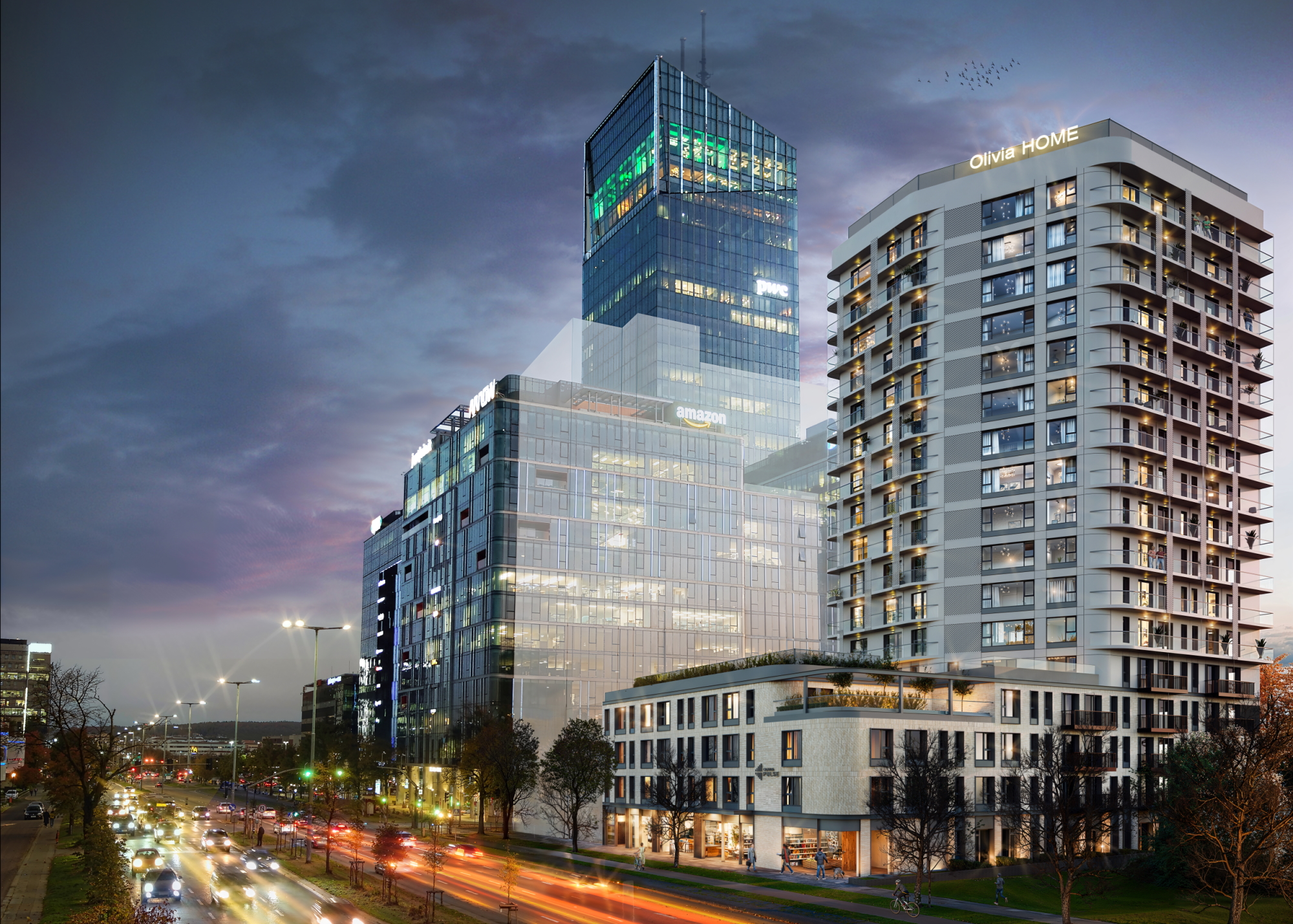
Olivia Pulse is a seventeen-story building, in which most apartments will be designated for long-term rental, and some also for short-term rental to provide accommodation for conferences and events organized on the top floors of Olivia Star. The investor also provided buyers with full operational support, which will be handled by Olivia Rent, also part of Olivia Group. This ensures that the investment will not only offer the standard already known from Olivia Centre but also relieve buyers of the responsibility of property management. Each apartment is offered with full finishing and interior equipment in one of three selected design styles. The project is currently in its final phase of implementation, with the first handovers scheduled for this autumn, allowing Olivia Home clients to expect a profit as early as 2026.


Tonsa Commercial Sells Olivia Star to STRABAG Group in Landmark Polish Real Estate Transaction

Press release


Tonsa Commercial sells Olivia Star to STRABAG Group in landmark Polish commercial real estate transaction


  • Expected to be the single largest commercial real estate transaction in Poland in 2026 and unprecedented in scale for Poland’s regional cities, with no comparable single-asset office deal previously completed in Poland outside Warsaw
  • Sale validates Olivia Centre – one of the largest office complexes in Central and Eastern Europe – as a fully institutional-grade investment destination
  • Tonsa Commercial retains ownership of the six remaining Olivia Centre buildings, comprising c. 130,000 sqm of office space
  • Tonsa Group PM continues as operator of Olivia Star post-completion, providing property management, leasing support and operation of the Olivia Star Top concept
  • Continued growth strategy across the Tonsa Group portfolio, including the Olivia Home residential brand and the Pekabex precast concrete platform


Rotterdam / Gdańsk, 02 July 2026 –
Tonsa Commercial REI N.V. (“Tonsa”), the Rotterdam-headquartered international real estate investor and developer behind Olivia Centre in Gdańsk, has completed the sale of the Olivia Star office tower to Austria’s STRABAG Group. The transaction, structured as a share deal, is expected to be the single largest commercial real estate transaction in Poland in 2026. It is also unprecedented in scale for Poland’s regional cities: no comparable single-asset office transaction has previously been completed in Poland outside Warsaw.


Olivia Star is the tallest building in Gdańsk and the whole of northern Poland, with an architectural height of 180 metres (156 metres to roof), 35 floors above ground and three underground levels. The tower comprises approximately 45,000 sqm of office space within a total floor area of c. 67,700 sqm, alongside extensive conference facilities, five restaurants, three bars and the publicly accessible Olivia Star Top observation deck and event space. Occupancy stands at 98 percent, with anchor tenants including Nordea Bank and PwC. Completed in 2018, Olivia Star was developed by Tonsa Commercial as the flagship of the wider Olivia Centre platform.


Olivia Centre, formerly Olivia Business Centre, comprises seven completed office buildings on Al. Grunwaldzka 472 in the Oliwa district of Gdańsk, totalling approximately 230,000 sqm of floor area and around 175,000 sqm of office space, making it the largest business hub in Poland and one of the largest office complexes in Central and Eastern Europe. More than 120 occupiers are present across the campus, including global names such as Amazon, Bayer, Allianz, Nordea Bank and PwC. Following the sale of Olivia Star, the remaining six buildings remain in the full ownership of Tonsa Commercial.


Continued operational role. Following completion, Tonsa Commercial will continue as operator of Olivia Star, providing property management and leasing support. Also operation of the Olivia Star Top concept – the publicly accessible observation deck, conference facilities, restaurants and bars on the upper floors – is being provided by team working closely with Tonsa Commercial.   This ensures full continuity for occupiers and visitors and keeps Olivia Star seamlessly integrated with the wider Olivia Centre campus, which Tonsa continues to develop and manage.


Commenting on the transaction, Maciej Grabski, President of Olivia Centre and Director of Tonsa, said: “When we began Olivia Centre in 2010, our ambition was to bring fully institutional-grade quality to Gdańsk and to the wider Polish regional market – to global standards in design, sustainability and tenant experience. Olivia Star was conceived as the flagship of that vision. To see it acquired by a partner of STRABAG’s stature, in what we expect to be the largest Polish real estate transaction of 2026 and the first deal of its kind in Poland outside Warsaw, is a powerful validation of what Olivia Centre represents today: one of the largest and most mature office complexes in Central and Eastern Europe, attracting institutional capital on the same terms as Western European gateway markets. We remain operator of Olivia Star and continue to develop and manage the wider Olivia Centre campus, alongside the broader Tonsa Group pipeline.”


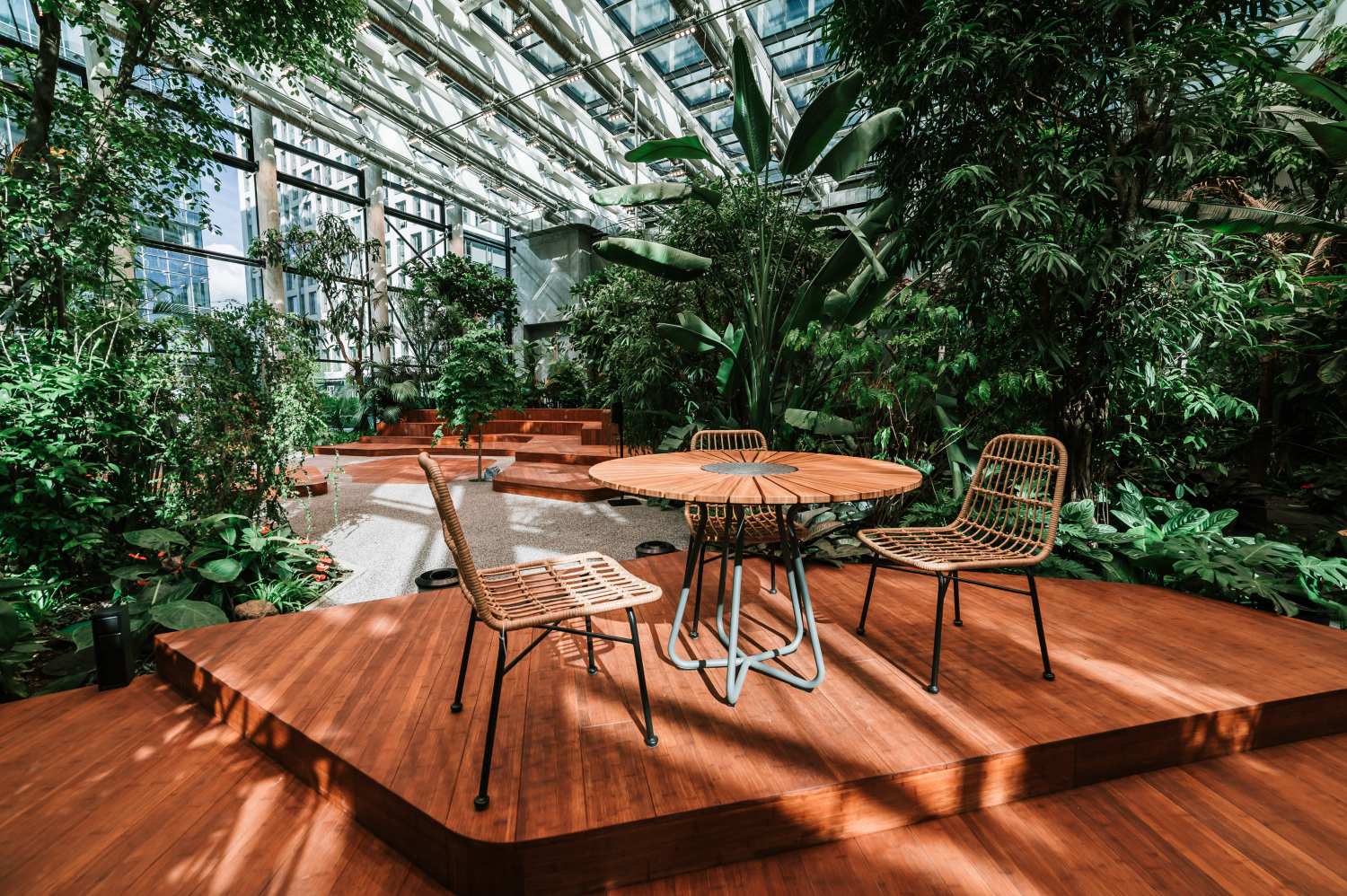
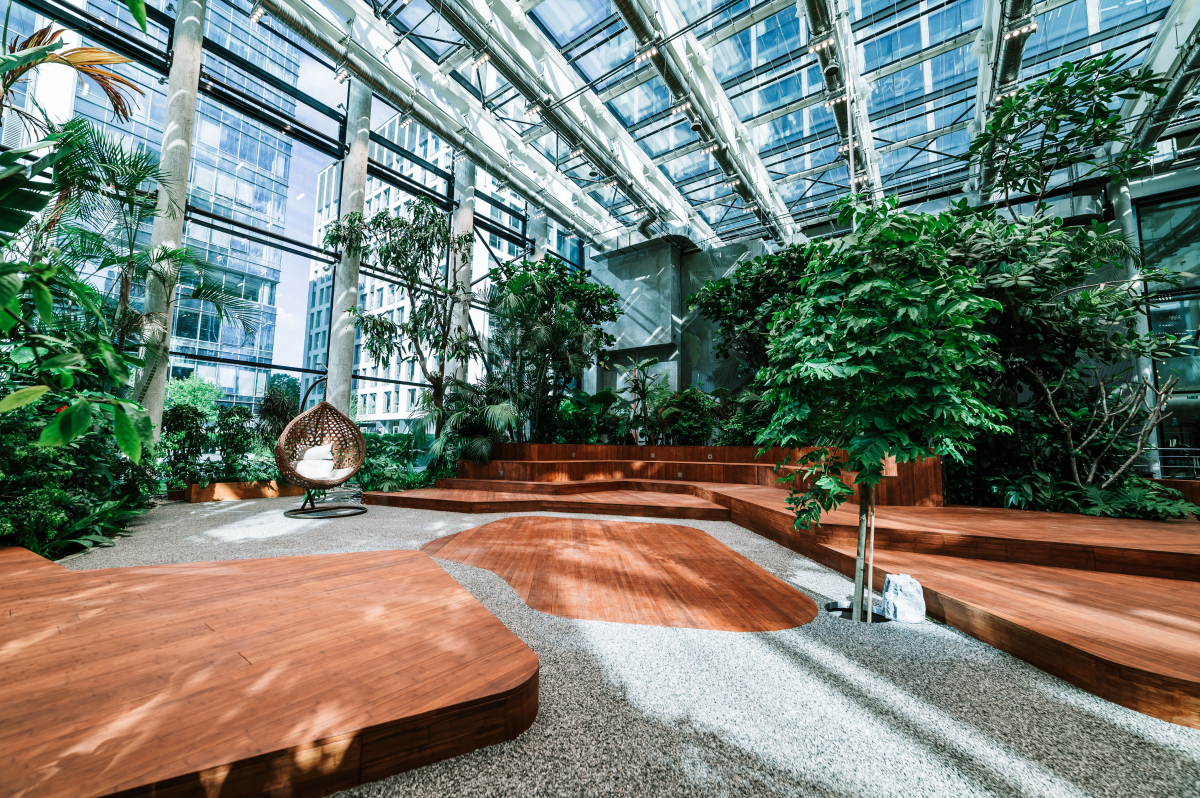
Beyond its role as a premier workspace, Olivia Centre has been deliberately designed as a vibrant, mixed-use ecosystem that goes far beyond traditional office leasing. The campus integrates an unparalleled range of services to meet the daily needs of professionals, visitors, and local residents alike. The hub features extensive amenities including medical and educational facilities, fitness clubs, and diverse gastronomy. A centerpiece of this holistic environment is Olivia Garden – a year-round, tropical green space of several thousand square meters serving as a natural retreat.
 

Central to the identity of Olivia Centre is its profound focus on building a resilient and engaged local community. The campus acts as a social catalyst, fostering interactions through a robust annual calendar of cultural, educational, and sports events. By cultivating proprietary initiatives – ranging from resident sports leagues and the Olivia Choir to numerous volunteering and networking programs – Tonsa Commercial ensures that the complex is not just a place to work, but a thriving community hub. This people-centric strategy significantly enhances tenant well-being, supports talent retention for occupiers, and creates a welcoming space that actively enriches the social fabric of the wider Gdańsk metropolitan area.


This holistic, community-driven vision is firmly rooted in a comprehensive Environmental, Social, and Governance (ESG) framework, as highlighted in Tonsa Group’s successive Sustainability Reports. Olivia Centre is a pioneer of sustainable real estate in Poland, continuously implementing solutions that reduce carbon emissions, optimize energy efficiency, and promote biodiversity. For institutional investors and global tenants alike, this rigorous dedication to ESG principles guarantees long-term asset resilience and aligns perfectly with modern corporate responsibility goals.


The Olivia Star transaction reflects a renewed inflow of international institutional capital into Poland’s regional cities, where the yield spread to Western European markets and Poland’s leading position in European GDP growth forecasts continue to drive investor demand. Tonsa Group will continue to develop, lease and manage the remaining Olivia Centre portfolio and is actively progressing further investments across its real estate platform, including the Olivia Home residential brand and the Group’s controlling interest in Pekabex S.A., the largest provider of precast concrete in Poland with operations across Poland, Germany, Sweden and the United Kingdom.


Olivia Pulse building offers residential apartments and marks the next step in the continued evolution of Olivia Centre, further broadening the destination’s offer and reinforcing its long-term mixed-use vision. It will complement a campus already positioned as a highly diverse, community-oriented environment, where office space is combined with services, gastronomy and amenities that support everyday life beyond traditional workplace functions. In this way, Olivia Pulse – developed by group’s Olivia Home – reflects the same user-focused and sustainability-driven approach that underpins the wider Olivia Centre platform and its ESG strategy.


Advisors. Tonsa Commercial was advised by Greenberg Traurig and Pinsent Masons (legal transaction advisory) and Tax Advisor Magdalena Zamoyska (transactional tax advisory). On the purchaser side, STRABAG Group was advised by KINGSTONE Real Estate (transaction advisory and process coordination), Act Legal (legal and tax), Savills (technical) and Baker Tilly (financial).


***

About Tonsa Commercial

Tonsa Commercial REI N.V. is a Rotterdam-headquartered international real estate investor, developer and asset manager. The Group’s flagship project is Olivia Centre in Gdańsk – one of the largest office complexes in Central and Eastern Europe – alongside the Olivia Home residential brand. Through its parent vehicle Tonsa SCA, SICAV RAIF, the Group also holds a controlling interest in Pekabex S.A., the largest provider of precast concrete in Poland, operating across Poland, Germany, Sweden and the United Kingdom.

For more information visit: www.tonsacommercial.com and www.oliviacentre.com


***

Press contact

Tonsa Commercial / Olivia Centre

Bogusław Wieczorek
Board Representative to Public Relations
boguslaw.wieczorek@oliviacentre.com
+48  501 951 937


***

Note on image rights. Photographs of Olivia Star and Olivia Centre may be used in the context of reporting on this transaction. Please cite “Tonsa Commercial / Olivia Centre” as image source. Photographs may only be edited within the context of standard image processing.
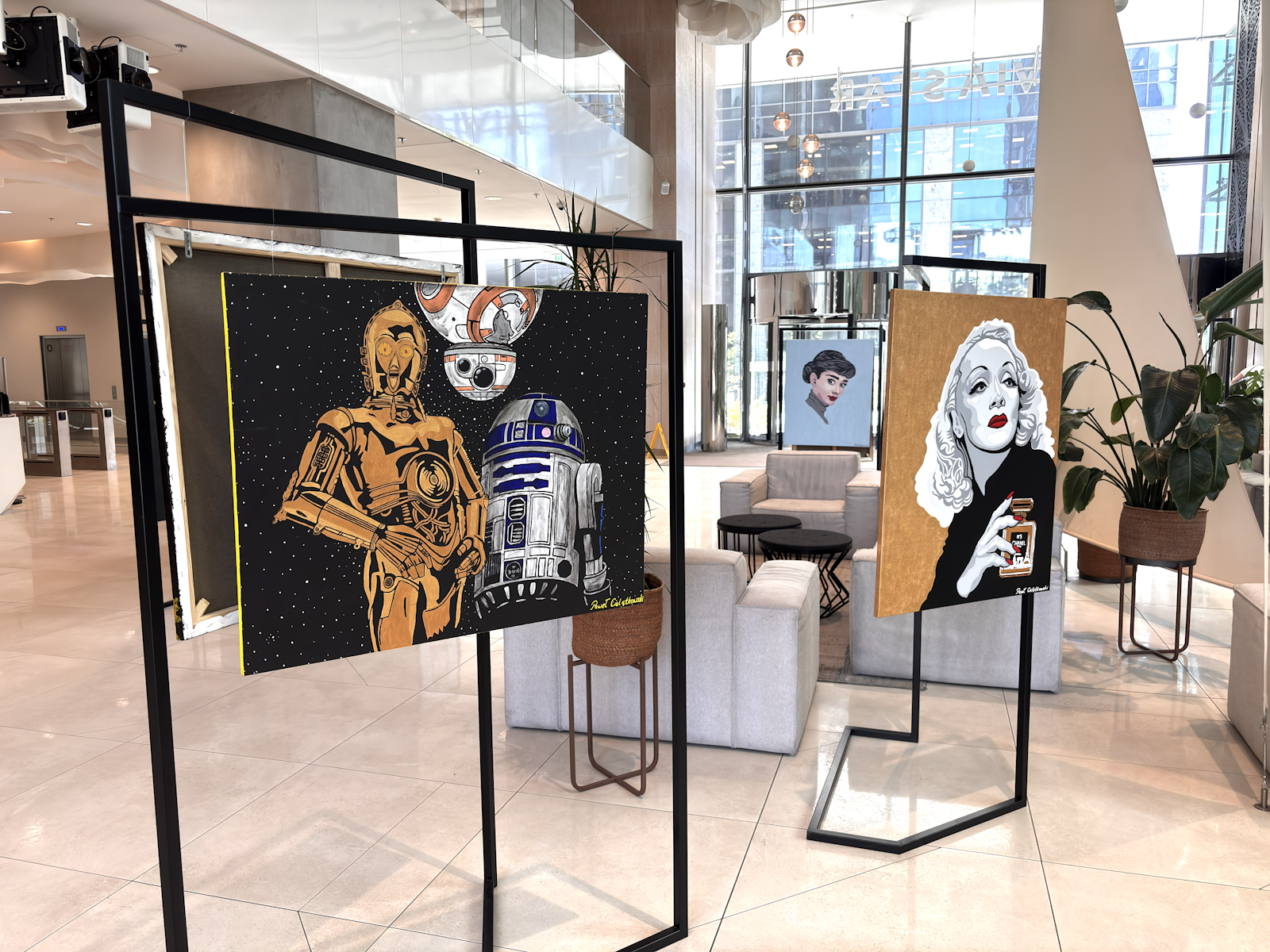
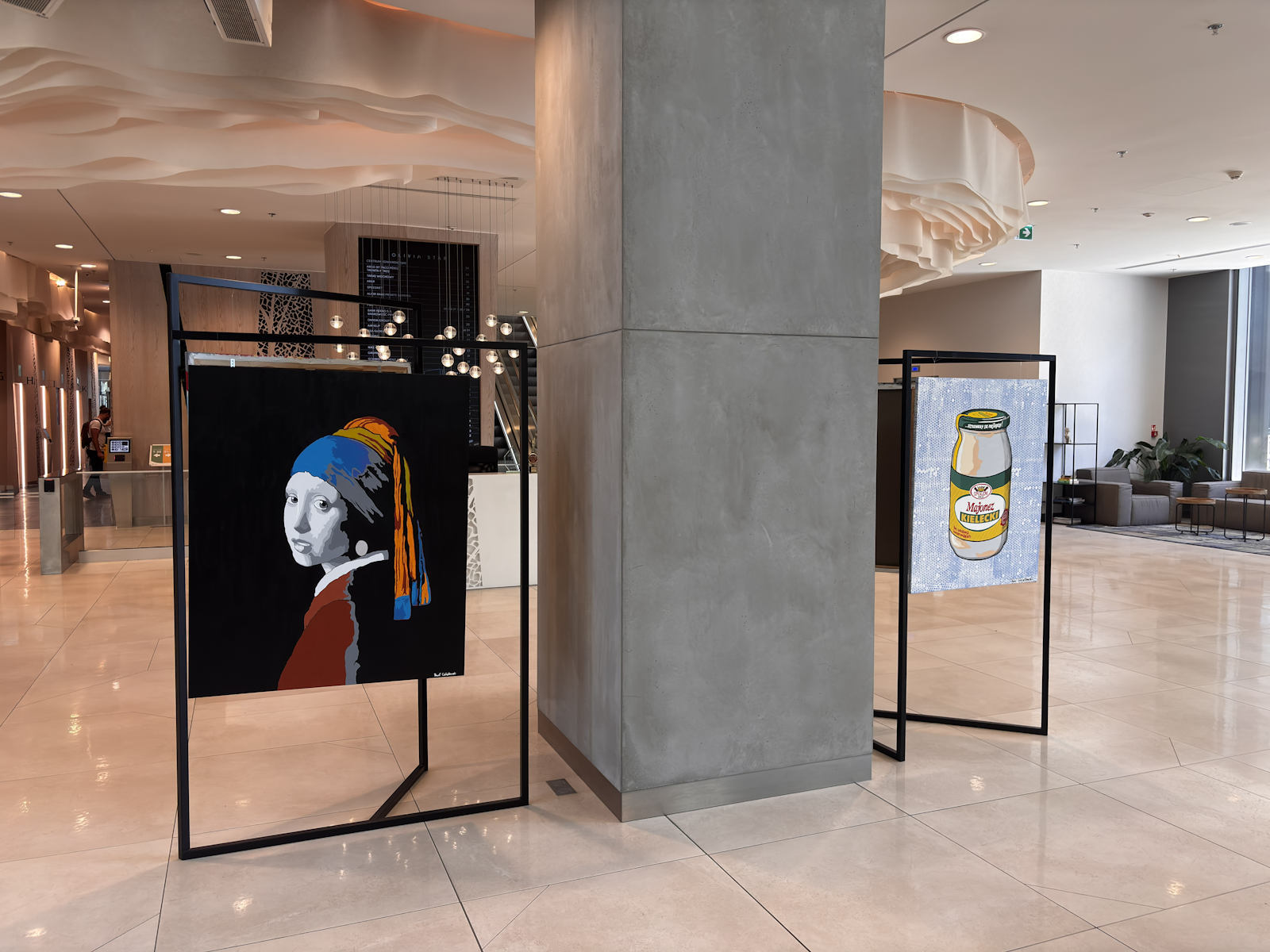
Color, energy and pop art. Piotr and Paweł Cielątkowski in Olivia Star

We invite you to the lobby of Olivia Star for the next exhibition of the Olivia Art series. The artists were born in Kwidzyn, and currently live and work in Mareza. Although painting has been present in their lives for a long time, they began their professional artistic activity ten years ago. Since then, they have been consistently developing their own, expressive creative language.


Their works are dominated by energetic abstractions, intense colors and dynamic compositions. An important part of his work are portraits of women in the style of pop art. Artists eagerly reach for strong contrasts and legible symbols, creating paintings that bring energy, movement and emotions to the space. They have presented their works in the Bay of Art in Sopot, the Stalowa Art Gallery and the Mag Modern Art Gallery in Warsaw, the Theatre Cultural Centre in Grudziądz, the Uphagen Arche Manor in Gdańsk, the Water Tower in Malbork and the Tulipános Ház Palace in Hungary.


This is not the first meeting of the Cielątkowski brothers with Olivia. Their paintings could be seen here as early as 2020. Now they are back with another presentation of their work. Welcome to the Olivia Star lobby. Admission is free.

More about the artists:


piotripawelcielatkowski.plInstagram: @piotr_i_pawel_cielatkowski
Facebook: Piotr and Paweł Cielątkowski


We opened the year 2026 with the exhibition “Between the Horizon and the Glass”, presenting the works of Aneta Iwona Oniszczuk-Jastrząbek. In the spring, unusual sculptures by the artist Stanisław Gierada were placed in the lobby of Olivia Star.


Sport and business

Competition, perseverance, concentration on the goal, the ability to work in a team – these are the qualities that characterize both athletes and entrepreneurs, which is why these two areas of life are constantly intertwined. However, what does this also translate into the real estate market? It turns out that it is quite large and can be one of the competitive advantages.


Large business centers often gather several or even several thousand employees. It is a huge, diverse community where everyone has their own interests, passions or skills. Proper management of the potential of such a large social group brings with it opportunities in the field of support for residents, integration, and often also promotion of the facility. Such projects also have an individual dimension, as Mateusz Kusznierewicz, Olympic medalist, representative of Polish sailing, says: The experience of my more than 40-year sports career has taught me that sport is not only about the development of the body: it is also important for mental well-being, for social relationships, but also for business, because sport has the characteristic of teaching perseverance, clearing your head of negative emotions, but also helping you quickly break down barriers, have conversations, share knowledge and establish relationships. Among other things, I show this in the Power Walk project, which I am currently developing: through conversations with interesting people, I want to inspire, present their history, the path they have taken, their passions and their interesting view of the world. It is amazing how many managers, managing serious enterprises, confirm in conversations during our walks that, despite their many responsibilities, they treat physical activity as something they always find time for, as it is one of the most important factors that help to cope with business challenges.


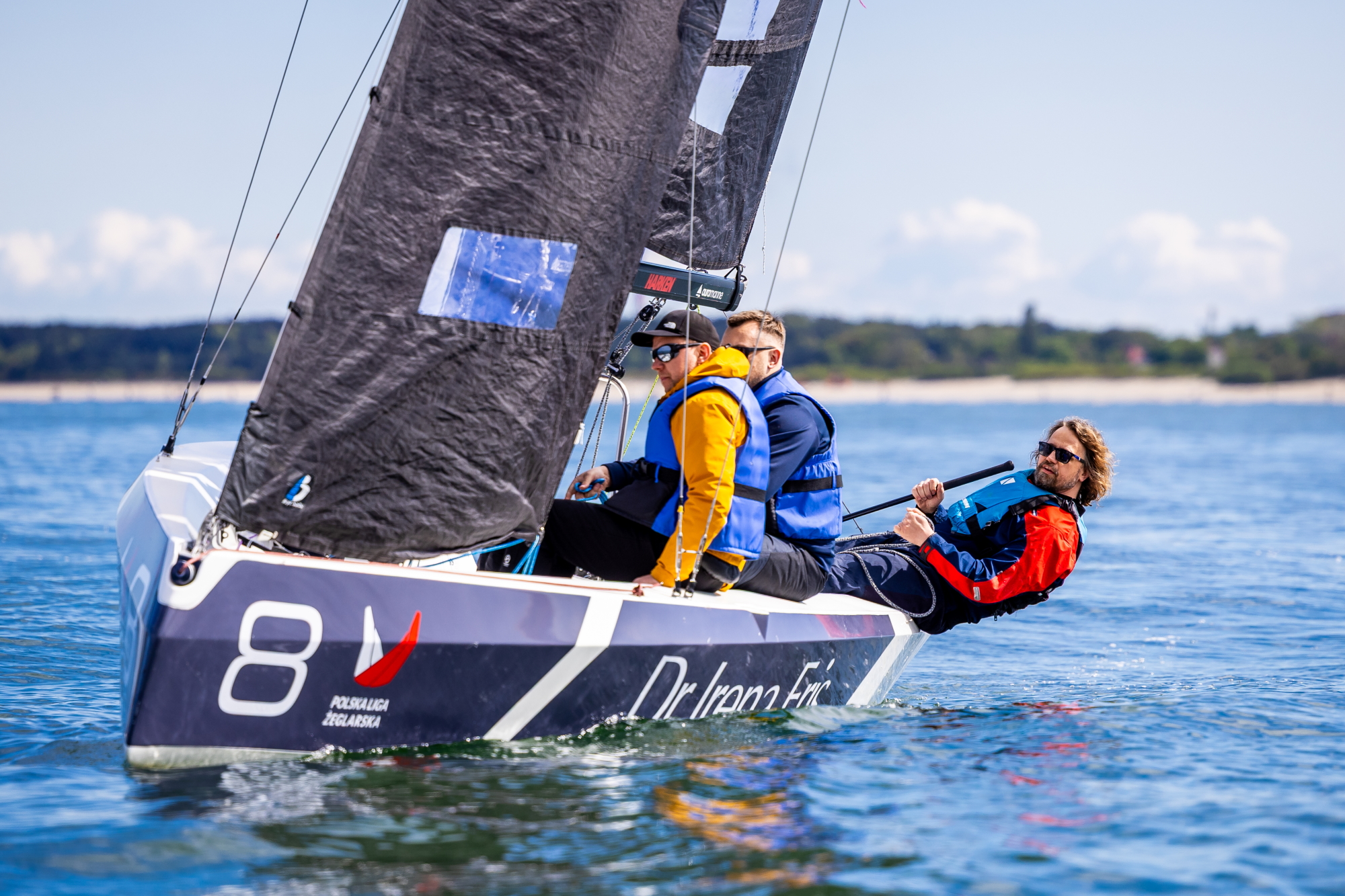
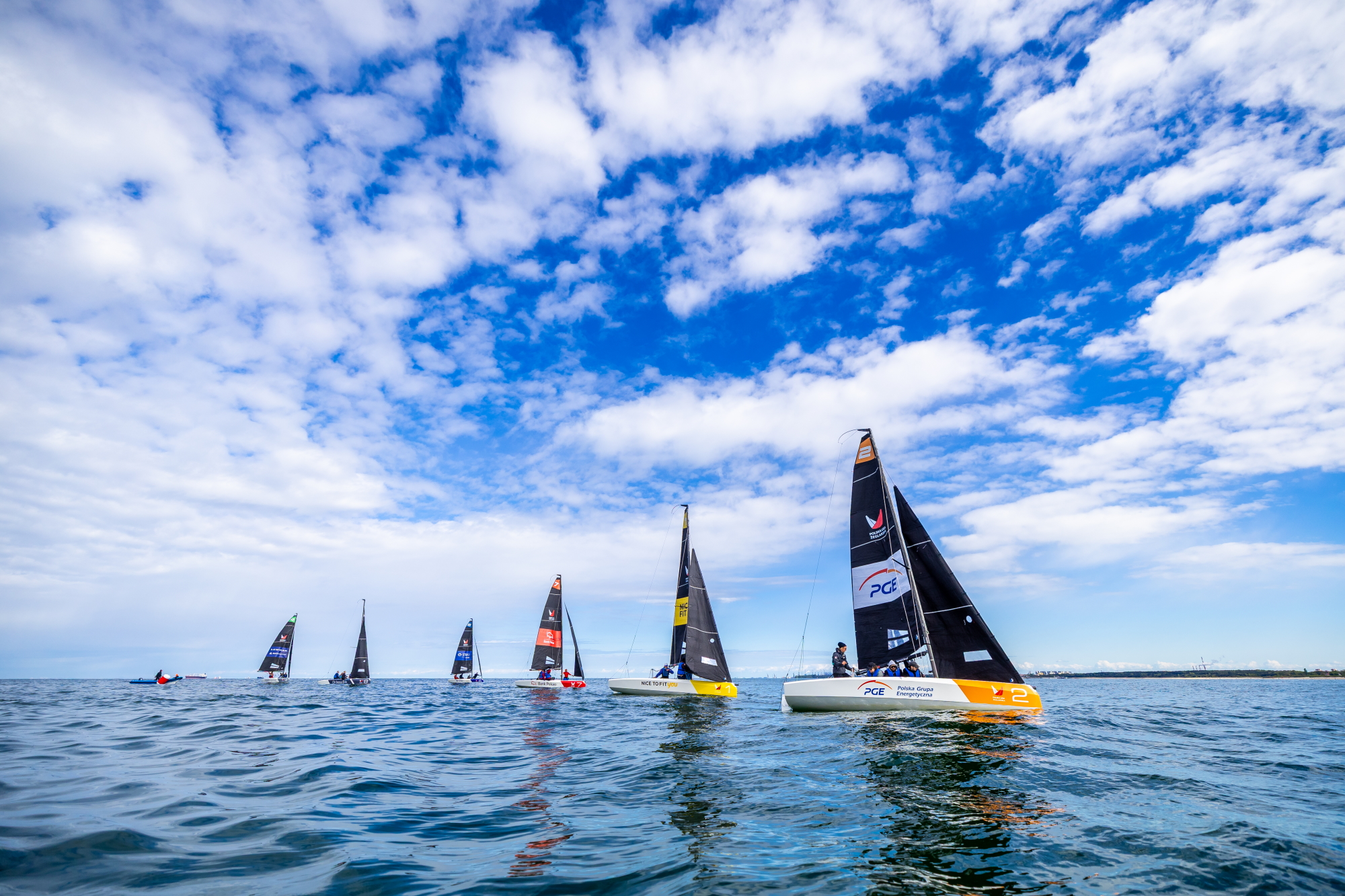
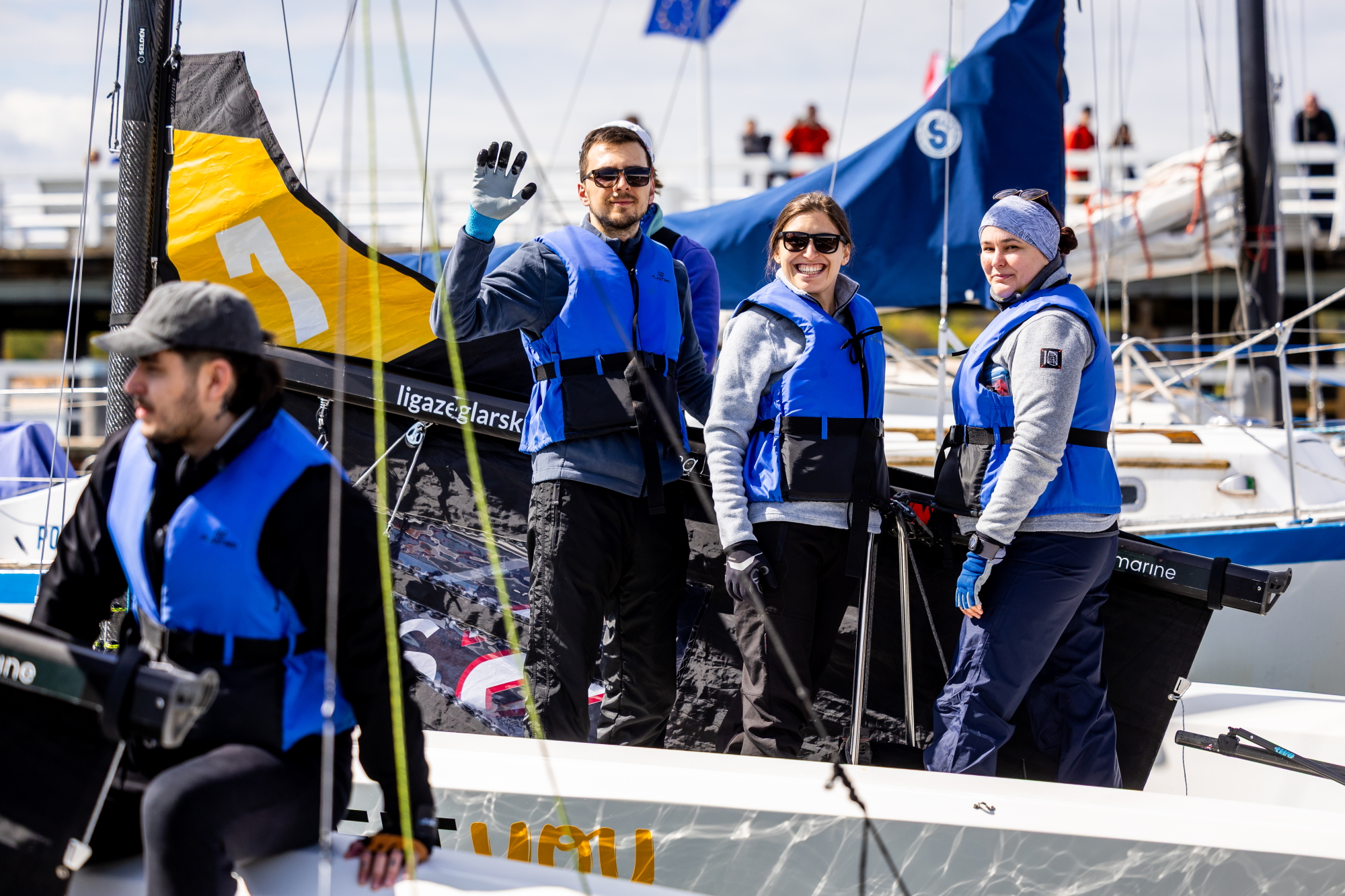
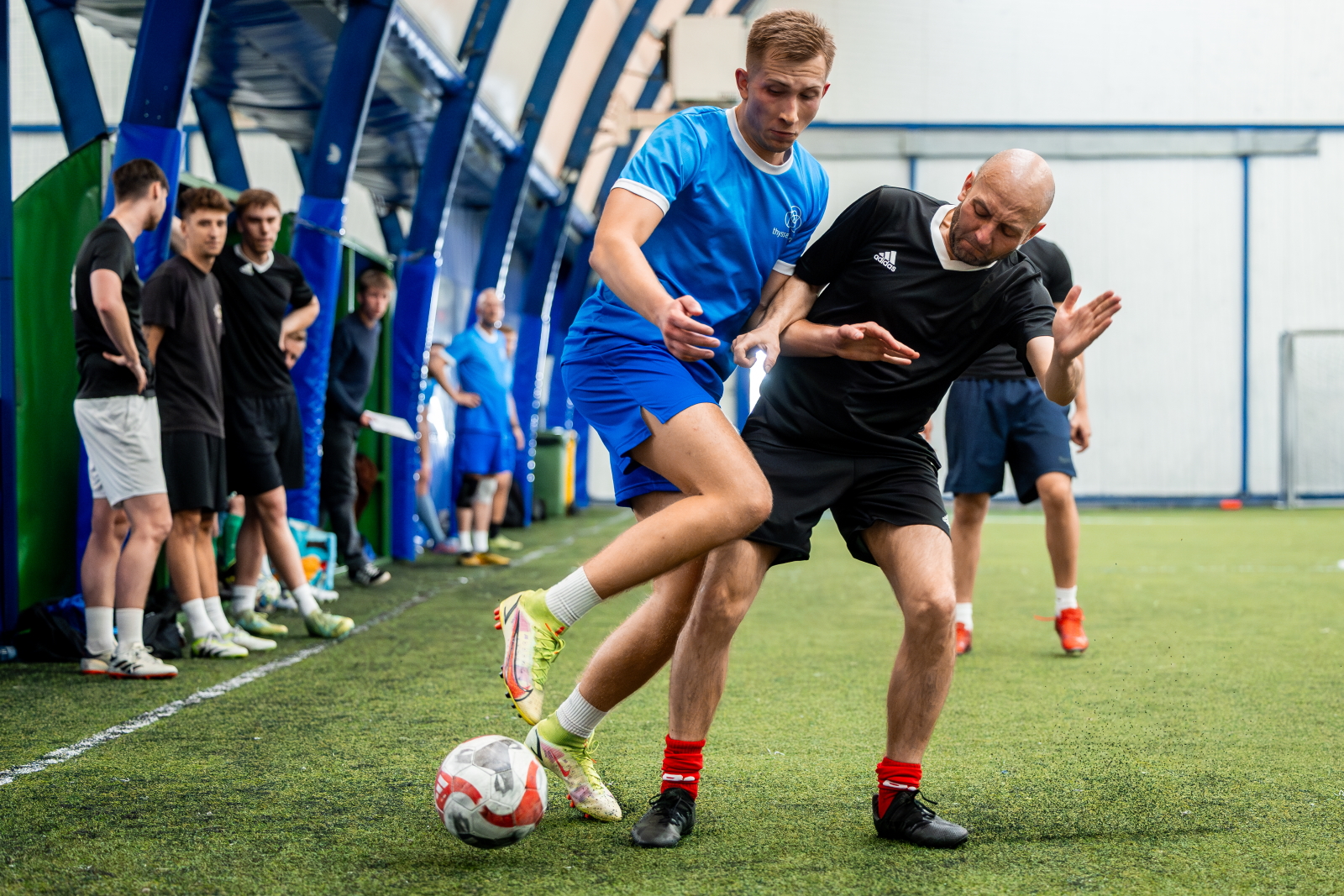
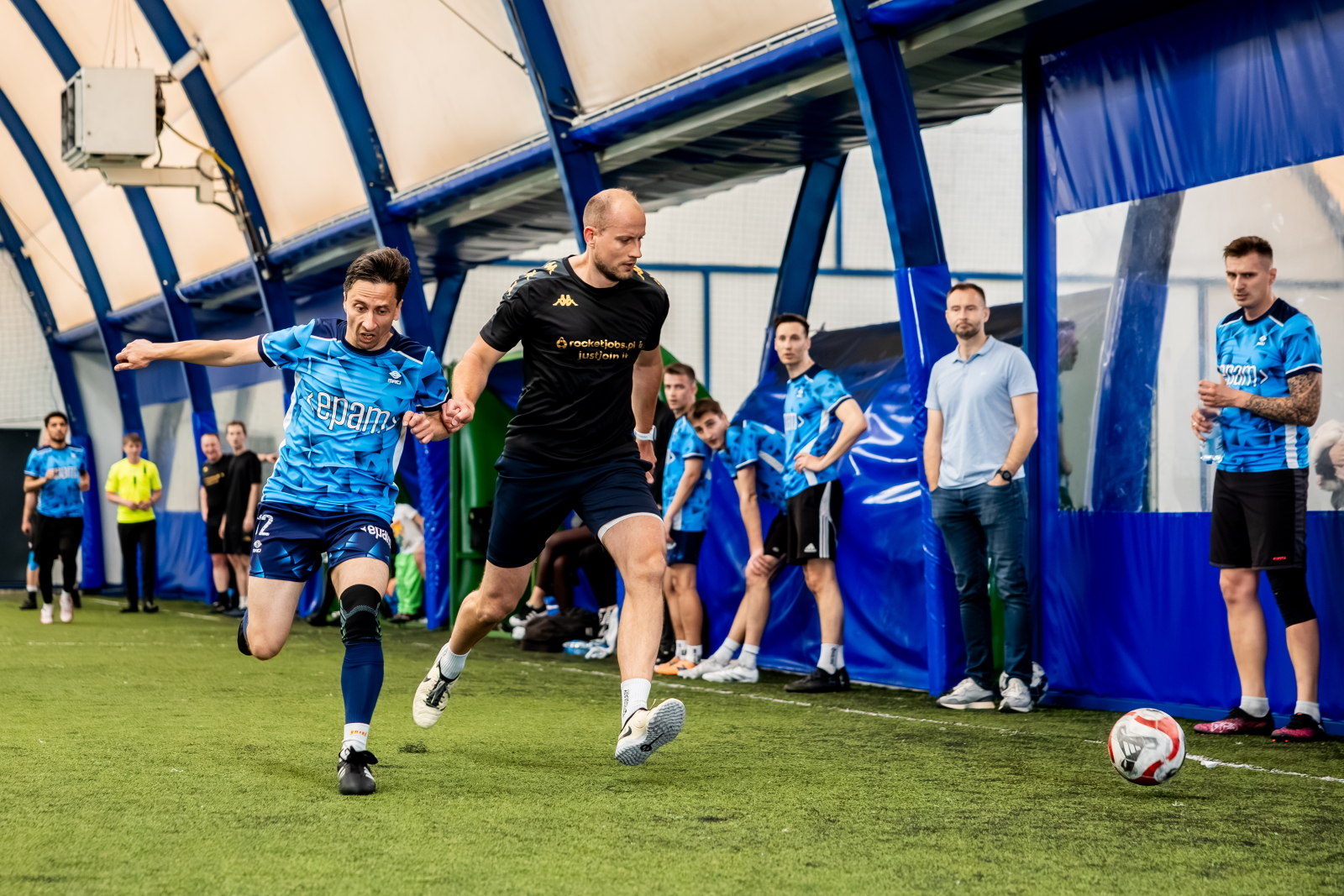
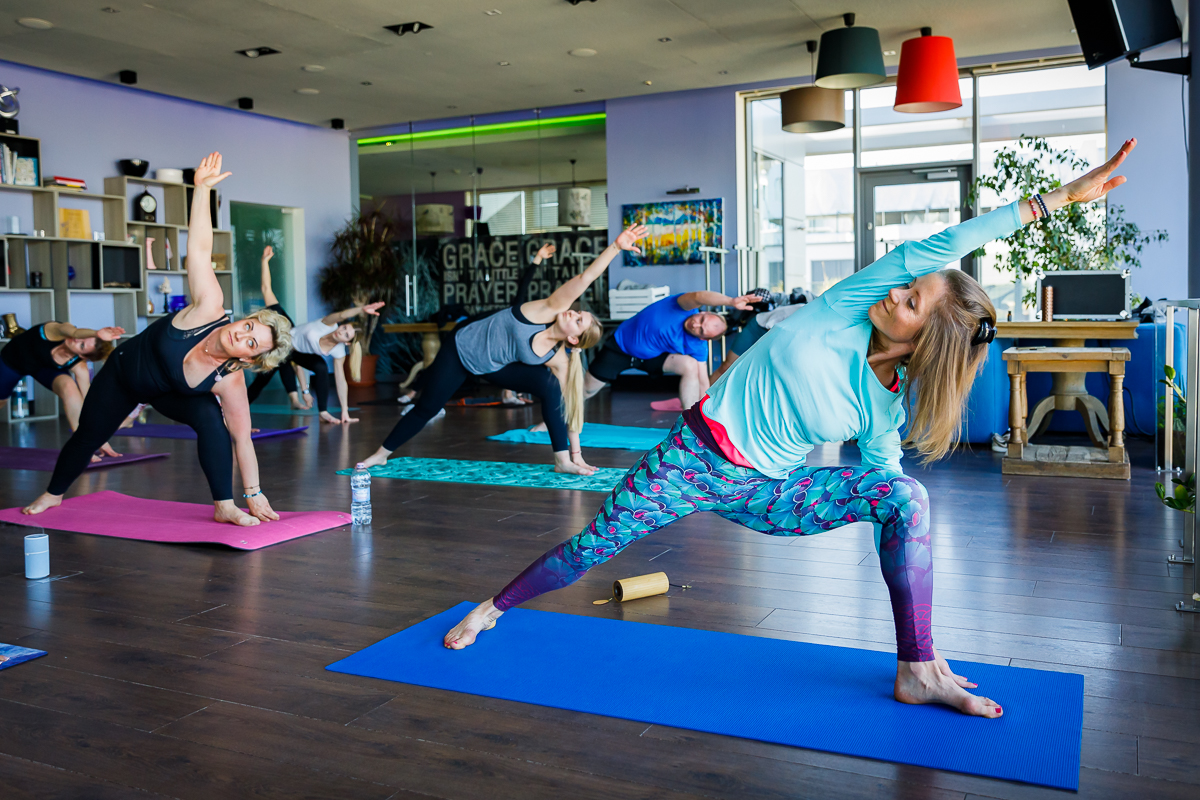
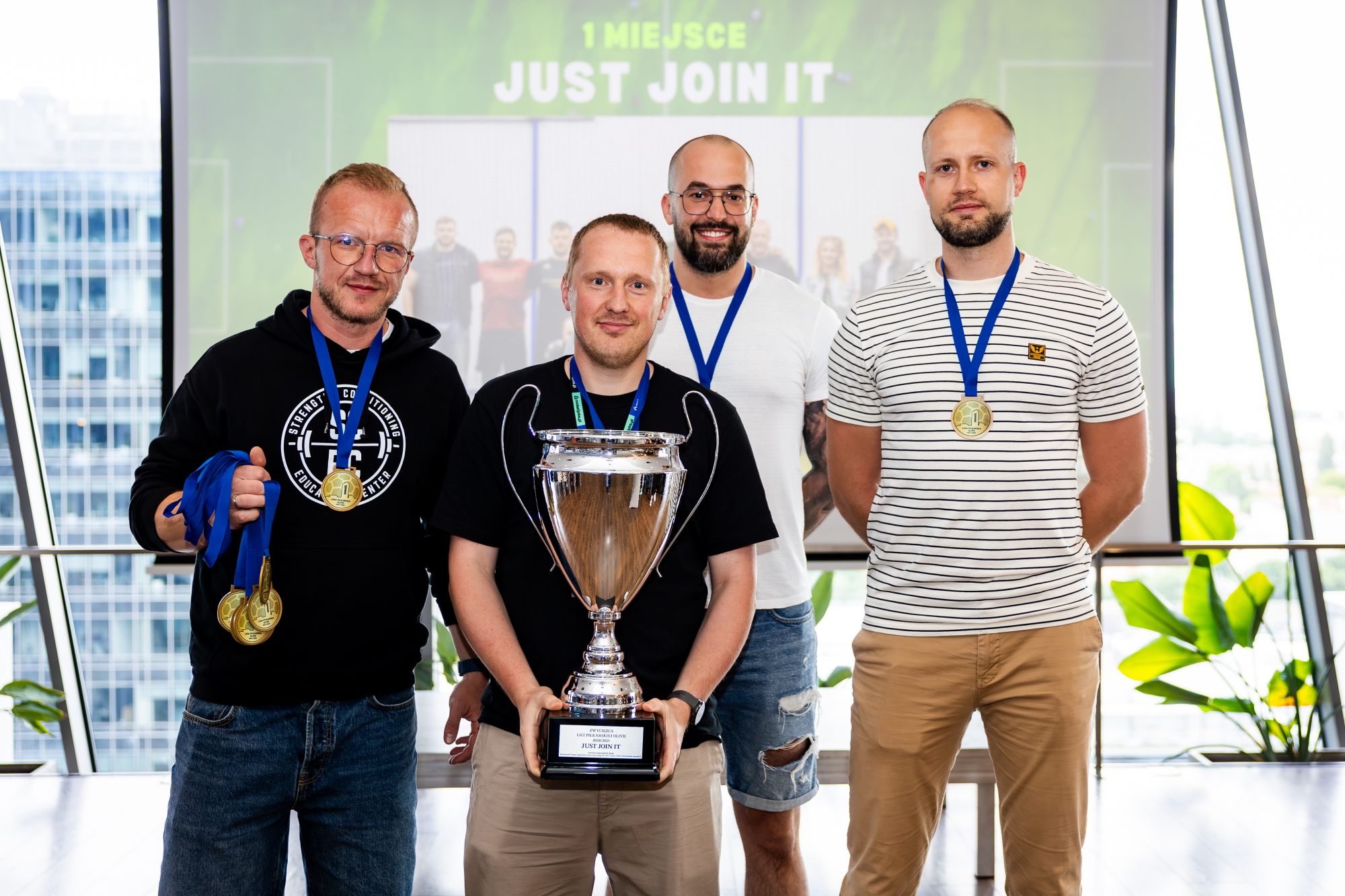
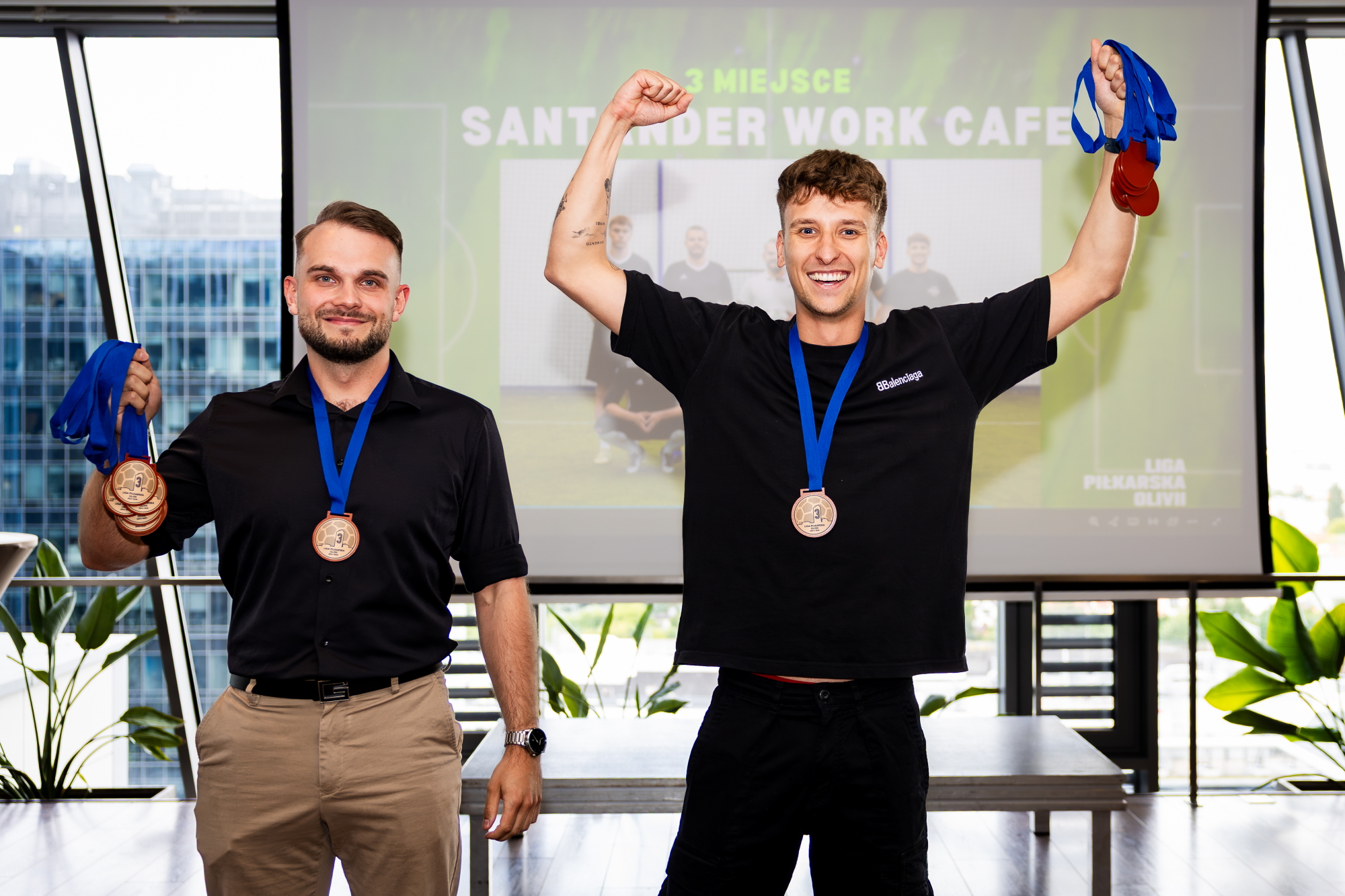
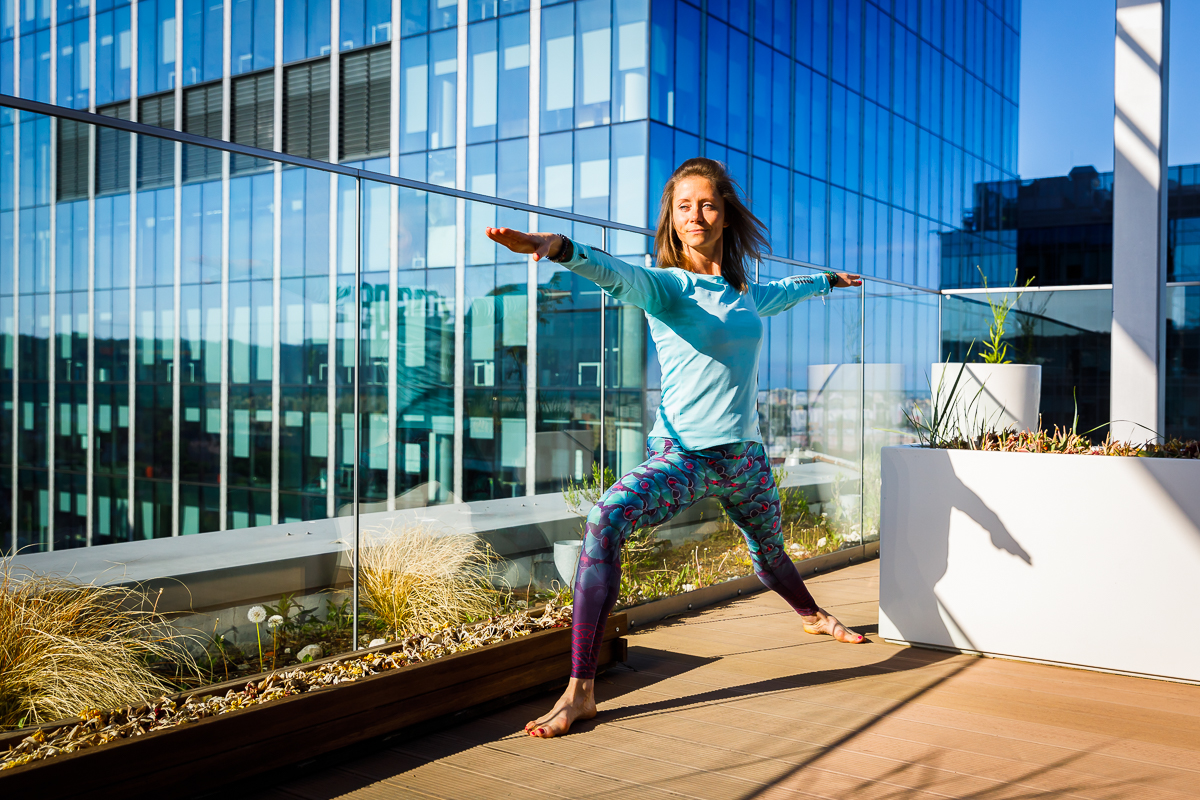
An interesting example of how to use sport for the benefit of a business center and use it to build a competitive advantage can be Olivia Centre, which is the largest Polish mixed-use facility. Its offer, addressed to resident employees, includes several initiatives related not only to sports. Interest clubs are addressed to a wide range of employees of the center, thanks to which not only can they choose the right discipline depending on their interests and level of fitness, but also take part in several different initiatives. Yoga classes are held every week , sailing enthusiasts have the opportunity to take cruises on the Bay of Gdańsk under the supervision of experienced skippers, and the longest running sports club is the Olivia Centre football league, which has been held for 13 years. It consists of as many as 12 teams, representing their companies in the annual championships. The popularity of the league is documented by the numbers: in total, there are over 50 matches per season, in which an average of 7 goals are scored per game. There are 199 players taking part in them, and the proof that the competition is really fierce are the statistics of cards handed out: in the 2024/2025 season, there were 27 yellow and 5 red cards.


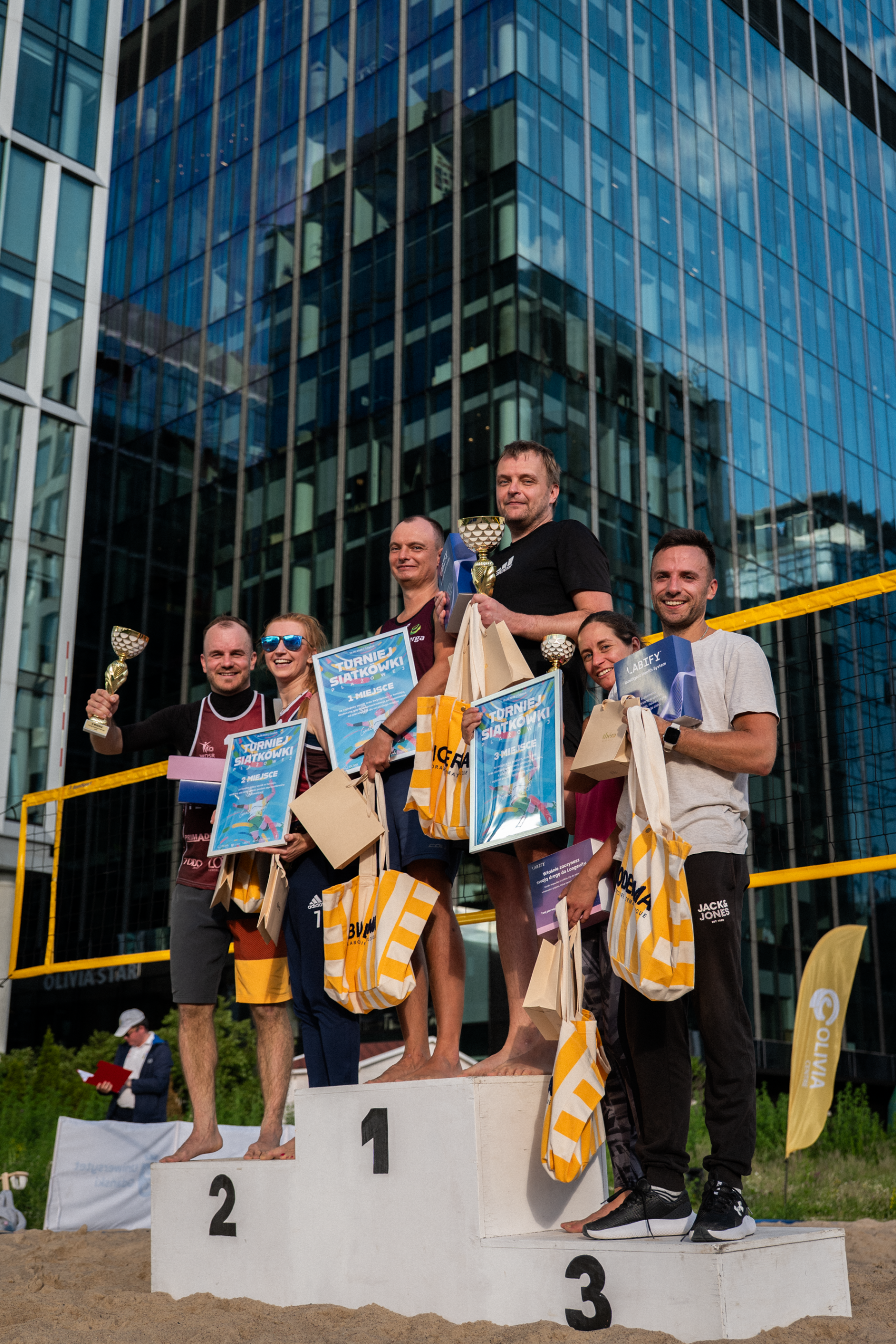
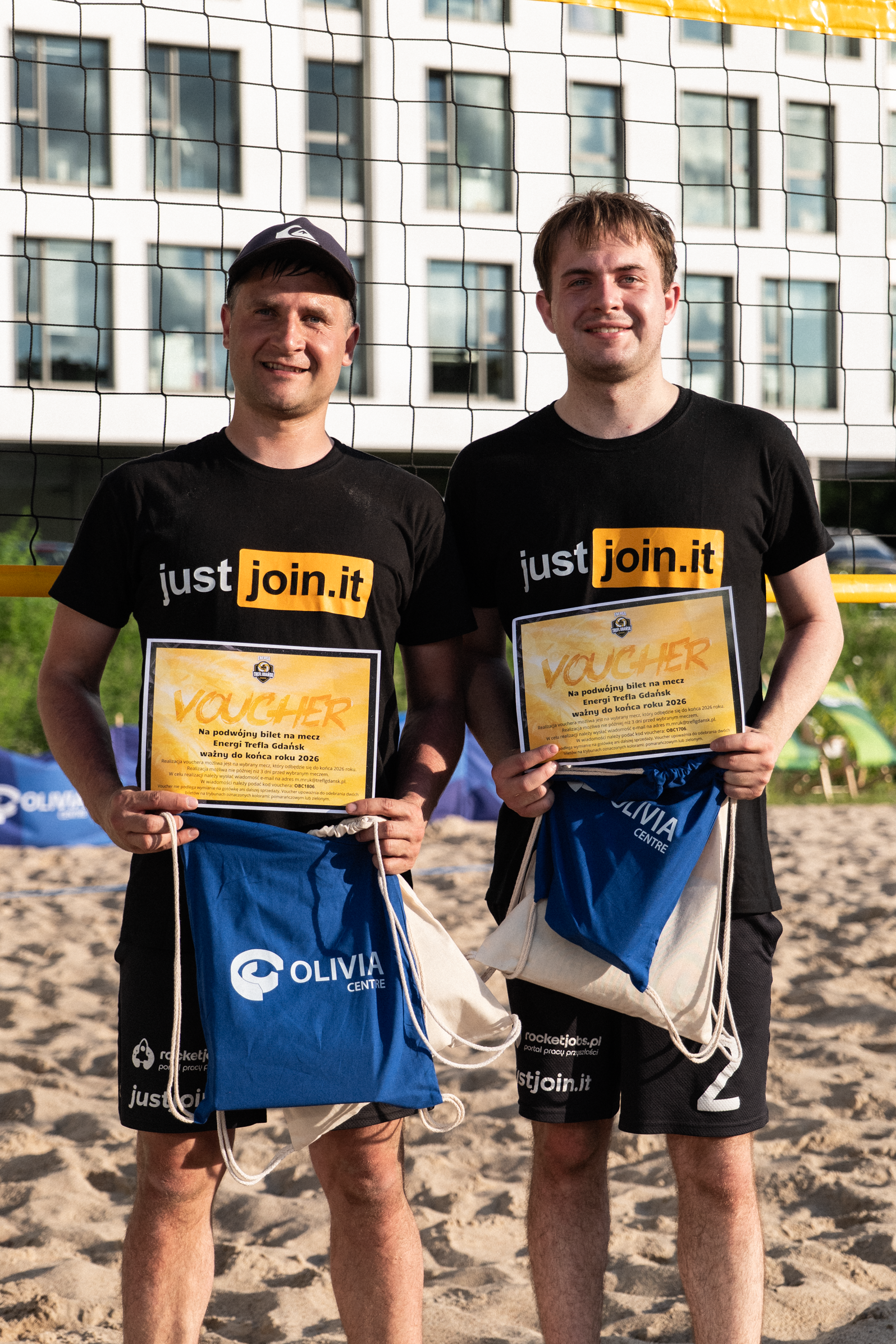
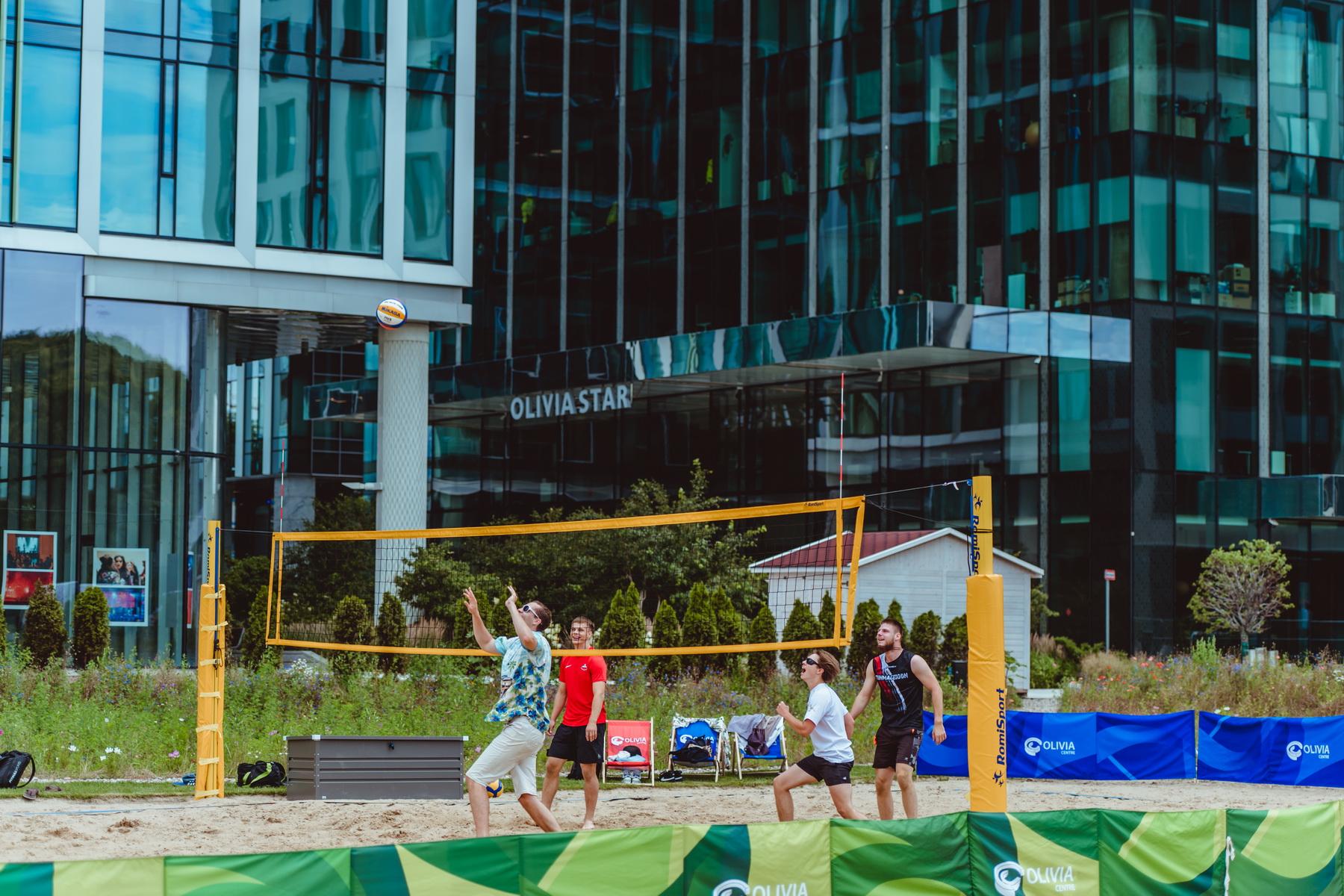
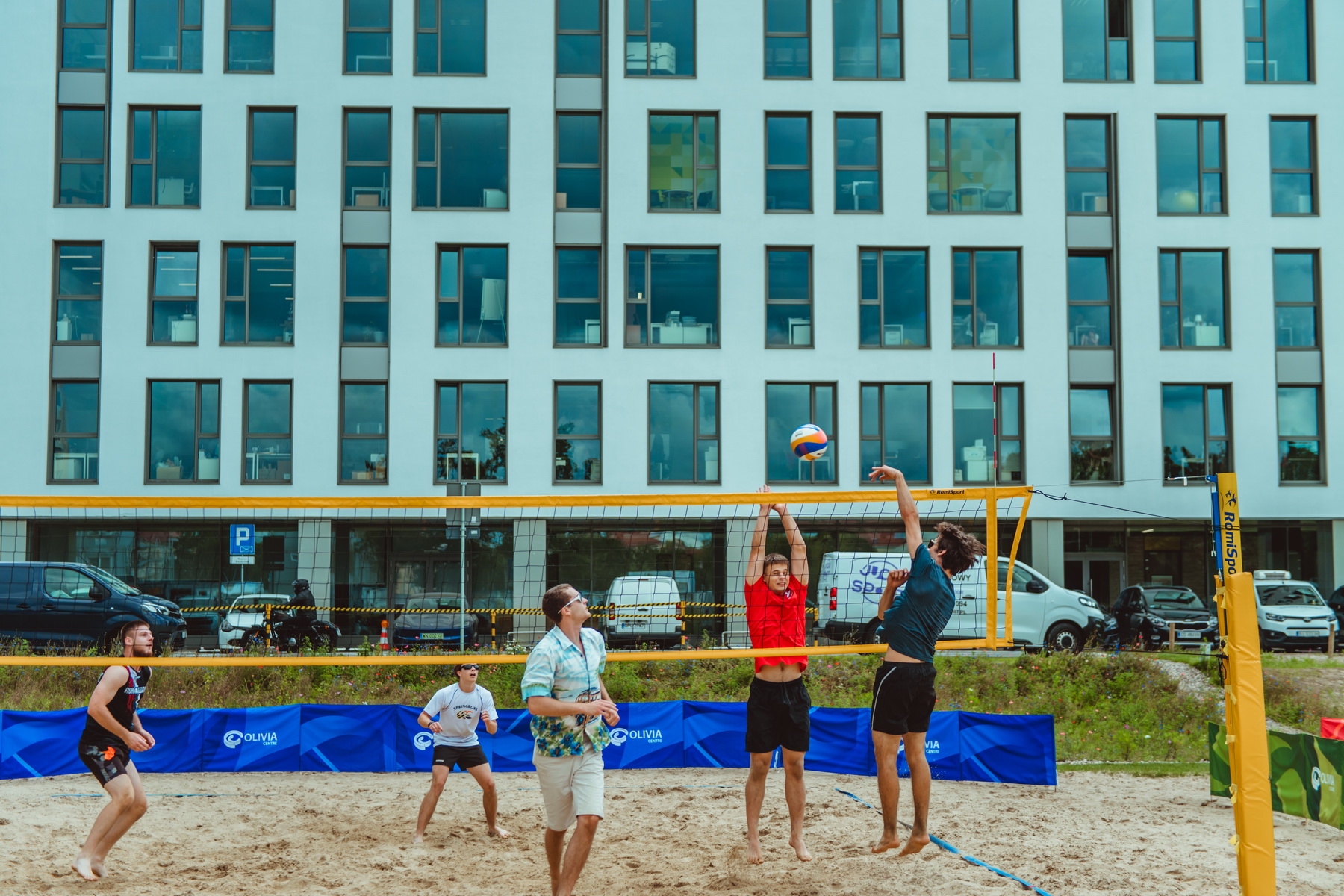
The volleyball club is also very popular, especially since two full-size beach volleyball courts appeared in Olivia. Since then, it has become one of Olivia’s most iconic sports – and one of the best examples of how work, sports and residents’ passions can naturally intertwine. The pitches are free of charge, and reservations can be made on your own using the online system. Thanks to this, volleyball quickly became an everyday element of residents’ lives. Corporate and inter-company teams organize their own matches, mini-tournaments and regular trainings. In total, in one summer season, pitches are booked over 400 times. The project has an additional dimension: the sports fields were also eagerly used by students from neighbouring schools – especially in the morning. In May, the pitches were often used by high school graduates, for whom sport was a form of relaxation before exams. This shows that Olivia’s sports space works not only for the residents, but also for the benefit of the local environment.


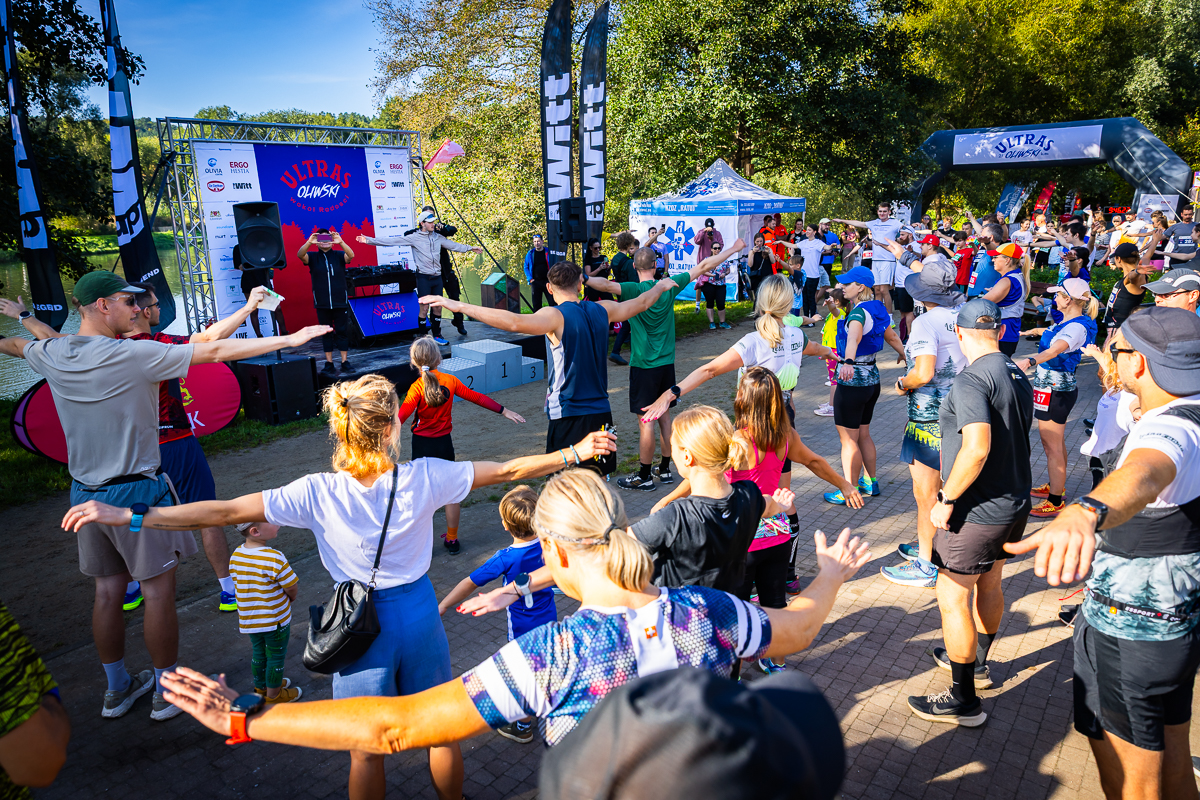
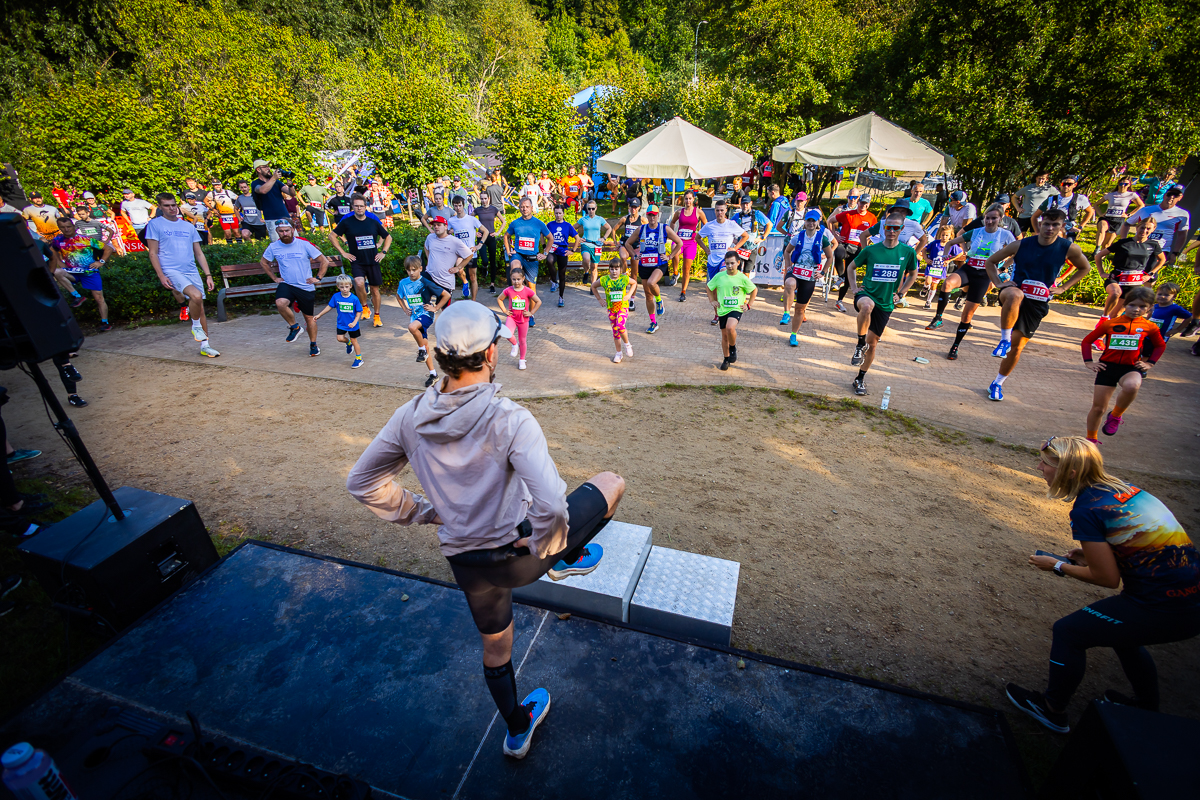
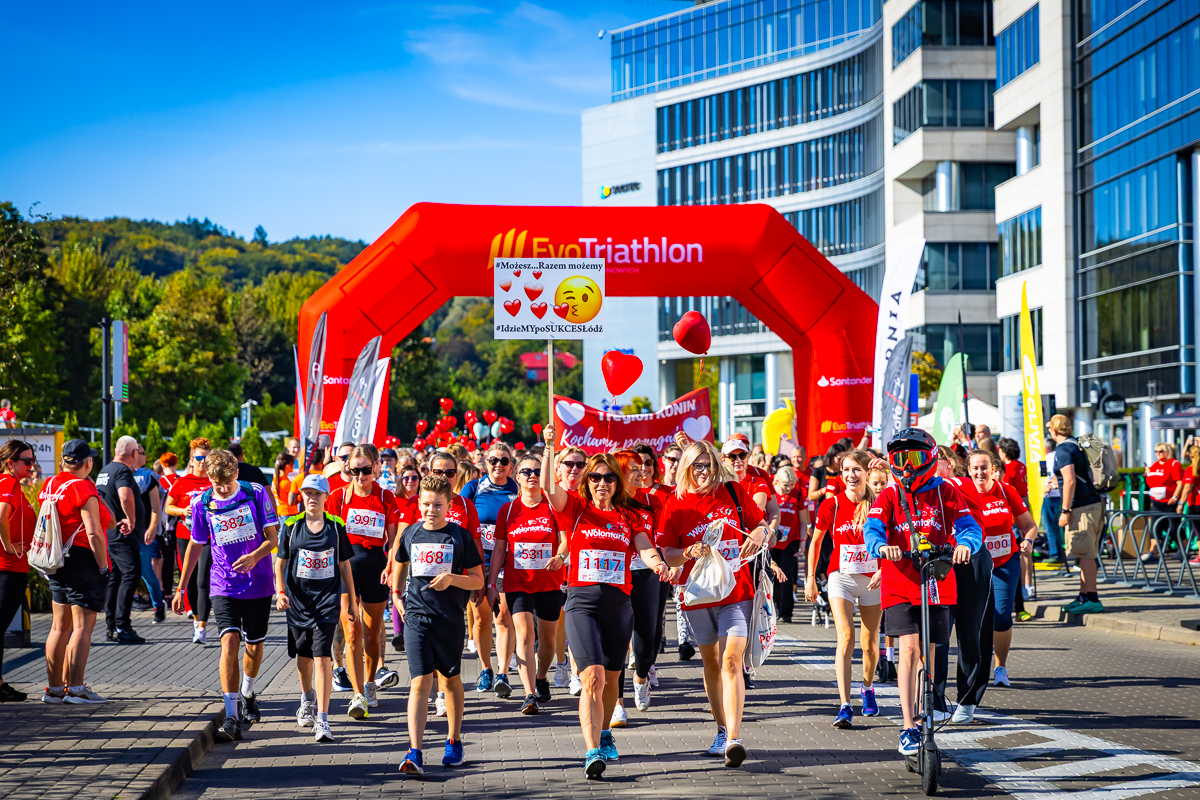
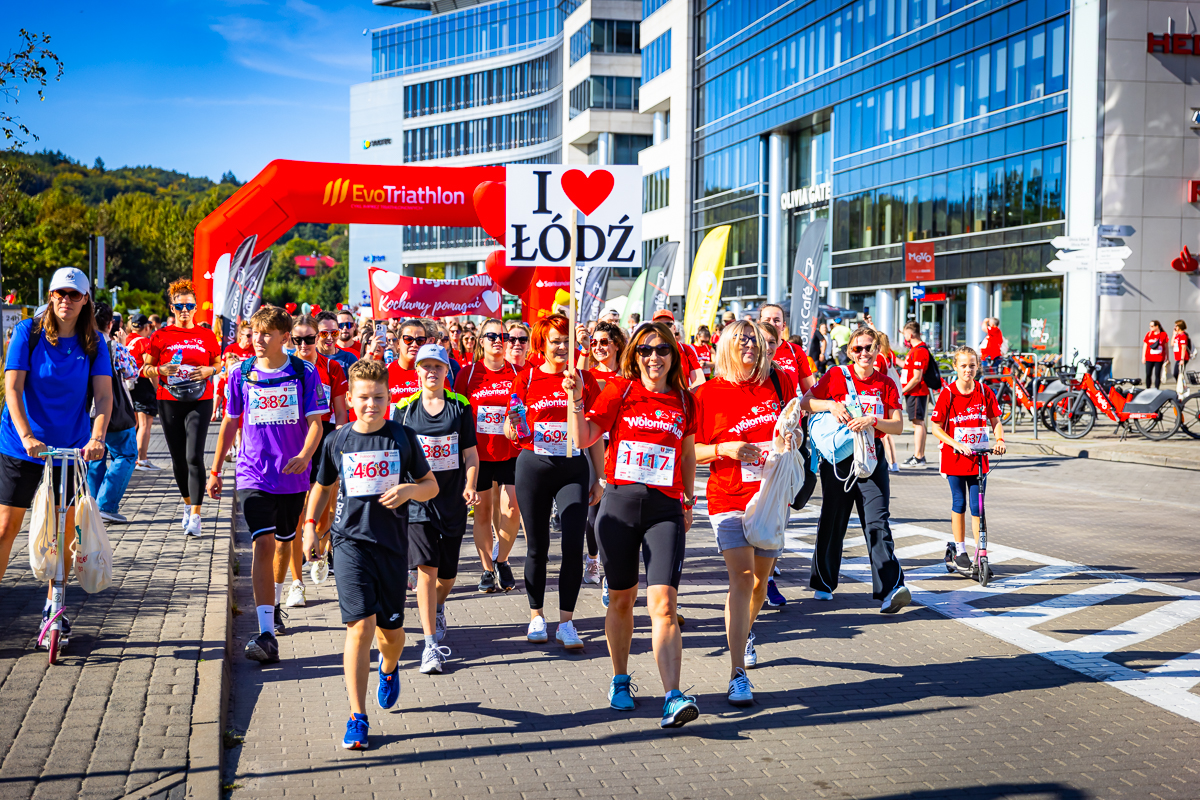
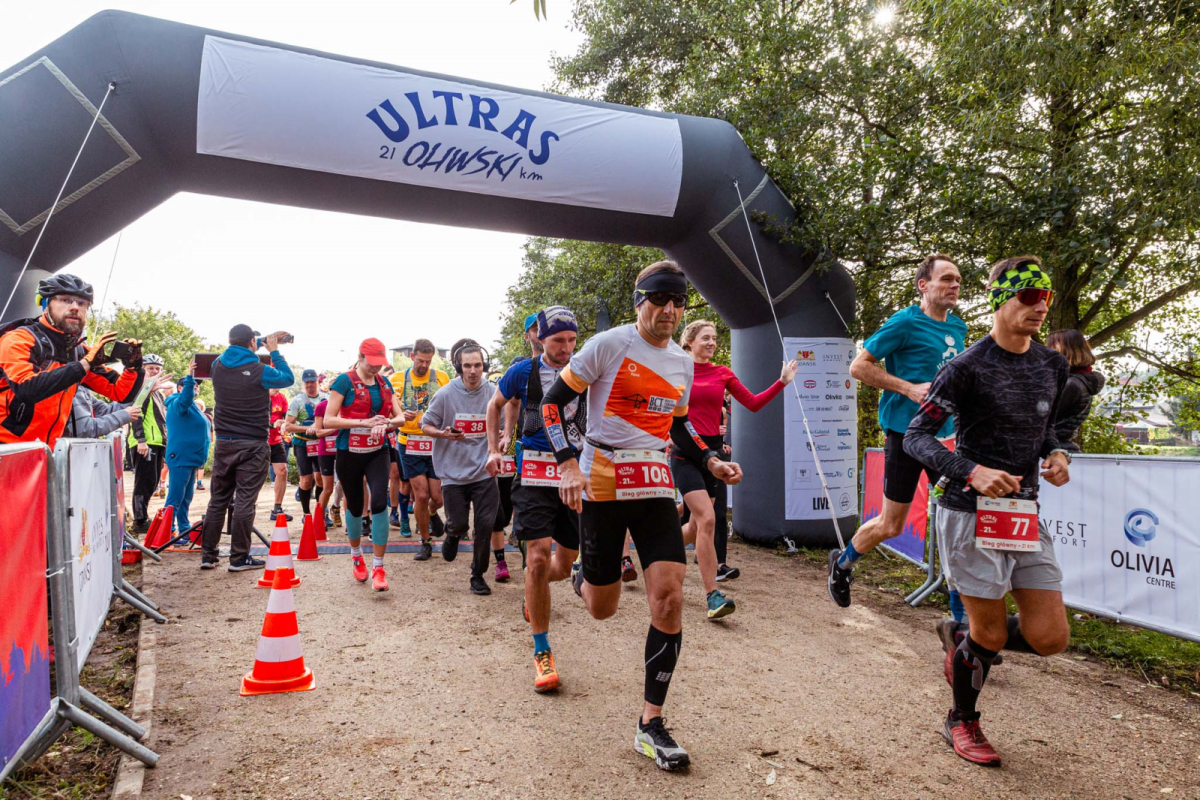
Among other sports clubs, we can also mention the running club, run by Łukasz Gałka, who has competed in half marathons, marathons and triathlons, is a medalist of the Polish Academic Championships, and today he not only trains others, but also prepares himself to participate in the World Masters Athletics Championships Daegu 2026. The club’s meetings are held twice a week, and its members prepare to achieve their own goals: improving their fitness or more ambitious plans. In the latter area, Olivia also cooperates with local organizers of sports competitions: Northern Charity Run Helps and Ultras Oliwski. You can take part in the first one by running, walking, cycling, rollerblading or scootering. There is one goal: to support those in need from the Fr. Eugeniusz Dutkiewicz SAC Hospice in Gdańsk. Ultras Oliwski, on the other hand, is a run for people who are preparing for mountain marathons and ultramarathons and for off-road running enthusiasts. The goal of the organizers is to popularize running and integrate the local community of Gdańsk-Oliwa, and Olivia Centre is a partner of this sports activity for the seventh time.


Olivia has also established a partnership with the neighbouring University of Gdańsk. Under the agreement, it became the Patron of Sport of the Academic Sports Association, which became a natural extension of the long-term cooperation between the partners. Thanks to the new agreement, sports training of Olivia’s clubs will be able to take place under the supervision of experienced AZS coaches. The surveys we conducted conveyed a very clear message – every initiative that brought employees together in joint sports, artistic or social initiatives was a factor influencing the well-being of employees – says Bogusław Wieczorek, Representative of the Management Board of Olivia Centre . What’s more, employees emphasized that interesting projects are valuable incentives for them to choose a job from the office. We compared it with the data on attendance in offices and it turned out that this is a noticeable regularity on the scale of our entire business center, which was a clear indicator for us for the development of further sports projects. Over the years, we have developed them in parallel with others, apart from sports projects, among which there are even such original projects as the Olivia Centre Choir, which now brings together employees from 18 different companies. All these initiatives have a common feature – they build satisfaction with the place that our residents have chosen to do business around sports.


Interestingly, the scale of the facility means that the group of residents also includes entities that allow for exceptional synergy and additional support for such projects. One of them is MySomi Care, which functions as an integrated healthcare ecosystem that combines clinical care, full diagnostics, supplementation (Labify) and SaaS technology in one place. The idea for its development came from the sports history of Sylwester Kłos, the founder and CEO of the company: As a young footballer, I had to end my career prematurely – classical medicine could not diagnose the source of the health problems I was facing at the time. I regained my remission only thanks to functional medicine and the school of Prof. Datis Kharrazian. This experience became the foundation on which I built Sports-Med in Gdańsk for over 10 years – one of the largest functional dietetics practices in Poland. In early 2026, after managing more than 15,000 patients in the individual care system. Today, the brand has evolved into MySomi Care – an integrated healthcare ecosystem that combines clinical care, full diagnostics, supplementation (Labify) and SaaS technology in one place. Patients come to us with symptoms that they hear in the standard system that they are “normal”: a decrease in sports form, chronic fatigue, brain fog, autoimmune, hormonal and skin problems. The company provides support for people in need of medical care, but also for athletes. We work on functional (not laboratory) scopes, full diagnostics and proprietary ETAP protocols – emphasizes Sylwester Kłos. The strongest proof of effectiveness are the athletes of the highest level who have entrusted us with their health and results – m.in. Przemysław Frankowski, Maria Andrejczyk, Paweł Wszołek, Sofia Ennaoui, Tomasz Gębala, Krystian Pieszczek.


Flexibility – the key word of the office market

The office market in recent years can be summed up in one word: volatility. The pandemic, the change in the model of work from office to hybrid, changes in energy costs, labor codes, labor costs and the entry of artificial intelligence mean that “flexibility” can be announced as the key slogan in the commercial real estate sector. The winner is the one who can listen to the market and adapt to changes. This is not only a tip for everyone who runs a business, but also for the entire business support sector: from suppliers of office supplies or fruit for the office, to the owners of the largest business centers. With the level of volatility observed in recent years, each of these industries had to learn to function in the new reality.


The changes that we all observe cause the need to hire, lay off, select space or release it, and incur the costs of office rearrangement. And with such dynamic external conditions, these activities often require really considerable operational skills and meeting the considerable costs of these processes.


It is for these reasons that the choice of the location where the business is conducted is crucial. The realities of recent years mean that our Residents need a partnership approach and understanding of their current needs and even more flexibility – says Michał Klepczyński, Director of the Commercialization Department at Olivia Centre. – In previous years, there were more frequent situations when companies were growing dynamically and needed effective support from us in the area of space selection. As a rule, this is not a challenge if the space is available within the same building. The problem arises when the demand increases during the ongoing contract and the possible development options are only available in other buildings. Olivia was created for such tenants, where 180k m2 of space is in the hands of a single managing entity that designs, commercializes and manages all space. This allows us to move growing residents even during the term of the lease agreements and allow them to develop on a new larger space within a single building and contact.


Currently, such dynamic growth scenarios as in previous years occur less frequently, companies scale more slowly, and the growth of their business is not always associated with an increase in demand for space. Due to the persistence of the hybrid work model, companies much more often need support in optimizing the leased space, and this raises a number of challenges, also on the part of the facility manager. The scale of the challenge is well known to architects, interior designers and contractors, who are responsible for adjusting the space to the standards expected by new tenants. The tasks they face are important, because even if the offices they are handed over are finished to a high standard, the new tenant has their own preferences and it is not uncommon to need a significant rearrangement of the space before it is possible to move into the vacated office. As confirmed by Artur Kuczyński, responsible for the Design Anatomy design office, as well as the finishing company Construction +, the number of such orders is growing every year: Every year we rebuild tens of thousands. m.kw. different types of surfaces. However, by working in the design & build formula, we can significantly reduce the budgets of these tasks and have a very flexible approach to project implementation. Experience has taught us to organize processes in such a way that instead of generating unnecessary costs, we focus on making the most of the potential of the existing spaces. Working together with the client allows you to provide comfort and peace of mind for both customers and the owner of the facility.


An example of smaller-scale development is Sea Global, which provides engineering and technical consulting for the energy industry, particularly offshore. For Sea Global, choosing the right work environment and business environment remains an important part of its development. Sea Global has its offices in Olivia Centre, which is adjacent to other companies from the energy sector, such m.in: Polskie Sieci Elektroenergetyczne, Energa from the Orlen Group, as well as a branch of PEJ, responsible for the construction of the first Polish nuclear power plant, and a number of other potential co-operators and companies providing business support services. As Angelika Gojdycz, Operations & Marketing Specialist at Sea Global, emphasizes, the conclusions from the choice of the location of the office turned out to be a very good direction: From the beginning of Sea Global’s presence in Poland, the location in Olivia Centre was the first and logical choice. An important element was also the efficient functioning of the office space and access to fully equipped infrastructure. The whole thing was complemented by the commitment of Olivia’s team and their openness to the needs of the community, which translated into a comfortable and well-organized work environment.


Representatives of other companies also speak in a similar tone. Kamil Parafiniuk, a member of the management board of Develocraft , emphasizes that one of the goals that the company has set for itself since the beginning of its existence was to find a location thanks to which they could develop their business: We chose this place because we want to be part of the vision that Maciej Grabski initiated in 2011. This is where the business heart of the Tri-City beats. By choosing Olivia, we have become part of the largest business hub in Northern Poland. We are continuing the strategy launched in 2025, which aims to attract foreign investments to Polish, with particular emphasis on the potential of Gdańsk. A prestigious location, which we indicate as a priority when inquiries from investors, is a big advantage. What is worth adding is that there are many companies in Olivia that have started working together, thanks to the same place of business.


It also happens that companies try to look for subtenants on their own, but this rarely brings good results due to the lack of knowledge of the market and the lack of human resources experienced in this type of processes. These are often difficult and time-consuming procedures, requiring first finding a new tenant, and then coordinating financial, legal and technical issues related to the division and adaptation of space for both the applicant and the new tenant – says Michał Klepczyński. From the perspective of the facility manager, we have to look at the rental rate in the remaining buildings. To put it simply – supporting the tenant and introducing him to the office during the term of the main tenant’s agreement means that we resign from filling another vacant space in the complex. When approaching cooperation in the long term, because this is what we try to operate in – it is the partnership approach, flexibility and support in difficult situations that build our reputation on the market, and above all, create relationships and trust. This is often one of the foundations when choosing Olivia as a place for further business development.


Additional opportunities for tenants are provided by the presence of a coworking facility in the facility, the lease rules of which are generally much more flexible than standard offices, and often it is coworking that is an excellent solution during transition periods, or during the implementation of longer projects by tenants. Special events organized by coworking spaces for their community are also an added value. Events, workshops and conferences serve to expand knowledge, but above all to network and business development.


As Marta Moksa, director of O4 Coworking at Olivia Centre, emphasizes, flexibility is inscribed in O4’s DNA: When we study the satisfaction of our customers, it is flexibility, openness to tenants’ expectations and their needs that are among the first associations with us. However, flexibility is always emphasized as the most important factor determining tenant satisfaction. And we interpret it in many ways: the first is a flexible form of office rental. That is, renting office space for short periods, with the option of changing at any time. A change can mean quickly choosing a space for a moment or permanently, reducing it or even giving it up in moments of turmoil. This possibility of looser bonding is crucial for many bosses – recent years have shown that you can have 10 employees in one month, 40 in the next, and then go down to 5 in a moment. Thanks to a flexible contract and having almost a hundred offices (from 3 to 36 people), we are able to be a key operational partner of our Clients. This group of needs also includes large corporations implementing temporary projects or opening new branches in the Tri-City. It is also important for them to be able to use the space for a few months, and finally rent their own office, most often in Olivia Centre.


O4 Coworking | Olivia Star


As Marta Moksa emphasizes, flexibility is also the need to respond to the ever-changing needs of customers: We have learned that nothing is impossible for us. Integration event? We will help! Development workshop? We will implement it. Recruitment, especially of young people? That’s why we’re doing the 8th edition of Speed Recruitment Dating. Building a network? That’s why we have conferences that have already become a permanent part of our calendars: LeadWell and Captain’s lunch. Sometimes there are also such unusual requests as renting a ping-pong table, and we can also meet them.


The development of a flexible form of business support is an added value in large office centres, offering opportunities that a smaller supplier will never provide. It not only allows the companies themselves to grow, but also affects the competitiveness of the center, and experience shows that flexibility and a wide range of support are important for both SMEs and large corporations.

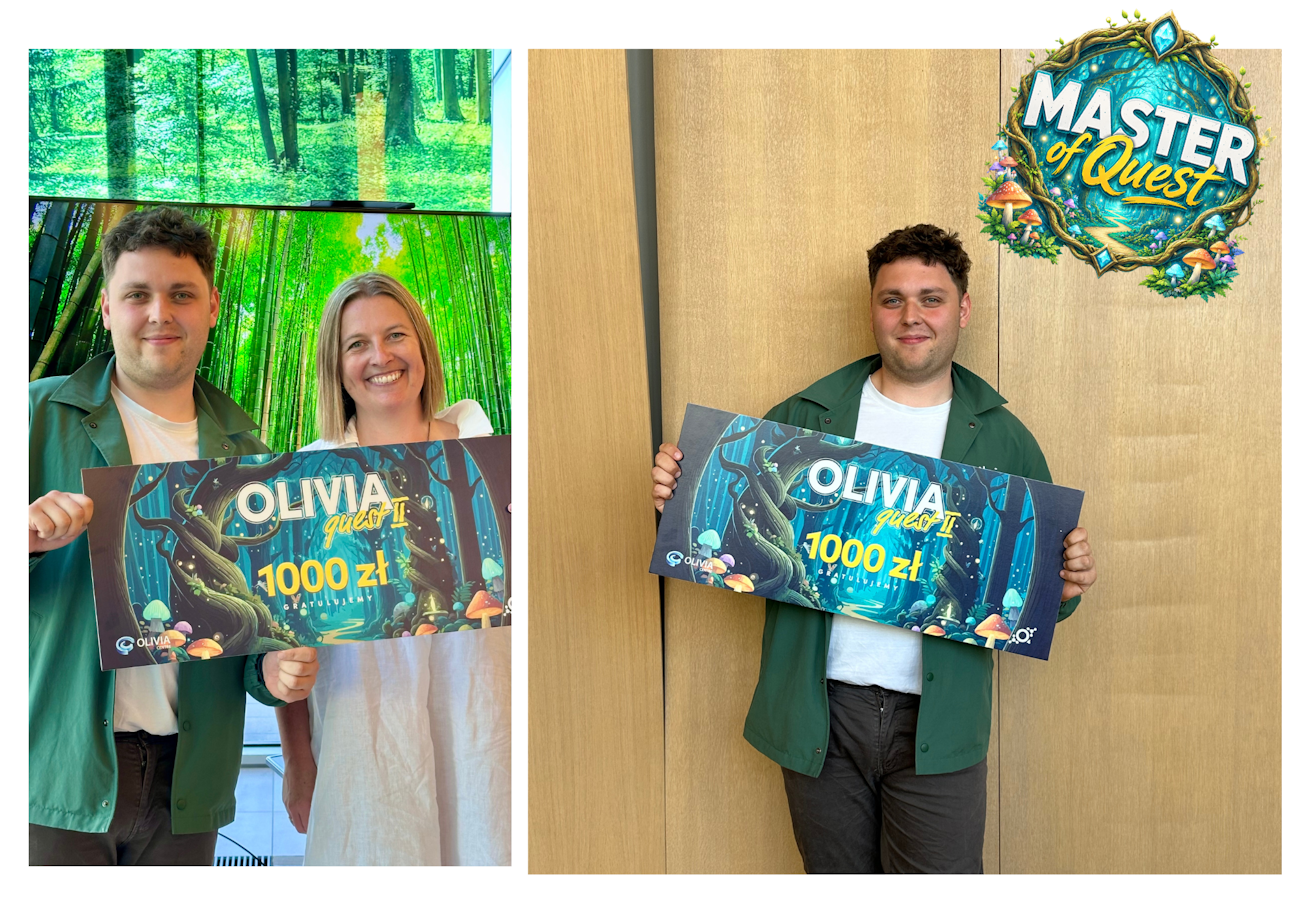
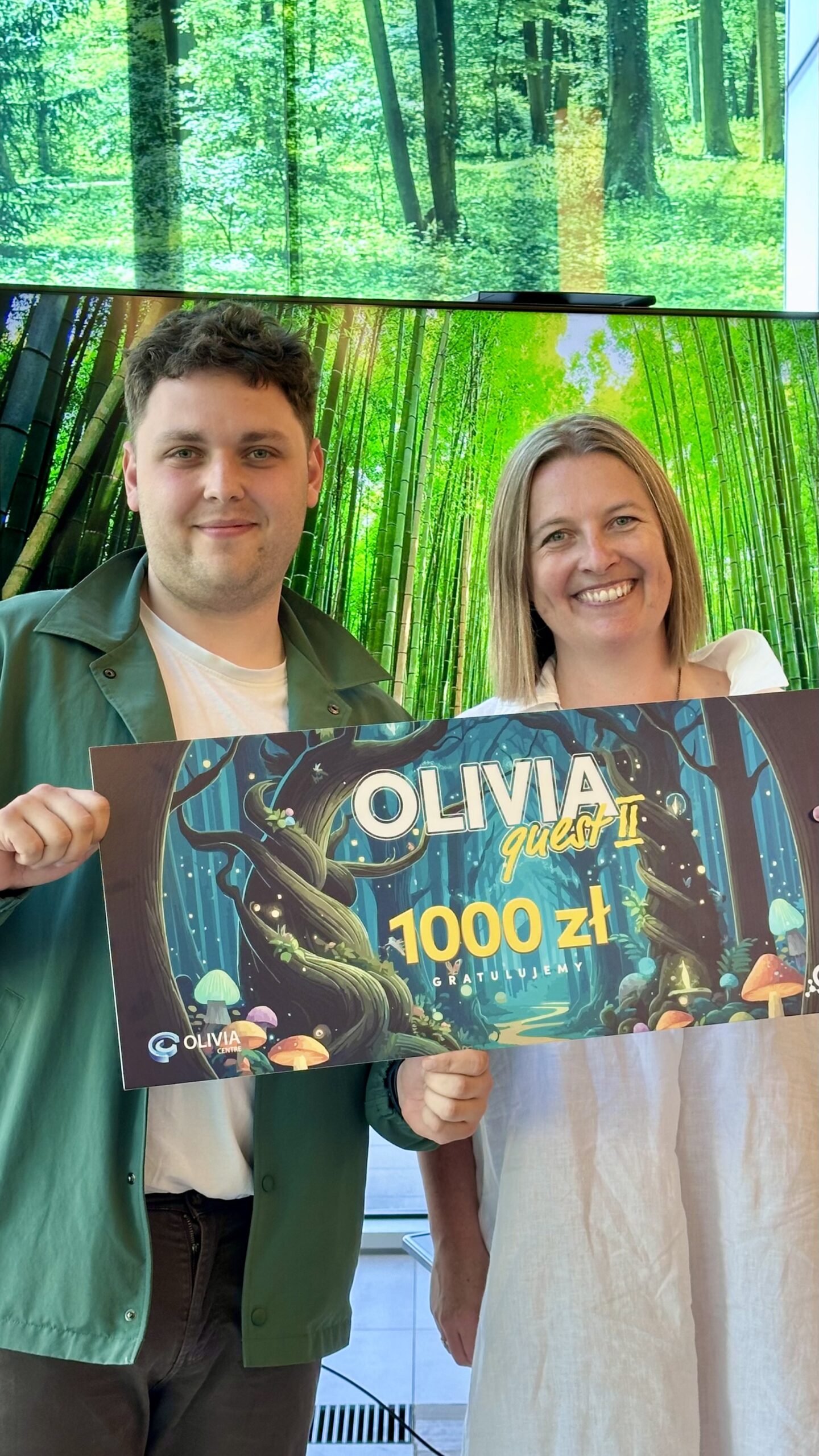
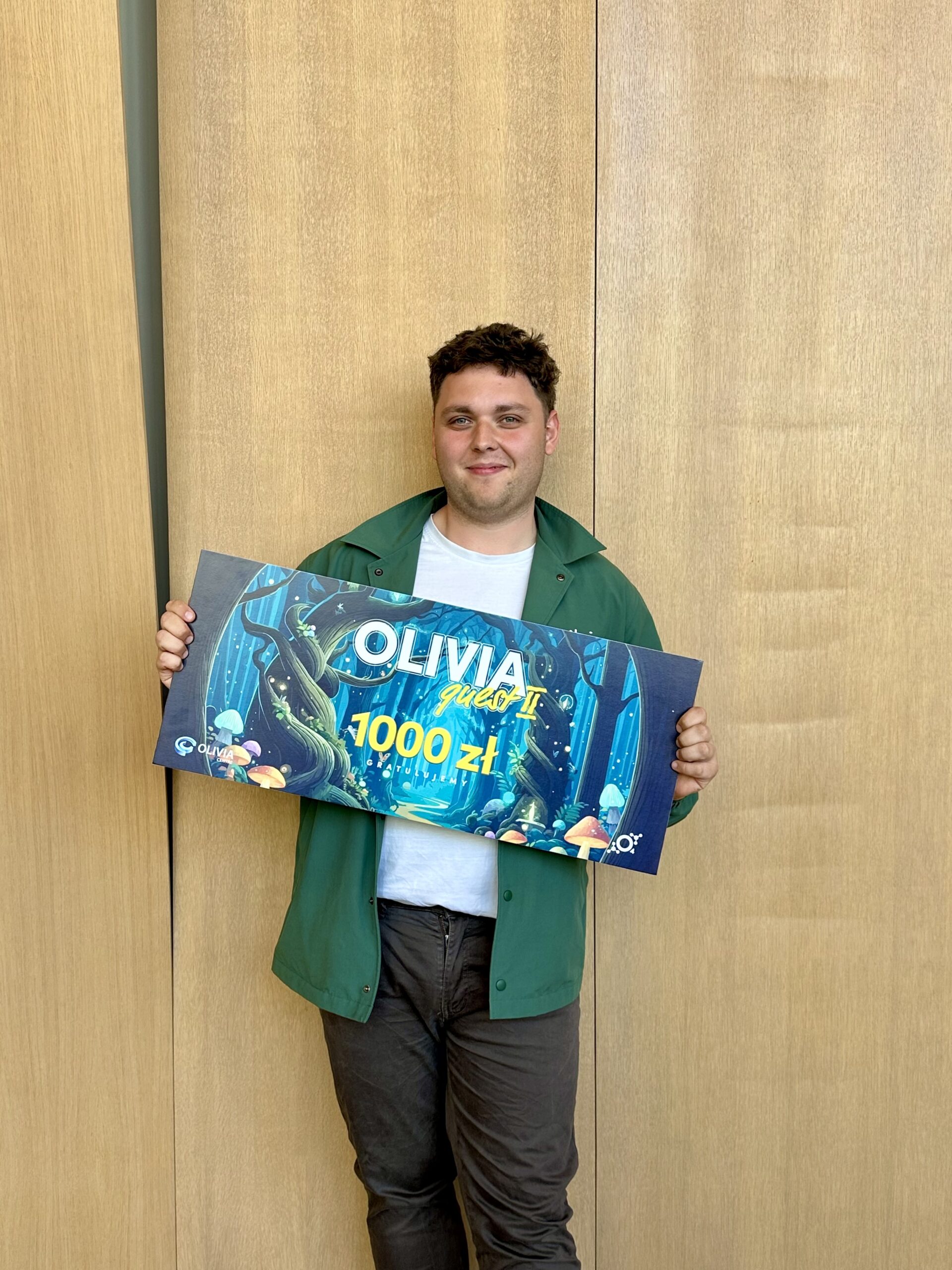
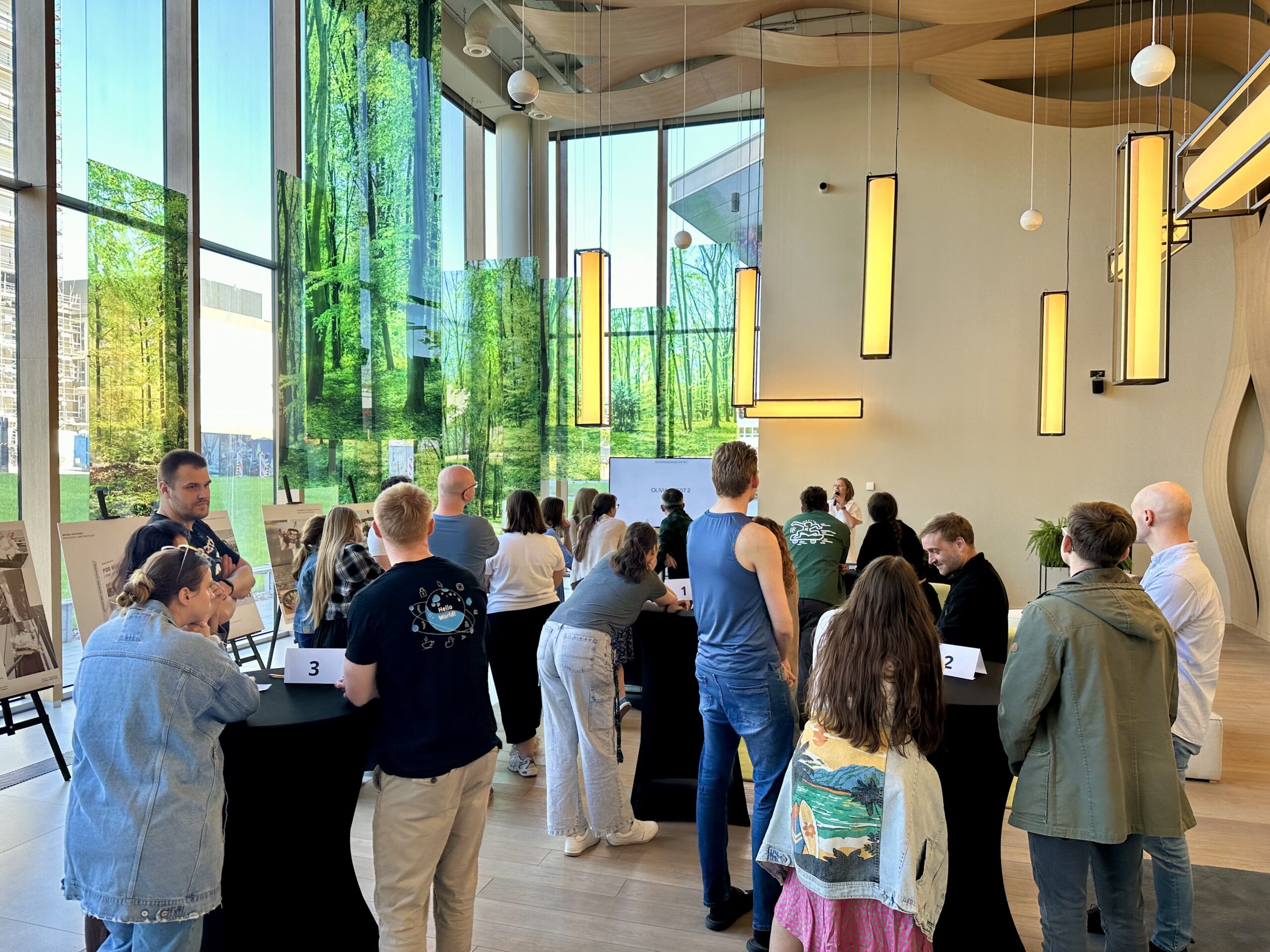
We know the winner of Olivia Quest 2! The best of the best is Mateusz from Skywise!

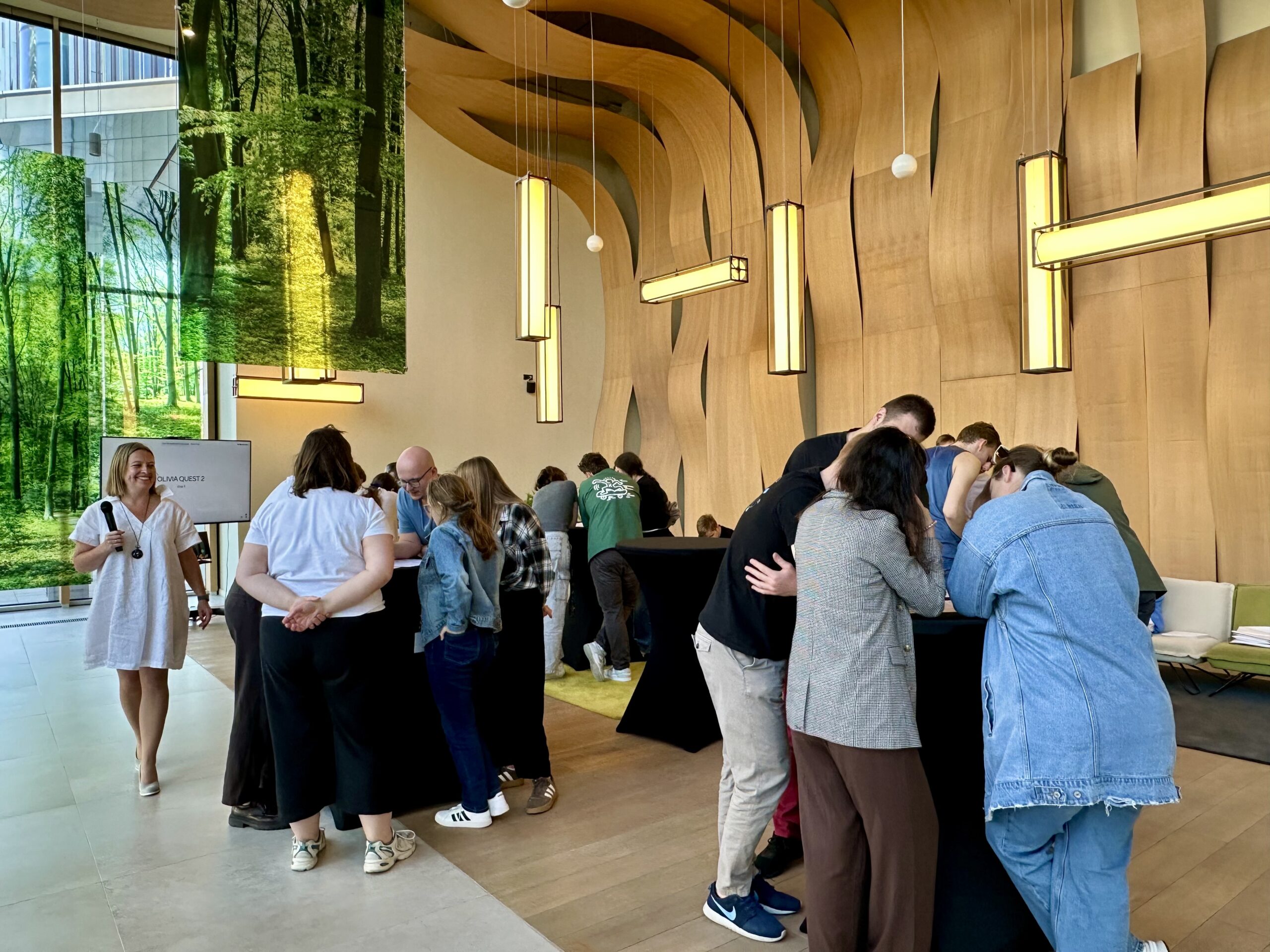
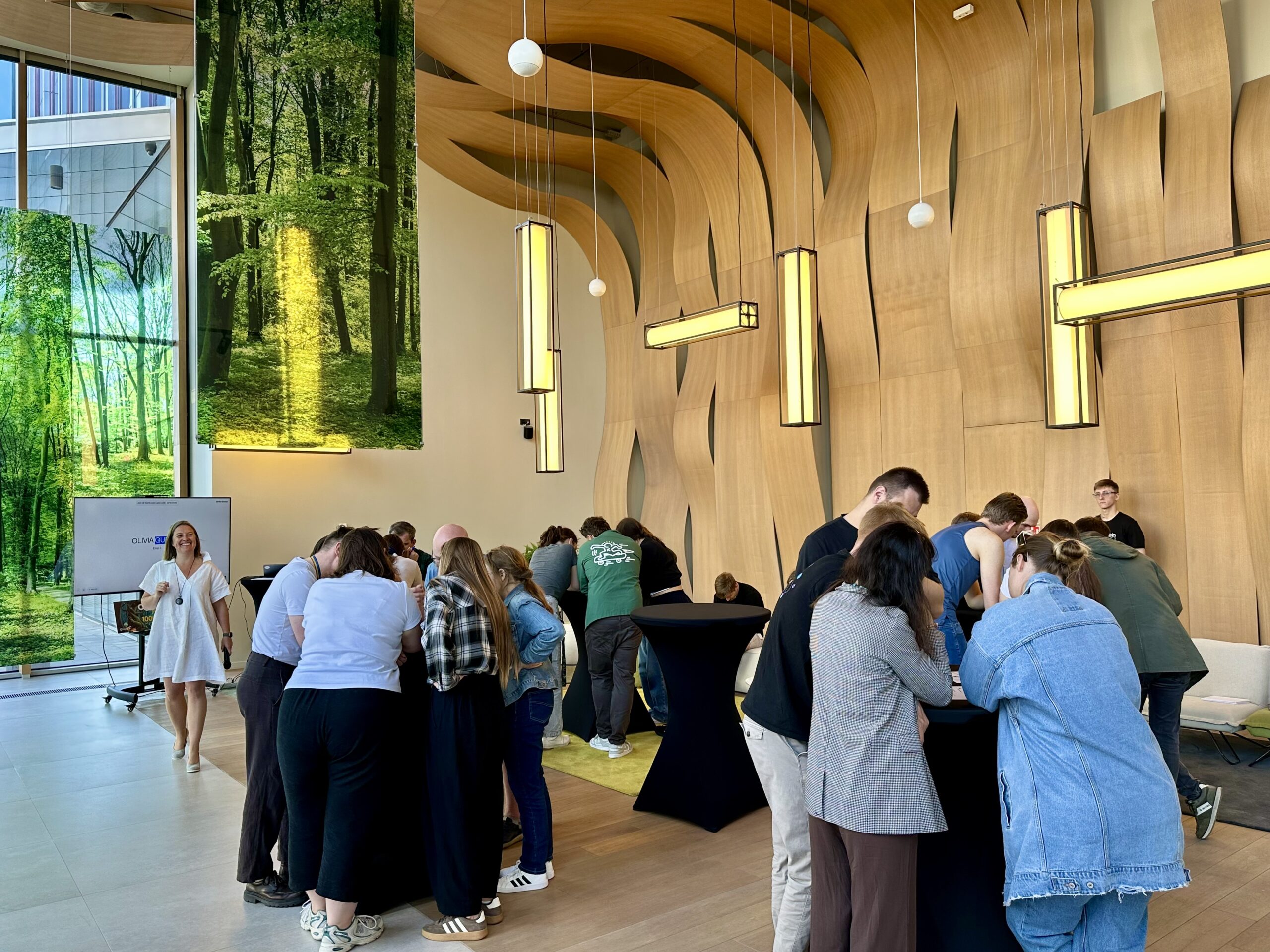
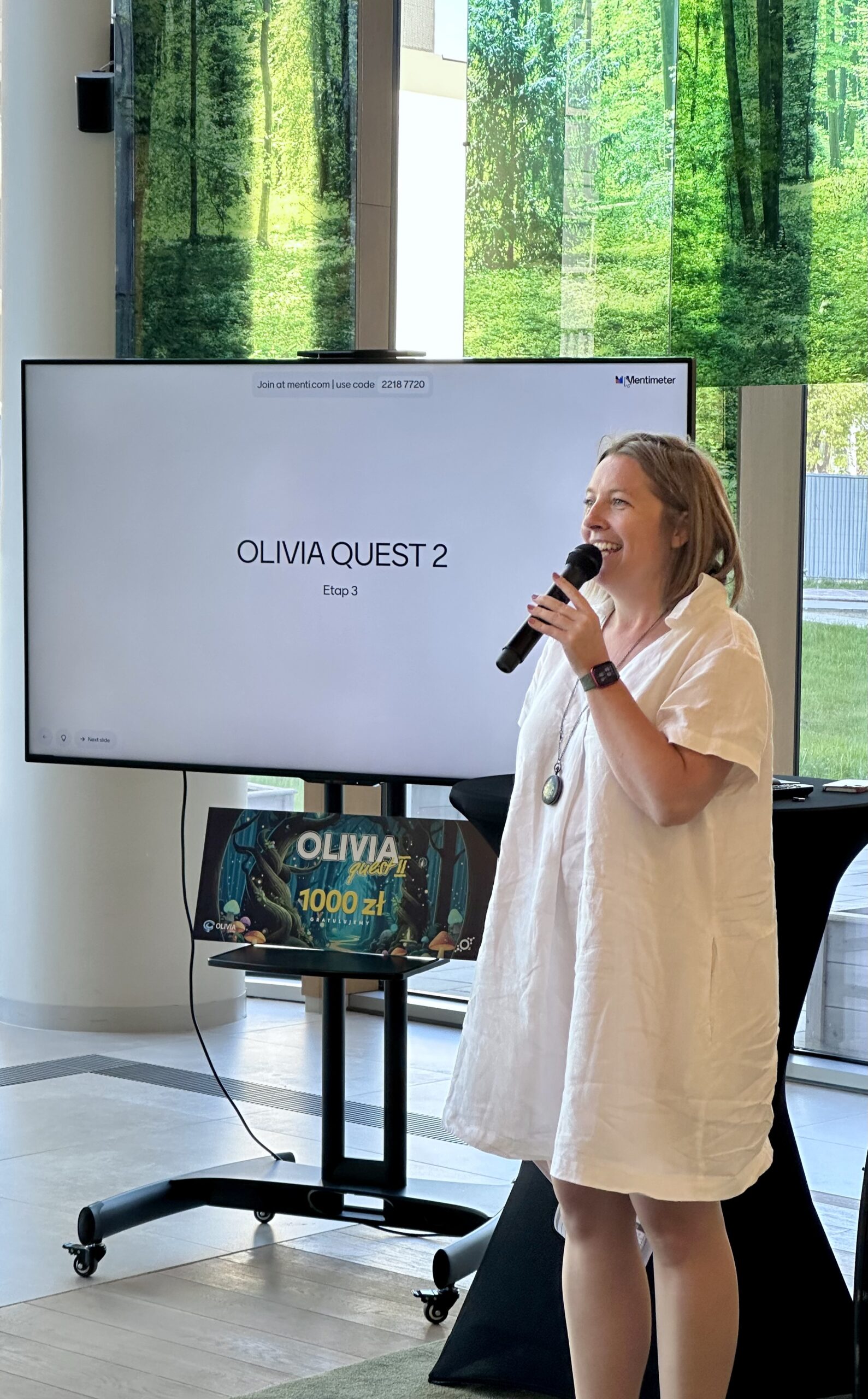
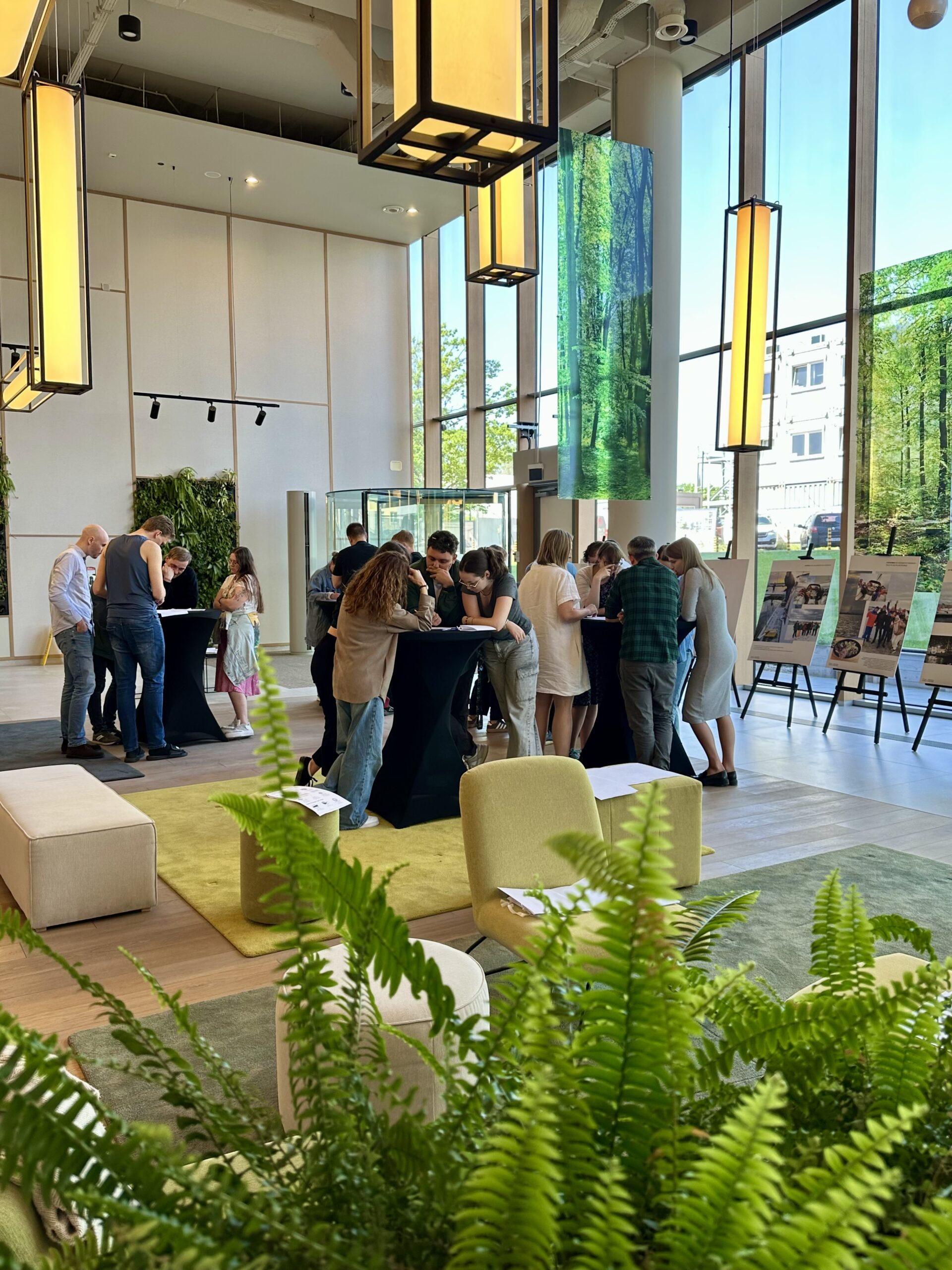
What an emotion it was! This year, the Game Master raised the bar high. You told us during the finale that Olivia Quest 2 surprised you, positively, of course, with its level of difficulty. Nothing is surprising! It can’t be easiest if the players are incredibly creative and there is 1000 zlotys up for grabs. In the finals, 37 players faced the Master, specifically the Game Master Marta. The best of the best turned out to be Mateusz from Skywise! Wow!


This time we played “only” 3 weeks. Intensely, with commitment and passion, she peeks into the Chest of Secrets every now and then, looking for on-screen hints and solving riddles and puzzles located in many of Olivia’s buildings.


Thank you so much for this fantastic time! 37 daredevils qualified for the finals, who correctly guessed the Main Password: Andrzej Wajda. A few clues (Words of the Day) led to it. We now present you with all the correct six.


  • 28.04 – Earth
  • 05.05 – iron
  • 07.05 – diamond
  • 12.05 – wizard
  • 14.05 – marble
  • 19.05 – Oscar for lifetime achievement


If you’re wondering where the idea for the Master Slogan came from, we have an excellent explanation. Well, the year 2026 was established by the Senate of the Republic of Poland as the Year of Andrzej Wajda in connection with the hundredth anniversary of his birth (March 6, 1926) and the tenth anniversary of the death of the outstanding director.


Mateusz outsmarted the Game Master


In the final game, and it wasn’t easy, the winner was Mateusz from Skywise, who turned out to be as fast as Flash, smart as Jack Sparrow and determined as Rocky Balboa! Big congratulations boy!


Finally, we present you with a few quest curiosities


  • Number of companies in the game: 29
  • The most quest company: Energa, followed by Nordea and Capgemini (wow!)
    We remind you that for the greatest employee engagement, Energa receives from a 20% discount to iLunch for all employees for 2 weeks and the Jupiter conference room in O4 for one-time use for the next year!
  • Trying to guess all passwords: 8738
  • Attempts to guess master password: 222
  • The hardest password of the day is the wizard: 2463 guessing attempts
  • The most persistent in guessing – Energa employees: 1735 attempts to guess the Words of the Day and the Main Password.
  • The fastest guess of the Main Password: Mariusz from Energi – on May 5 at 9:04 (respect!)


Thank you for the fun and may the power be with you! See you next year!


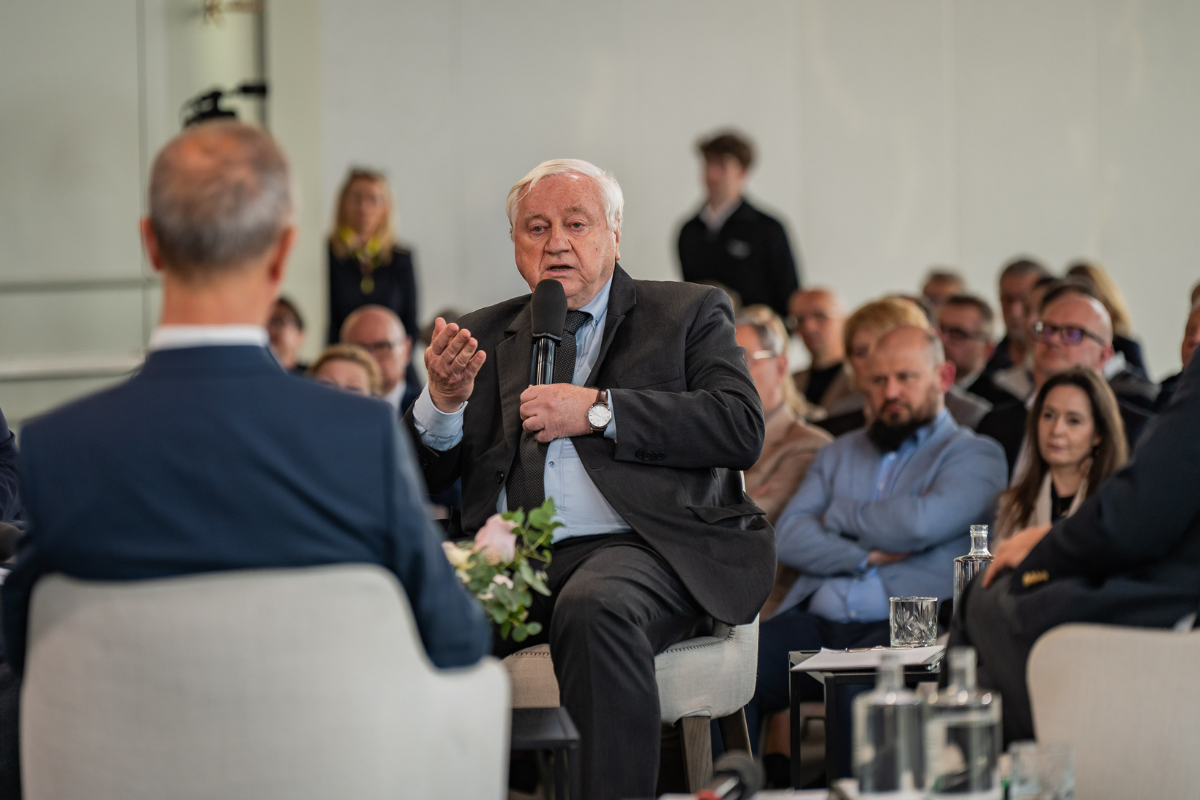
Talks at the Olivia Summit. Geopolitics and economy between the US, Europe and China

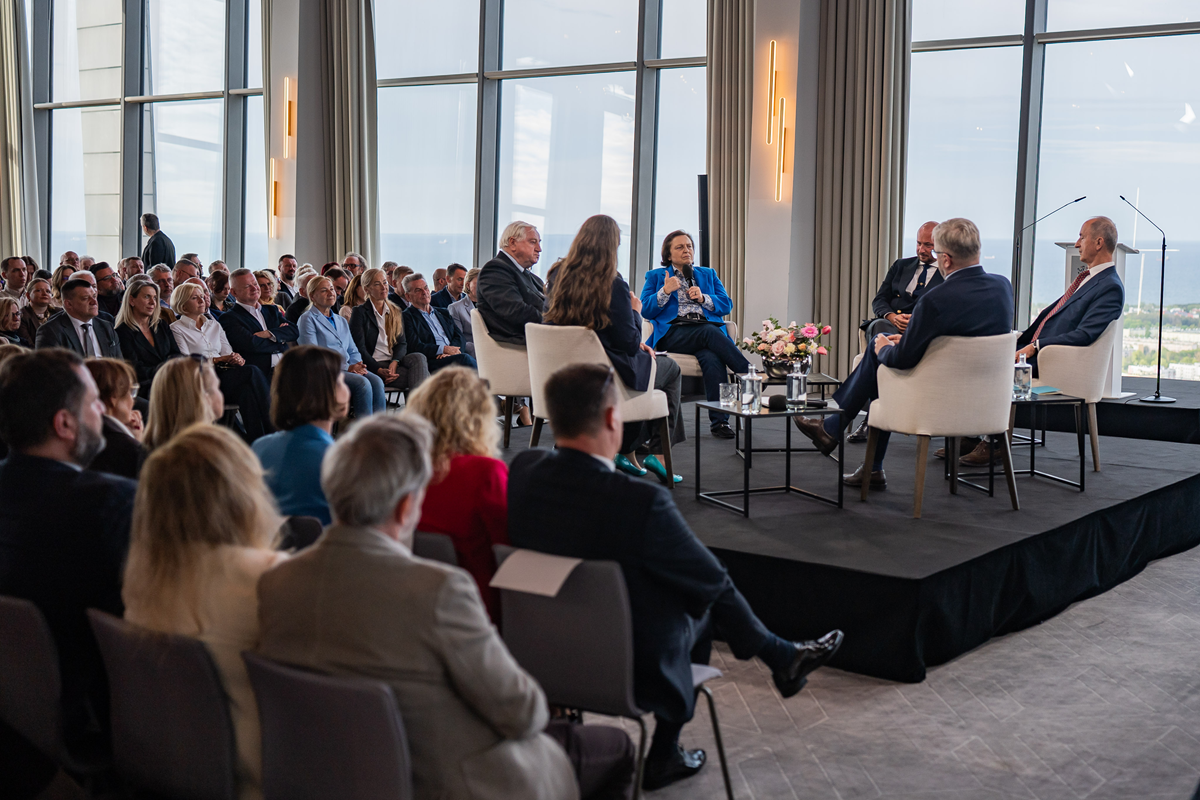
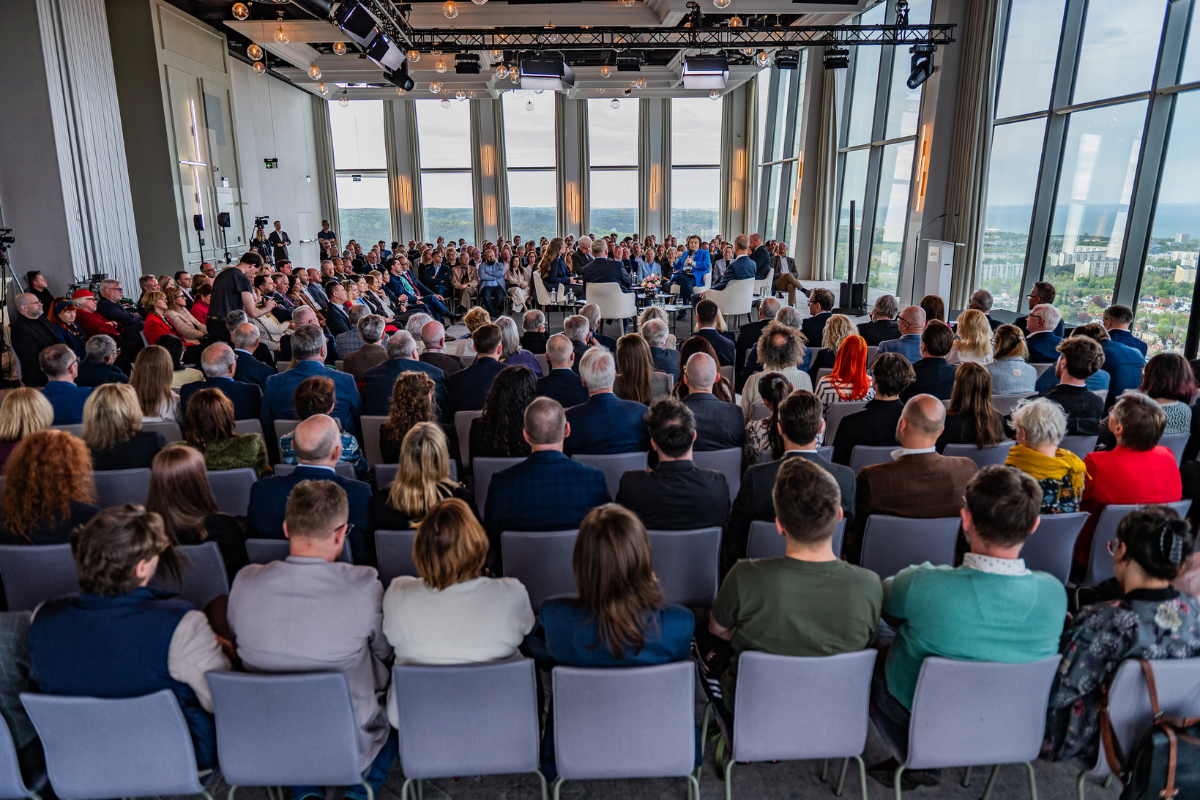
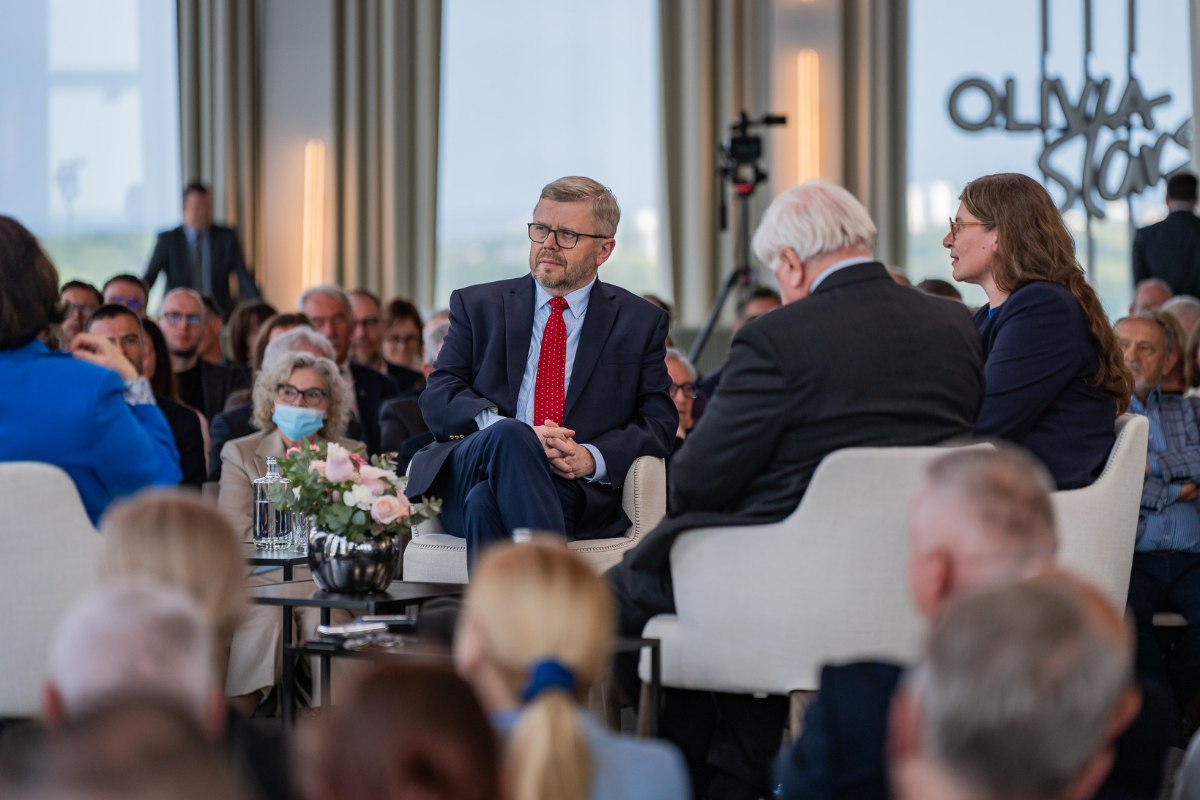
An extremely important meeting is behind us. On 8 May, the “Summit Talks” were held in Olivia once again, the main topic of which was geopolitics and the economy between the US, Europe and China.


In a world of rapid geopolitical shifts, it is becoming increasingly clear that relations between the US, Europe and China today define not only trade or international politics. Access to technology, security of supply chains, the pace of innovation, the stability of economies and the competitiveness of companies and countries depend on their shape. Global competition is moving to the level of strategic raw materials, artificial intelligence, energy, cybersecurity, and control over key technologies of the future.


It is no longer a question of whether the world is entering a new phase of geopolitical reconstruction, but of how quickly companies, institutions and countries will be able to adapt to the new architecture of global dependencies.


The event organized by the Employers of Pomerania brought together people who have been co-creating the Polish debate on the world, security and the place of Europe in the dynamically changing balance of power for years.


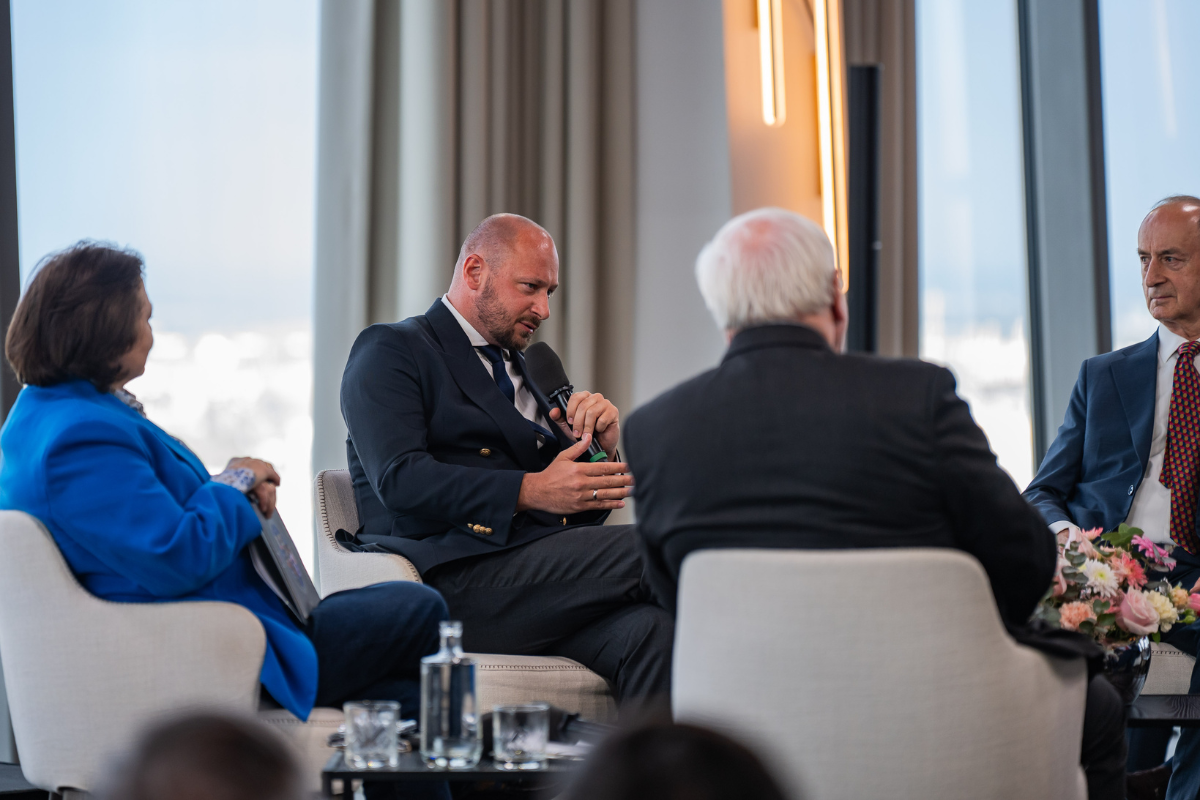
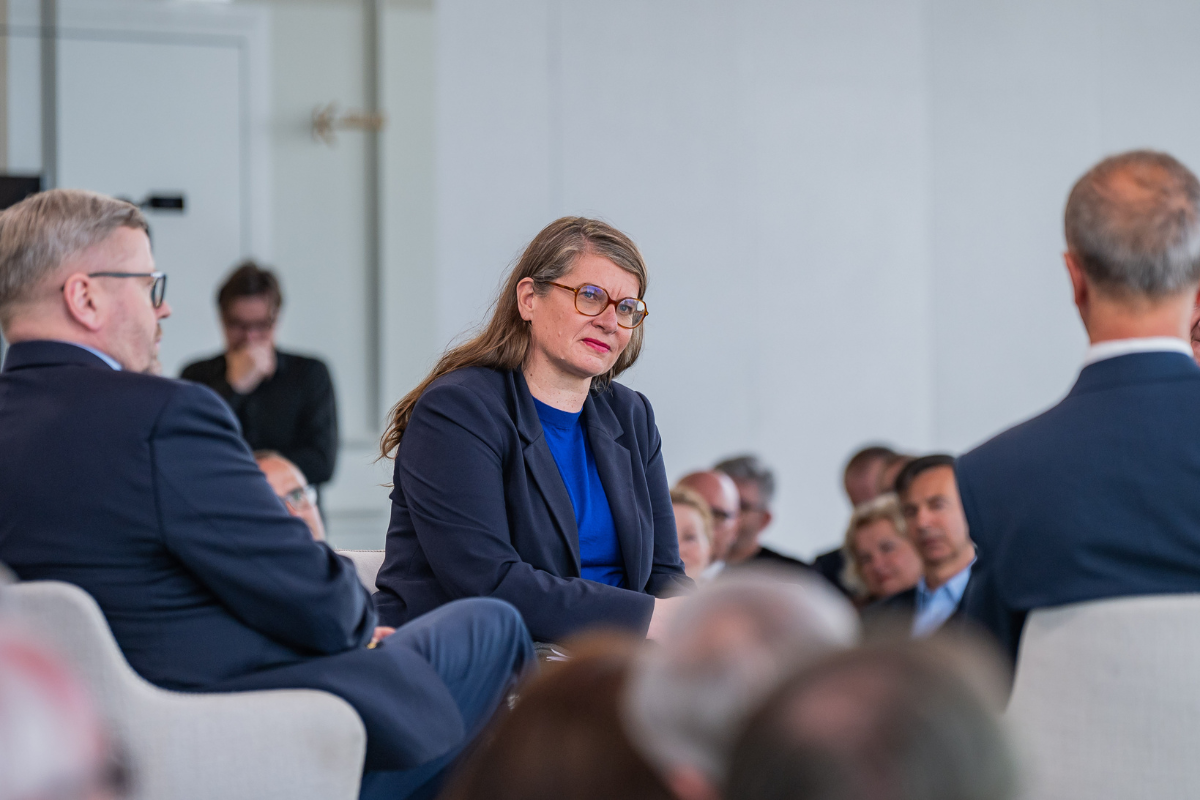
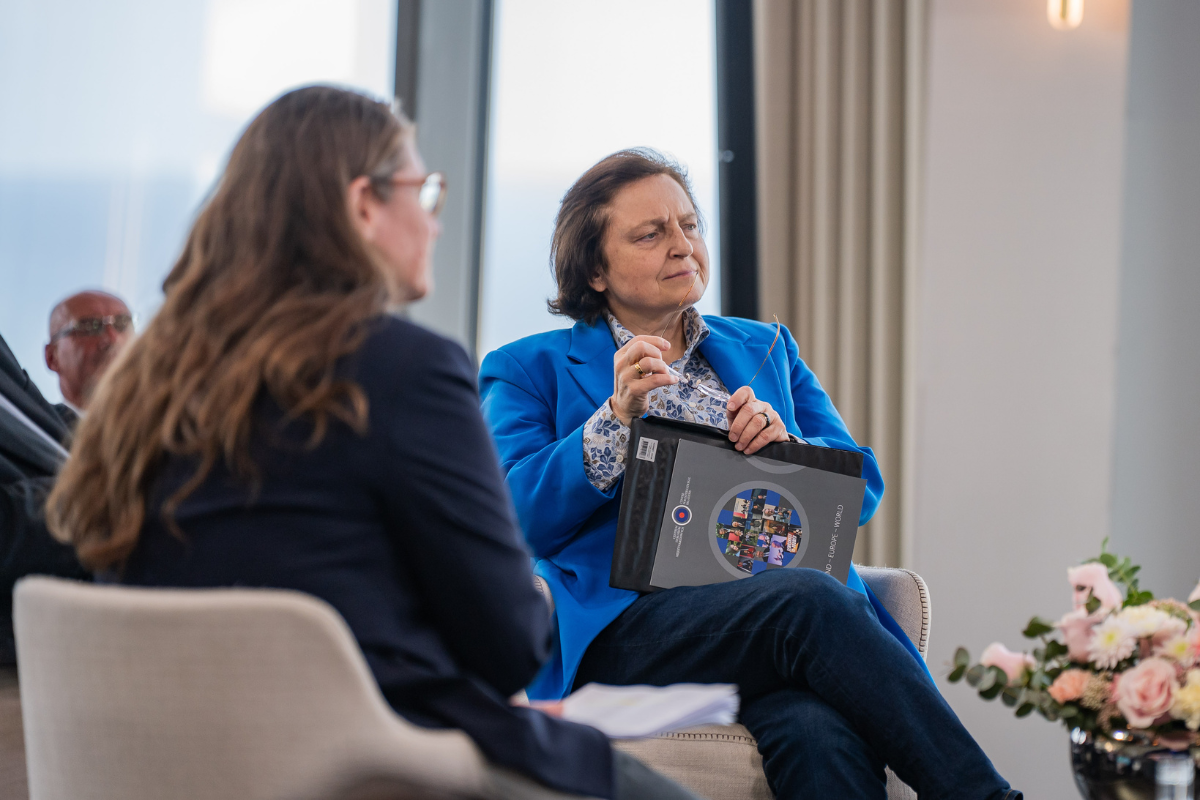
The debate was moderated by journalist Agnieszka Lichnerowicz, and among the participants were:

  • Małgorzata Bonikowska, PhD – an expert on geopolitics and US-EU-China relations, president of the Centre for International Relations and co-founder of THINKTANK, who has been analysing the impact of global changes on the security and competitiveness of the West for years,
  • Prof. Bogdan Góralczyk – political scientist, sinologist, diplomat and one of the most respected Polish experts on China and East Asia,
  • Janusz Reiter – diplomat, former ambassador of the Republic of Poland to Germany and the USA, founder of the Centre for International Relations, for decades actively participating in shaping Polish strategic reflection and transatlantic relations,
  • Lieutenant Colonel dr hab. n. Med. Jacek Siewiera – former head of the National Security Bureau, responsible in 2022–2025 for strategic state advice in the field of security and international policy,
  • Maciej Witucki – Vice-President of BusinessEurope and Chairman of the Main Council of the Lewiatan Confederation, representing the perspective of European business in the face of economic and regulatory challenges.


Photog. Dawid Linkowski


The conversation concerned, among m.in, the changing world order, Europe’s role in the rivalry between great powers, economic security and the impact of global tensions on business and society.


We are glad that once again such key issues were discussed here. It is worth recalling that a year ago, experts in the field of politics and defense discussed Polish security and global threats in Olivia. The guest of honour of the meeting was the renowned statesman and historian Bronisław Komorowski, President of the Republic of Poland in the years 2010–2015.


More…