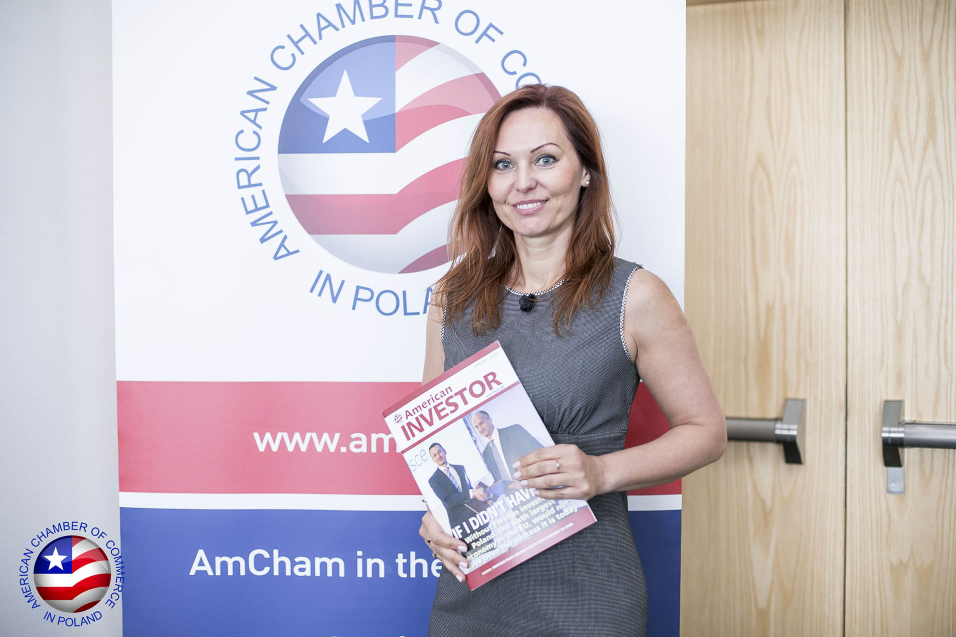
We need to learn how to live. Interview with Prof. Witold Orłowski

“We need to learn how to live”. Interview with Prof. Witold Orłowski about the idea that to understand modern world we need to learn how to change ourselves continuously.

Social-economic life of Pomerania region revolves around Olivia Business Centre. Here, there are many conferences and workshops, which aim is to integrate, exchange knowledge and inspire one another. Very often, keynote topics focus on current trends, which influence business development and human capital. Olivia is a place, where numerous debates and discussions are held, which deal with the most important issues concerning, for example, current social-economic challenges facing Polish inhabitants, including residents of Pomerania region. Olivia enables people to participate in events, which engage, stimulate and make them think.

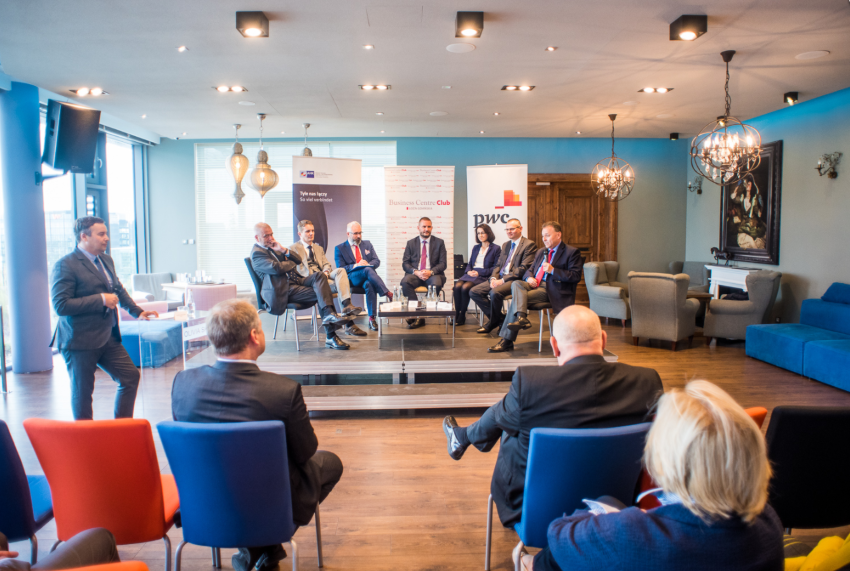
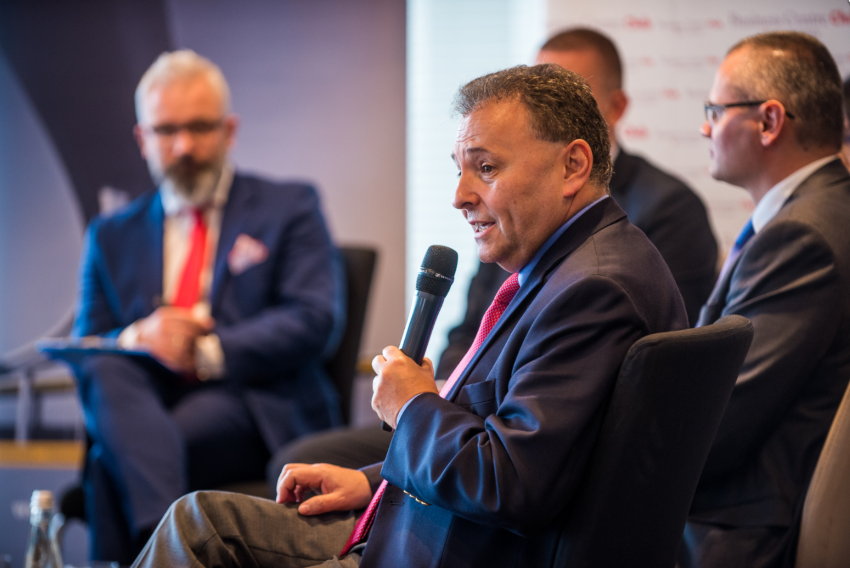
On September 19, 2017 in Olivia there was a debate about an important issue: “Does Polish economy need euro?”. Gdansk Business Centre Club Lodge and PwC were the organisers of the event. Distinguished guests accepted the invitation of organisers: Prof. Witold Orłowski, chief economic advisor in PwC, former economic advisor of the President of Poland and Prof. Dariusz Filar, economist and lecturer at the University of Gdańsk, former member of the Monetary Policy Council. The following persons were hosts of the debate: Maciej Dobrzyniecki , vice president of the management board of BCC, chancellor of Loża Gdańska, Katarzyna Dobrzyniecka, head of Loża Gdańska and Paweł Ożarowski, head of PwC’s office in Gdańsk. The following persons spoke in the discussion: Michał Makowski, head of Gdańska Sotcznia Remontowa [Gdansk Repair Shipyard], Rafał Dobranowski, head of legal department in Drutex, Lidia Ziaja, export manager in Ziaja, Bartosz Ziaja, vice president of the management board in Ziaja and Robert Raszczyk, deputy managing director in BRANDS Polska sp. Ltd.
We invite you to read an interview with Prof. Witold Orłowski, macroeconomist, publicist, chief economic advisor in PwC, about the main macroeconomic processes occurring in the world, policy connected with Polish accession to the Eurozone, influence of modern technologies on communication and art of establishing relations in the world of global business, as well as about the ability to acquire one of the most important competencies of the future – openness to continuous learning.

–/–

Monika Bogdanowicz (Olivia Business Centre): Professor, you describe yourself in the following way: “I am an economist who tries to understand what is going on in the world”. Only two years ago we had a different situation in global politics. At that time, you wrote: “In Donald Trump’s economic programme there are many pleasant generalities: lower and easier taxes, less bureaucracy, more favourable conditions for businesses. However, there is also a clear suggestion to give up existing policy of openness to trade, especially to break the agreements on free economic cooperation of the USA and the countries of America and the Pacific basin. And in the background – the perspective of trade war with China. If Trump really won the elections and if he really started to consequently implement such a policy, implications could be far-reaching. To put it briefly – the world that we are used to, the world of globalisation and freedom of cross-border movement of goods and capital, could end faster than we may think”.* How does this scenario stand the comparison with reality and current development of the situation in the economic arena of geopolitics? May these forecasts become real?

Prof. Witold Orłowski: So far, nothing has really changed. I mean the fact that we are still living in the world, in which market is functioning, after all, and globalisation has not been hindered. Crisis, which began a decade ago, is not over yet. We still don’t have a normal economic situation. At the same time, we can see political and social changes, which, to a large extent, result from economic changes and are their reflection. We can notice them on the example of the growth of populism in many countries, which were considered as resistant to such phenomena, starting with the United States. There, nobody expected that you can win elections being a populist.

Up to now, Donald Trump hasn’t implemented anything he had promised. But he can still do that. That is why, we don’t know how this story is going to end. We also don’t know if after Donald Trump there won’t be another president who will be a more radical populist. We are living in very difficult and uncertain times. We will see what scenarios of world development will look like. There may as well come calm times, but also the escalation of problems.

In Europe, after Emmanuel Macron became the president of France, so after populists’ failure, people started to say that “the wave of populism has swept through, now everything is going to start to calm down, economy is turning the corner, societies start to accept what has happened and we will slowly come back to normality”. However, we can as well imagine a completely different political scenario. Scenario, in which, for example, in 3 years Macron’s popularity, which has recently fallen sharply, will amount only to 5%…

MB: That’s true, today we can observe that Macron isn’t successful in fulfilling election promises. In the long term, voters may not be able to forgive him such a failure.

WO: Then, we may have to deal with the rerun of fear, but a much bigger one. As I mentioned before, after president Trump there may appear another one, who is much more populist, not only in the area of declaration, but also in implementing their promises.

Thus, both global and gradual calming down and bigger and bigger problems, especially in western world, may occur.

Let’s add the growing importance of developing countries, I mean China and India. It is happening at the cost of the influence of the West. Here, I would like to remind you that western world is not only a political community. It is also a community of values, which we believe to be right. The world, in which western values will be on the defensive, will be a worse world from our point of view. The world, in which democracy, freedom, human rights, etc. will mean less.
So, on one hand we have global changes, which we won’t be able to stop and which, to some degree, reduce the role of the West. On the other hand, in our western world we have two above-mentioned scenarios: calming down and restoration of economic and social harmony versus the escalation of upheavals.

Finally, we have such countries as Russia, which were expected for a very long time to become the countries of western world and to share the same values. Now, these countries are much more noticeably moving away from this vision.

MB: Moving towards closer areas of European policy, I would like to ask if it is possible that other countries will exit the EU? Is there any chance to stop these tendencies? Or will we manage to maintain the belief that the benefits from being EU member are superior?

WO: The border, which divides Europe into countries, which are very engaged in integration processes and the ones, especially in our part of Europe – however I don’t mean all countries from our region – in which there is no such an engagement, is becoming more and more clear and visible. Unfortunately, Poland belongs to the group of countries, in which societies start to be less convinced of the point of European integration.

That is why, there appear questions concerning whether the situation will be calming down and we will be coming back to normality, harmony and cooperation or whether we will be inflaming the situation. Right now, we don’t know what will happen, so both positive and very negative scenarios are possible.

In this context, let’s take into account also global problems, for example the problem of emigration. This is not our choice, but the situation, which will probably last forever. In Africa, we have to face a continuous population growth and evolving climate changes will be surely “crowding” continent’s residents out. Then we may have to face another, intensive emigration waves. These problems are of significant importance.

Some of them are out of our control, some of them are challenges, in which we participate and which were brought about by us because we are a society, which belongs to the group of western countries and European Union.

MB: We are meeting in a situation, where there is no binding decision concerning introducing euro in Poland. Does Polish economy need euro and which benefits could we have if Poland made the effort to enter Eurozone?

WO: The issue of euro is neglected by our politicians. According to them, it is a dead issue which will never come back and will never be important. But I can perfectly imagine that in 5 years the issue of euro will still be open. Perhaps our entering the Eurozone will then come at a higher cost than now. Today we could do it without much effort, if we only wanted to.

We are the member of European Union and we committed ourselves to adopt a common currency of EU. I am convinced that regardless of problems euro may have, it will always be a strong currency and the Eurozone will be the core of European market. I can’t state unequivocally when it will happen, but I think that sooner or later Poland will want to enter the Eurozone once again. Even if today we declare that we are not interested in euro and the majority of Poles agree with such a statement.

Overall, in my opinion, there is more good than bad in introducing euro in Poland. The main benefit for such a country as ours is that we have an access to cheap capital, with the help of which we can modernise economy and develop faster. If a country uses euro in the right way, it develops faster. Of course, the last decade taught us also that there are some traps connected with this currency.

MB: Can economic development of Poland soon draw level with leading EU countries?

WO: I don’t know whether Poland will draw level with Germany in our lifetime. However, I think that in the case of using right policy, entering Eurozone would accelerate this process. I am rather certain of that.

MB: We are on the threshold of new academic year, that is why I would like to ask about the relations between education and new technologies. New technologies are more and more boldly entering this environment to make time devoted to learning more flexible and reduce spatial distance. Do students, who visit universities only two times in a semester, lose the chance to establish real relationships with lecturers, mates or, for example, with their potential business partners?

WO: The world is changing and this is always accompanied by the assessment of direction of changes. Usually, if we are used to something, we think that “other” world is worse. In the past, we were used to a direct contact, that is why we think that contact via electronic tools and the Internet is something worse. In this way, we certainly lose something. On the other hand, we also gain something. For example, young people claim that not benefiting from on-line world is a waste of time.

MB: What about creating relations, which are very important in business? In the virtual world, establishing real relations will be much more difficult.

WO: You need to find a reasonable compromise and remember that today, if you work in a company, which conducts business activity in many countries, people have to get used to the fact that most of the contacts are virtual. Teleconferences are replacing regular meetings and real travels. This is now a standard situation in most of the organisations. However, it doesn’t mean that real meetings will go out of date. We just need to get used to both of them and learn how to live with them, as well as be able to establish relations, despite the fact that actually more and more contacts are maintained in a different way, not during meetings in real world.

I think that everyone has had such a situation – we know somebody well, but if we think for a while, we may come to a conclusion that we don’t know what this person looks like. We keep in touch with such a person for many years, only by exchanging e-mails. However, we can also use Skype (ed.: laughter).

I think that we don’t have to feel offended by technological changes and it is not worth it. We need to learn how to derive good things out of them. We need to learn how to live.

The world is not better or worse than 20 years ago. Now it is simply different. Young people are used to keeping in touch, especially with the help of smartphones and the Internet. Whether we like it or not, this is their way to communicate with each other. In this way they establish relationships and for sure they will continue doing it in the future. We can only accept it.

Of course, sometimes there arises a problem, when persons between whom there are 20-30 years of difference are talking to each other. In such a situation, there appears a huge difference in ways and language of communication. But always understanding and acceptance are the most important. After all, the world is continuously changing.

M.B.: I would like to ask you about the most needed occupations. What is worth learning, who is it good to be? What should we choose to avoid the situation, when some years of studies go in vain and how can we effectively develop our potential?

W.O.: There is no answer to such questions. Of course, there are some professions, which are and will be needed. For example, IT specialists. The demand for such a profession is increasing rapidly. However, this is such a specialised area that not everyone can be an IT specialist.
On the whole, everyone should be prepared for that, that various requirements may wait for them at work. That is why, you need to be flexible, know how to learn and want to learn. Secondly, during the whole life, you will probably have to change jobs many times, maybe even radically. It means that the ability to learn continuously is more important than having specific knowledge and profession.

In other words, specialists in certain areas will be always needed. But the ability to learn is more important than mastering a certain profession at a particular time. The truth is that profession, which we are now learning, can be completely useless in 10 years because, for example, it will be conducted by robots.

MB.: So shaping the openness to continuous learning and openness to changes carried by the world in young people’s minds in a skilful way is becoming the most important value in modern education?

W.O.: Yes, such an attitude is surely the best guarantee and policy for a good future.

MB: Thank you for this inspirational conversation.

–/–

Photos by courtesy of Trojmiasto.pl. The author of the photos: Maciej Czarniak.

Full photo gallery from the meeting is available on the website Trojmiasto.pl

–/–

Prof. Ph.D. Witold M. Orłowski – professor of economics, rector of Vistula University, chief economic advisor in PwC Polska, as well as chairman of the Board of Trustees of the National Museum in Warsaw. In the years 2010-2015 he was a member of the Economic Council of the Prime Minister, in the years 2014-2015 he was a member of the committee of Economic Award of the President of the Republic of Poland, in the years 2001-2005 he was a chief economic advisor of the president Aleksander Kwaśniewski. He graduated from University of Łódź and Harvard University. In the years 1993-1997 he worked in the World Bank. In the past, he was also an advisor of the Chief Negotiator responsible for Poland’s EU accession, Special Advisor to the European Commission, member of the Macroeconomic Council of the Minister of Finance, advisor to many national and international organisations. The author of 11 books and 200 scientific publications, popular economic commentator and columnist of major Polish newspapers. A member of the National Development Council established in 2010 by the late Lech Kaczyński, President of the Republic of Poland.


* Witold Orłowski’s blog,

http://witoldorlowski.natemat.pl/187731,donald-trump-i-globalizacja
 

Together for development. An interview with Krzysztof Kunicki, a speaker at the Yes, We Can!

The labour market in Pomerania is developing dynamically, and its improving statistics make it quite a challenge to attract new candidates. HR specialists also have to work hard so that those who are already employed do not start looking for a new employer.

However, what can be enjoyed by employees is a big headache for employers and company HR departments. This means that it will be increasingly difficult to recruit new staff, and it will also not be easy to retain those who are already employed for longer.

That is why HR specialists’ heads are already full of ideas to make the company’s image more attractive and effectively improve working conditions. You will be able to find out which of them are effective and which are worth implementing in the corporate reality during a conference dedicated to all HR professionals – Yes, We Can!

We talk to Krzysztof Kunicki, one of the panelists of the event and the organizer of the project, about the needs of HR specialists in Pomerania, what skills are a guarantee of getting a great job, why the greatest strength of every company are properly selected, talented people and why it is worth being a participant of the event at Olivia Business Centre.
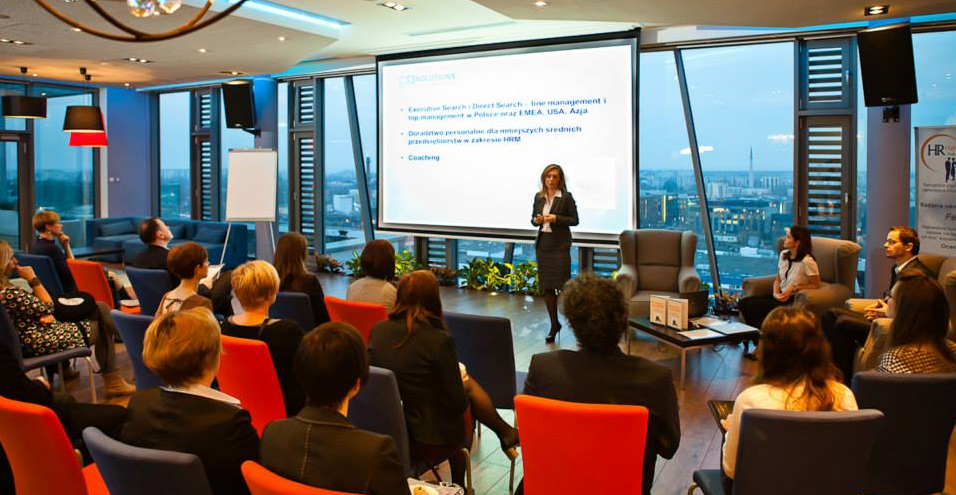
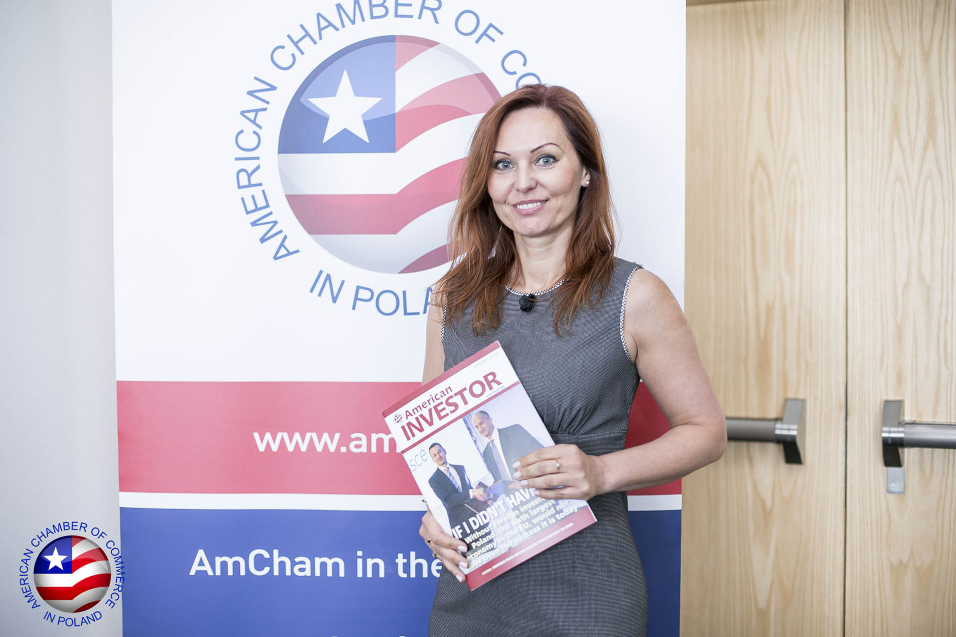
Monika Bogdanowicz (Communication Olivia Business Centre): Who needs good HR today? How did you come up with the idea to organize the “Yes, We Can! ?

Krzysztof Kunicki (Job Office, Gdańsk Labour Office)*: Who needs good HR today? I think that every company, and certainly every company, that wants to acquire valuable employees and develop further thanks to them. The idea to organize an expert debate came from the needs of HR professionals themselves.

Maybe it will be a simplification, but today many companies equate good HR with, for example, a high salary, additional health insurance or a multisport card. Not so long ago, such solutions were effective in attracting candidates, but today all of this is more and more often treated as a standard. In this situation, HR specialists ask themselves what else can be done, how to effectively attract the best and keep them for longer. And that’s exactly what we’d like to talk about – the most interesting trends and proven ideas for better HR.

MB: What does the current situation on the labour market look like, looking from the very centre of the business environment, where the Job Office and the Talent Development Centre – the organisers of the event – are located?

KK: The labour market is an area that is changing very dynamically. Not so long ago, companies recruiting specialists for various types of positions had no problems with finding potential employees, they did not always meet all the requirements of employers, but they were. Today, unfortunately, things are different.

It is very difficult to find candidates, even for positions that do not require high qualifications. This is also strongly felt by international corporations and the so-called A large business which, due to its specificity, is looking for candidates with a certain amount of knowledge and skills, such as language skills.

MB: What are the biggest challenges faced by people involved in recruitment and development of human capital in companies in Pomerania?

KK: There are several challenges. When it comes to the most important things, we can easily point to two – searching for the right employees and keeping them in the company for longer. It is no secret that the conditions on the labour market are currently dictated by job seekers, the best can freely choose from the offers, so the task of an HR specialist is not easy, he must attract candidates more effectively than the competition will. However, the challenges do not end there.

We live in a very mobile world, especially young people have a different approach to employment than, for example, their parents, who may have worked in one company all their lives. Today, changing the workplace is no longer unusual, so the role of the HR department is to develop such an offer that the best employees want to stay in the company for as long as possible.

MB: What elements of the program do you recommend to the conference participants and what is the distinguishing element of your event?

The uniqueness of each conference, debate or discussion panel is always evidenced by people who want to share their knowledge and experience. This case is no different. We invited a group of really interesting personalities who have been dealing with human resources management in an international environment for several years, in a word, real experts in their field. This is certainly how Konrad Lipski from State Street Bank or Ewa Mandryk, who developed her career m.in, should be described in this way. at Intel.

Of course, there will be more interlocutors, but I think that all the speakers share a common motto, no matter what difficult challenges we face, we can do it anyway, in a word, Yes, We Can!

Krzysztof Kunicki: Master of Law, administrator, employee of the Gdańsk Labour Office, business client advisor at JOB OFFICE. He graduated from the Faculty of Law and Administration of the University of Gdańsk and completed a number of specialist trainings in the field of recruitment and selection, coaching and career counselling. He also specializes in administrative law and proceedings. At work, she deals with the labour market, recruitment and selection of candidates for individual positions. She develops and implements promotional and marketing strategies for GUP and cooperates with business clients on a regular basis. In her work, she focuses on professionalism, improving the quality of services and comprehensive advice in the recruitment and selection process.

Job Office is located in the Olivia Six building of the Olivia Business Centre complex, in the Olivia CONNECT space (13th floor). The most important pillars of JOB OFFICE’s activity are: pre-recruitment, comprehensive information on the services offered by the Gdańsk Labour Office, advice on the selection of the best form of employment for employees and promotion of e-services of the Labour Office. JOB OFFICE is a partner for all companies from the IT, BPO, SSC sector, which currently offer a very wide range of career development opportunities. As part of the JOB OFFICE offer, employers can take advantage of tailor-made services, resources and knowledge in the field of HR and a full range of financial forms of support. Job Office specialists respond to the diverse needs of employers. More: https://www.gup.gdansk.pl/

“Yes, We Can!” conference, 6 September 2017, Talent Development Centre, Olivia Business Center (ground floor in the Olivia SIX building).

Go to conference registration


Together for development. Conversation with Krzysztof Kunicki, Yes, We Can! conference’s speaker

Labour market in Pomerania region is dynamically developing and its constantly improving statistics make recruiting new candidates for work more and more challenging. Human resource managers have to put a lot of effort to prevent already employed workers from looking around for a new employer.

However, what makes employees happy, can be a headache for employers and companies’ HR departments. For it means that it will be getting more and more difficult to find new workers. Additionally, it won’t be easy to keep already employed persons for a longer period of time.

That is why, the heads of human resource managers are already full of ideas how to make company’s image attractive and to improve working conditions effectively. During the conference dedicated to all HR-workers – Yes, We Can! you will have a chance to find out which of them are effective and which of them are worth implementing into corporate reality.

We are talking to Krzysztof Kunicki, one of the speakers during the event and the organiser of the project, about HR specialists’ needs in Pomerania region and about skills, which guarantee getting a great job. We are also discussing and wondering why the biggest strength of every company is well-chosen, talented stuff and why it is worth to participate in the event in Olivia Business Centre.

Monika Bogdanowicz (Olivia Business Centre Communication): Who needs a good HR today? Why did you decide to organise “Yes, We Can!” conference?

Krzysztof Kunicki (Job Office, Employment Office in Gdańsk)*: Who needs a good HR today? I think every company does. For sure the ones, which want to recruit valuable workers and develop thanks to them. The idea to organise experts’ debate in some way derived from HR specialists’ needs.

It may sound like a simplification, but nowadays many companies identify good HR services for example with high remuneration, additional health insurance or Multisport card. Until recently, such solutions attracted candidates effectively. However, today they are treated as a kind of standard benefits. In such a situation, HR specialists ask themselves what else can be done. What can attract the best workers effectively and keep them for longer. This is the issue we would like to talk about – the most interesting trends and proven ideas for better HR.

MB: What does a current situation in labour market look like, if we look at it from the centre of business environment, where Job Office and the Centre of Talent Development – event’s organisers – have their headquarters?

KK: Labour market is an area, which is changing very dynamically. Not so long ago, companies recruiting specialists for different kinds of positions didn’t have any problems with finding potential workers. They didn’t always meet all employers’ demands, but at least they were recruited. Unfortunately, today the situation is different.

It is very difficult to recruit candidates even for such positions, which don’t require high qualifications. It also significantly touches international corporations and so called big business, which, because of its character, searches for candidates with certain kind of knowledge and skills, even language ones.

MB: What are, currently, the biggest challenges for people who recruit workers and develop human capital in Pomeranian companies?

KK: There are several challenges. When it comes to the most important ones, I can safely indicate two – searching for right workers and keeping them in a company for a longer period of time. It is no secret that conditions in labour market are currently dictated by people who are looking for jobs. The best ones can pick through many job offers, that is why HR specialists don’t have an easy task to deal with. They have to attract candidates more effectively than their competitors. However, this is not the end of challenges.

We are living in a very mobile world. Especially young people have different approach to employment than, for example, their parents who could work in the same company their whole lives. Today, changing workplace is nothing unusual. That is why the role of HR specialists is to develop such an offer to make the best workers stay in a company as long as possible.

MB: Which elements of the programme do you think are the most important for participants and which element distinguishes your event?

People who want to share their knowledge and experience, always make any conference, debate or discussion panel unique. This case isn’t different. We invited to the discussion a group of extremely interesting people, who have been working as HR managers in international environment for many years. In short, real experts in their profession. Such a description fits perfectly Konrad Lipski from State Street Bank or Ewa Mandryk, who developed her career, among other companies, in Intel.

Of course, there will be more speakers, but I think that speakers have the same motto: it doesn’t matter how difficult our challenges will be, we can do it, in short, Yes, We Can!

Krzysztof Kunicki: master of laws, administrative law attorney, employee of Employment Office in Gdańsk (GUP), business client advisor in JOB OFFICE. He studied law at the Faculty of Law and Administration of the University of Gdańsk and participated in many specialist training courses within the scope of recruitment, coaching and career counselling. He specialises also in administrative law and proceedings. He works in the scope of labour market, recruitment and selection of candidates for certain positions. He develops and implements promotional and marketing strategies of GUP and is constantly cooperating with business clients. In his work, he focuses on professionalism, improving the quality of services and comprehensive consulting in the process of recruitment and selection.

Job Office has its headquarters in Olivia Six building located in the Olivia Business Centre complex, within Olivia CONNECT space (13th floor). Here are the most important pillars of JOB OFFICE’s business activity: pre-recruitment, comprehensive information on services offered by Employment Office in Gdańsk, counselling in the scope of choosing the best form of employment and promoting employment office’s e-services. JOB OFFICE is a partner of all companies from IT, BPO and SSC sectors, which currently offer a wide range of possibilities to develop career. Within the scope of JOB OFFICE’s offer, employers can use “tailored” services, resources and HR knowledge, as well as a full range of financial forms of support Specialists from Job Office respond to different employers’ needs. More information: https://www.gup.gdansk.pl/

“Yes, We Can!” conference, September 6, 2017, Talent Development Center, Olivia Business Centre (ground floor in Olivia SIX building).

Register for a conference

Mayor Paweł Adamowicz in Olivia Business Centre

On Friday, 1 September, Olivia Business Centre was visited by the Mayor of Gdańsk, Paweł Adamowicz. The President was accompanied by Deputy Mayor Aleksandra Dulkiewicz , who is responsible for the economic policy of Gdańsk. The Olivia Star, the tallest building in northern Poland, was visited by the president of Olivia, Maciej Grabski.

From this unusual perspective, what did the president like the most?

“The fact that you can see Gdańsk under development from here. Cranes are an expression of dynamism. On the other hand, we can also see spaces that can be filled with urban tissue. It can be seen that Gdańsk has a great potential of hectares of land that we can develop wisely. For housing, kindergartens, nurseries… In a word, Gdańsk can develop and can maintain a healthy age structure.” said Paweł Adamowicz to the editorial office of gdansk.pl, which accompanied the president during the meeting.

“We are proud to be part of this great project, because Gdańsk is changing before our eyes. Compared to cities such as Cracow, Warsaw and Wrocław, we are very dynamic in terms of the potential of residents and the number of jobs created” – said Maciej Grabski, President of Olivia Business Centre, about the investment.

Extensive information along with video material can be found on the website of the gdansk.pl portal.

And this is how Paweł Adamowicz reported on his visit to Stara on his official profile:

See the gallery from the visit of the Mayor of Gdańsk Paweł Adamowicz to Olivia Business Centre:


Mayor of Gdańsk, Paweł Adamowicz, in Olivia Business Centre

On Friday, September 1, Olivia Business Centre was visited by the mayor of Gdańsk – Paweł Adamowicz. He was accompanied by vice mayor – Aleksandra Dulkiewicz, who is responsible for economic policy of Gdańsk. Guests were invited to the roof of Olivia Star, the highest building in northern Poland, by Olivia CEO, Maciej Grabski.

What did the mayor like the most, looking from this perspective?

“The fact, that from this building you can see that Gdańsk is developing. Cranes are the symbol of dynamism. On the other hand, you can also see spaces, which can be filled with urban tissue. You can see that Gdańsk has a great potential, as it has many hectares of land, which can be wisely developed. We can build there blocks of flats, kindergartens, nurseries… In short, Gdańsk can develop and can keep a healthy age structure” – said Paweł Adamowicz in an interview with editors of gdansk.pl, who accompanied the mayor during the meeting.

“We are proud that we participate in this big project because Gdańsk is changing before our very eyes. Compared with such cities as Cracow, Warsaw and Wrocław we are very dynamic when it comes to residents’ potential and the number of created workplaces” – said Maciej Grabski, Olivia Business Centre CEO, about the investment in an interview with gdansk.pl.

Comprehensive information and video footage can be found on www.gdansk.pl.

Paweł Adamowicz reported about his visit on the roof of Olivia Star on his official profile:

See the photo-coverage of Paweł Adamowicz’s visit in Olivia Business Centre:

Human capital – a key resource of companies and organizations. Interview with Joanna Bojarska-Buchcic, creator of the HR community

September is the time to return after the holidays to a wide range of regular meetings and conferences in Olivia Business Centre, in the main conference room of Olivia Sky Club. One of the very important thematic areas that are constantly present in the program of this place, which is by definition a space of integration and inspiration, is the area of topics related to the management of human capital and social capital, as well as the intensive exploration of talent development opportunities by companies.

On 11 September, from 8.30 a.m. to 12.00 p.m. in Olivia Sky Club (Olivia Tower, 12th floor), a business breakfast will be held.HR Trends 2017. Changing the rules in the digital age“, to which we also invite you with an interview with its organizer, Joanna Bojarska-Buchcic.

The theme of the event will be a presentation “HR Trends 2017. Changing the rules in the digital era”. This is one of Deloitte’s most extensive research projects on talent, leadership and the challenges facing HR departments in the era of the technological revolution.

Monika Bogdanowicz (Komunikacja Olivia Business Centre): Joanna, the next meeting, organized by the American Chamber of Commerce Poland in Olivia Business Centre, will be devoted to strategic human resource management under the title “Strategic HR”. What is the idea behind the meetings and for whom are they organized?

Joanna Bojarska-Buchcic (Managing Partner HR SOLUTIONS GROUP, Regional Director at the American Chamber of Commerce Poland): By taking up the function (Red. Regional Director) in AmCham in April this year, I decided that issues related to strategic human resources management, which I have also been dealing with for 18 years, are so important in the current reality of the development of modern technologies and the rapidly changing labor market, that I decided to create a series of meetings within the Chamber entitled “Strategic Human Resources Management”. “Strategic HR”. Meeting they take place once a month and are dedicated to HR departments as well as management boards.

Their aim is to provide knowledge about modern human resources management and the exchange of experiences between the participants of the meetings, as well as to present modern solutions and global trends in the area of HR.

I hope that the program prepared by me and partner companies for the autumn of this year will be interesting for the participants and will provide knowledge and experience in the areas of m.in. strategic remuneration management, building the environment and employee engagement, as well as the use of modern tools and technologies.

On 30 August, at the Hilton Hotel in Gdańsk, a meeting of HR Directors of key Tri-City companies was held, during which we debated about the challenges faced by modern HR departments and the possibilities on our part, as the Chamber, of supporting these activities by providing interesting knowledge and a platform for the exchange of experience.

This has personally confirmed my conviction that there is indeed a need, and I would like to respond to this need with support as a representative of the House in the region.

Our members are global American companies, which are among the first in the world to experience changes in various areas of management caused by global Polish digitization, which is not without significance, because these trends in organizations are strongly entering our Polish market, which has a great impact on competitive companies, which are somehow forced to implement changes in their organizations.

MB: During your planned meeting, Deloitte will present the “ HR Trends 2017″ Report. HR Trends 2017. Changing the rules for the digital age“. Why and how is this report important for Tri-City business?

JB-B.: Deloitte has been compiling reports on HR trends around the world for years. The report “HR Trends 2017. Changing the rules in the digital age” is the largest study on human capital conducted by Deloitte. The survey surveyed 10,000 employees from 140 countries. This report shows the huge changes that are taking place in the business world, which are dictated by the intensive development of technology and digitization in the world. This actually means a change in the rules of running and managing business, as well as a new role for HR. HR faces major challenges related to building multicultural and multigenerational teams, whose members have very different needs related to functioning both in the business environment and in the company itself. On top of that, there is a technological change that not all generations of employees are ready for. The report shows global trends in HR and our Polish reality.

The change in leaders’ thinking aims to create the organization of the future, both in terms of the work environment, career development opportunities and talent acquisition in a difficult, competitive labor market. It also concerns the implementation of modern technologies that streamline work and improve its efficiency, and thus productivity.

I invited Deloitte to present the report because it is of particular strategic value for people managing human resources in organizations.

The report shows what companies from the Tri-City market will have to face in the coming future. By seeing the trends, you can properly prepare and implement this change in the organization.

It was very important to me to present the report on our Tri-City market, because I believe that it is people who create companies. And being competitive in such a demanding market requires the implementation of activities in the area of building employee engagement, getting to know and satisfying their professional needs.

MB: In your opinion, how can analyses and recommendations for development in the area of HR for companies with different potential be helpful in developing a strategy of action and building the organization of the future?

JB-B.: I believe that market reports are very helpful in building a company’s human resource management strategy. Because of their reliability, they provide information directly from leaders, managers, and employees. We get to know their opinions and opinions on various topics, as well as their needs.

Today’s efficiently managed and effective organization means satisfied and motivated employees, as well as wisely selected tools and technologies that improve and support work, not hinder it. Companies need to undergo a change in the way the employee thinks and perceives within the organization. This involves a change in mentality and principles of managing people. After all, multigenerational teams mean different needs and different ways of management. This requires time and work of HR departments to create effective teams that will work in the organization and create it in the long term.

Taking into account certain aspects in creating an HR strategy, such as a talent acquisition policy, it is necessary to know what kind of work and in what environment talents expect. Such knowledge is provided by analyses and reports.

I believe that market data and trends are essential today in formulating a company’s HR strategy.

MB.: Thank you very much for the interview!

JB-B.: Thank you and I invite you to the meetings of the “Strategic HR” series and “HR Trends 2017. Changing the rules in the digital age”.

Registration and information about the meeting: http://www.oliviacentre.com/events/event/trendy-hr-2017-zmiana-zasad-w-erze-cyfryzacji/

More:

Report: HR Trends 2017

2017 Global Human Capital Trends

Joanna Bojarska-Buchcic – Managing Partner of HR SOLUTIONS GROUP and HR SOLUTIONS USA, Regional Director at the American Chamber of Commerce Poland, previously Senior Consultant creating the structures of the Irish company Sigmar Group in Poland, managing the company’s branch in Gdańsk. He has 18 years of professional experience in the field of Human Resources Management , in particular in the recruitment of personnel for specialist, managerial and top-managerial positions, as well as the development of recruitment startups and team building. He also has 4 years of experience in working in the area of personnel management in the German international concern Dyckerhoff Group in the construction industry. She graduated from the University of Entrepreneurship and Management. Leon Kozminski University in Warsaw with a specialization in Human Resources Management and an MBA with a specialization in Human Resources Management.

Human capital – key asset of companies and organisations. Conversation with Joanna Bojarska-Buchcic, the creator of HR communities

September is the time, when we come back from holidays to a wide range of regular meetings and conferences in Olivia Business Centre’s main conference room in Olivia Sky Club. One of very important thematic scopes, which are always present in this place’s programme, which is, in principle, the space of integration and inspiration, is the area of subjects connected with managing human and social capital, as well as intensive exploration of opportunities to develop talents by companies.

On September 11 from 8:30 am to 12:00 pm in Olivia Sky Club (Olivia Tower, 12th floor), there will be held “HR Trends 2017. Change of the rules in the digital era” business breakfast, to which we would like to invite you, by presenting the interview with its organiser, Joanna Bojarska-Buchcic.

The event’s main theme will be the presentation of “HR Trends 2017. Change of the rules in the digital era” report. It is one of the most wide-ranging research projects conducted by Deloitte concerning talents, leadership and challenges, which HR departments are facing in the era of the technological revolution.

Monika Bogdanowicz (Olivia Business Centre Communication): Ms Joanna, the next meeting organised by American Chamber of Commerce Poland in Olivia Business Centre will be devoted to strategic human capital management under the title “Strategic HR”. What is the idea of such meetings and who are they organised for?

Joanna Bojarska-Buchcic (Managing Partner HR SOLUTIONS GROUP, Regional Director in American Chamber of Commerce Poland): When I took the position ( ed. Regional Director) in AmCham this April, I realised that the issues connected with strategic human capital management, which I have been dealing with for 18 years, are of such importance in the current reality of modern technologies and rapidly changing labour market, that I decided to create, within chamber’s framework, a cycle of meetings called “Strategic HR”. The meetings take place once a month and are addressed to HR departments and management boards.

Their aim is to deliver knowledge on modern human resources management and exchange experiences between participants, as well as to present modern solutions and global trends within the scope of HR.

I hope that the programme prepared by me and partner companies for this autumn will be interesting for the participants and will deliver knowledge and experiences from the scope of, for example, strategic management of remuneration, creating environment and workers’ involvement, as well as using modern tools and technologies.

On August 30 in Hilton Hotel in Gdańsk, there took place the meeting of Human Resource Directors from key Tricity companies, during which we debated on challenges facing modern HR departments and our, as a Chamber’s, opportunities to support such actions by delivering interesting knowledge and platform to exchange experiences.

It confirmed my beliefs that such a need really exists and I would like, representing the Chamber in this region, to support this need.

Our members are global American companies, which, among the first ones in the world, are experiencing changes in various management areas caused by global digitalisation. It is also important because such trends in organisations intensely penetrate our Polish market, what really affects competing companies, which are somewhat forced to introduce changes in their organisations.

MB: During the planned meeting
, Deloitte will present “HR Trends 2017.
Change of the rules in the digital era” report. Why and in what way is this report important for Tricity business?

JB-B.: Deloitte has been preparing reports concerning global HR trends for many years. “HR Trends 2017. Change of the rules in the digital era” report is the biggest study in the scope of human capital conducted by Deloitte. The study covered a group of 10000 workers from 140 countries. The report presents huge changes, which occur in the world of business and which are dictated by the intensive global development of technology and digitalisation. In reality, it means the change of rules concerning conducting business and managing it, as well as new role of HR. HR is facing big challenges of creating multicultural and multigenerational teams, members of which have very different needs connected with functioning both in business environment and in a company itself. To this we can add technological change, for which not all generations of workers are ready. The report presents global trends in HR and our Polish reality.

The change of leaders’ way of thinking leads up to creating organisations of the future both when it comes to working environment, opportunities to develop career and recruit new talents in a difficult and competitive labour market. This regards also the implementation of modern technologies, which optimise work and improve effectiveness and consequently productivity.

I have invited Deloitte to present the report because it has essential strategic value for people who manage human resources in organisations.

The report shows what companies from Tricity market will have to face in the coming future. If you know the trends, you can prepare this change in a right way and implement it in an organisation.

It was very important to me to present the report in our Tricity market because I think that it is the people that create companies. Being competitive in such a demanding market requires implementing actions in the scope of building workers’ involvement, getting to know and meeting their professional needs.

MB: In what way, according to your experience, can analyses and recommendations of development in the area of HR for companies with different potential be helpful in developing strategies for actions and building organisations of future?

JB-B.: I think that reports from markets are very helpful in developing the strategies of HR management in companies. Due to their reliability they provide information directly to leaders, managers and workers. We get to know their views and opinions on different subjects, as well as their needs.

Today’s well-managed and effective organisation means satisfied and motivated workers, as well as well-selected tools and technologies, which optimise and support work instead of inhibiting it. Companies have to change their way of thinking and perceiving workers in an organisation. It is connected with the change of mentality and rules of managing people. Multigenerational teams mean different needs and ways of managing. It requires time and work of HR departments in creating effective teams, which will be working in an organisation and will create it in the long-term perspective.

Taking into account some aspects while creating HR strategies, such as the policy of talent acquisition, it is essential to have knowledge about what kind of work and in which environment is expected by talents. Such knowledge can be derived from analyses and reports.

I think that market data and trends are crucial nowadays while formulating company’s HR strategy.

MB.: Thank you very much for the interview!

JB-B.: Thank you. I would like to invite to the meetings from “Strategic HR” and “HR Trends 2017. Change of the rules in the digital era” cycle.

Registration and information on the meeting:
http://www.oliviacentre.com/events/event/trendy-hr-2017-zmiana-zasad-w-erze-cyfryzacji/

More:

Report: HR Trends 2017

2017 Global Human Capital Trends

Joanna Bojarska-Buchcic – Managing Partner HR SOLUTIONS GROUP and HR SOLUTIONS USA, Regional Director in American Chamber of Commerce Poland, prior position: Senior Consultant who creates the structures of Irish company Sigmar Group in Poland and manages company’s branch in Gdańsk. She has 18 years of professional experience in the scope of Human Resources Management , especially in recruiting staff for specialist, managerial and top-managerial positions, as well as in developing recruitment startups and creating teams. She has also 4 years of experience in work connected with area of staff management in German, international concern Dyckerhoff Group in the construction sector. She graduated from Leon Koźmiński Academy of Entrepreneurship and Management in Warsaw, specialisation: Human Resources Management, MBA’s specialisation: Human Resources Management.

About the Pomeranian Economy of Cooperation. Interview with Maciej Grabski, President of Olivia Business Centre

On Pomeranian economy of cooperation. Interview with Maciej Grabski, President of the Olivia Business Centre

Advanced technologies turn many traditional sectors of the economy now upside down. Changes also occur in our mentality – we have become more open using many things without necessarily owning them. As a result, completely new business models are developed, based on dispersed know-how, trust and involvement of the community – e.g. sharing economy. Can it become a development springboard for companies in Pomerania? How could we apply our openness in combination with technological potential for a better life quality?

The interview with Maciej Grabski, President of the Management Board of the Olivia Business Centre is made by Marcin Wandałowski, Executive Editor of “
Pomorski Przegląd Gospodarczy
“.

In many areas of the economy we note nowadays a process of transfer from business models based on centralised institutions to models relying on dispersed know-how, trust and – increasingly frequently – involvement of the community. Where has the change come from?

It has been brought about by several phenomena, but two of them stand out. I will start with cultural changes – young people have become more open to using many things without necessarily owning them. And it was only recently that the interest in possessing things used to be a priority for many. This is supplemented with a technological aspect – now we have computers, smartphones, tablets that we use to get access to inexpensive and flexible payment systems and communication systems with others. We do not have to visit offices of banks to use them – we keep hands on everything. As a result, we can execute transactions in a simple way. And additionally – they are relatively secure. People who sell, rent or buy something – like an apartment or a car – are subject to assessment. The Joneses assess other Joneses. User verification has become the basis for the functioning of multiple business operating in the web.

Are we basically untrusting and not willing to cooperate?

Recently, a survey has been held in which respondents were asked: “Would you share your home or car with others?” The results both among Poles and among Americans who are perceived as very open people, show a positive response was given by 2/3 of the respondents. In those terms, statistically there is no difference between us. I think that as a nation we are open – we like to have fun, share our joys, entertain guests at home. Let’s look at EURO 2012 or the World Youth Days. We are no different that the Americans or West European communities.

Can this be translated into success of the companies that begin operation in Poland in the sharing economy model?

They have hardly started. So far, I have not noticed either in Pomerania or in Poland any companies of that kind that have grown so much to become our showcases. Allegro perhaps is a good example. However, I notice that many niches in our country have been filled in by large international corporations like Uber or Airbnb. Soon, our market will also be entered by foreign entities that are involved in lending money among people or even in pizza, deliveries by courier or other customers. Luckily, many types of services take place in local markets – Pomerania, Poland, Central Europe – and that is why we have an opportunity to implement interesting ideas as it is simpler to do things here and now. For Polish companies – even if they do have interesting ideas – it will be difficult to get through to global levels since often it is a matter of available cash to be used to fight competitors than the aspect of good ideas.

(…)

Full tests of the interview in Pomorski Przegląd Gospodarczy.

Come visit us!

With passion, always a smile on your face. About a boy who wants to do more

Searching, but also constantly developing passions is an extremely important topic in the life of each of us. By being guided by passion, we manage to live a fuller, wiser and certainly more interesting life. However, in order to have the effects of such actions, you need to start well, preferably as early as possible. We would like to tell you about a boy whose activity touched us so much that we decided to introduce him to our entire Olivia Business Centre community.

This story begins many months ago, when we met a 13-year-old boy among the audience of Olivia Camerata chamber music concerts. He found information about the possibility of taking part in this event, registered his participation in it by e-mail (now it is much easier :)) and… appeared at a performance at Olivia Sky Club. Seemingly an ordinary action, but nevertheless – taking into account the fact that information about Camerata concerts are distributed in selected places on the Internet, and our protagonist is 13 years old – we should appreciate both the fact of reaching them and the fact that finding the message in the right place (quite rarely visited by teenagers) and time allowed us to combine many elements;)

And this is how Mateusz Chaj (because he is the main character of this story) became a regular participant of events, meetings and conferences organized in Olivia Business Centre. As most of them are free to enter (although registration is required), there is no age limit. Thus, Mateusz took an active part in such projects as the meetings of the Olivia Cooltura series with Marek Kamiński and Maciej Kosycarz or the Jagiellonian Club, where the role and importance of cooperation between Gdańsk and the Scandinavian countries were discussed. What a vast and diverse spectrum of topics and activities, taking into account both the age of our protagonist and his basic activity, i.e. school activities. If we add to this the fact that he joined the OBC team and made kilometers for Gdańsk as part of the “Bicycle May” campaign, we have almost a full picture of Mateusz – an enthusiast of many dimensions.

We decided to recognize and highlight Mateusz’s exceptional commitment to the development of our community, also because we believe that proactivity is one of the most important qualities of anyone who wants to successfully shape their future. We are also very happy that Mateusz’s family accepted our invitation to Olivia Business Centre and we were able to get to know the boy better, for whom openness and curiosity about the world are a standard and who wants and is able to draw so boldly from the world around him (and at the same time travelled almost 560 kilometres for us):)

Here is what Mateusz said about Olivia Business Centre during our meeting: – I like this place. For a lot of interesting events in which I can participate. I started with classical music concerts, I also take part in meetings with famous people at the Sky Club. I’m always very curious about what they have to say, and Olivia Business Centre gives me the opportunity to even talk to them. Maybe one day I’ll work here. Besides, I expected Olivia Business Centre to be the best in terms of kilometres. And so we got a good result, I hope it will be even better next year He added with a smile.

We want Olivia Business Centre to be a friendly meeting place for many different environments and people. Therefore, we try to create optimal conditions for their personal and professional development and support them in creating new activities or developing their passions. Our events, meetings, conferences (several hundred a year!) are addressed not only to Olivia’s employees, but also to all residents of the Tri-City. Matthew’s example can certainly be an inspiration for all of us, all of us who are looking for ways and concepts on how to develop our potential and talents.

“It is extremely motivating for us that such a young man, now fourteen-year-old Mateusz, is already pinning his hopes for the future on Olivia. We don’t know how his life will turn out and what choices he will still make, but we have noticed and decided to appreciate his commitment today, passion, openness and constant willingness to learn. He is an extraordinary young man. Because Mateusz loves to ride a bike, he just received a bicycle from us. – says Monika Bogdanowicz from Olivia Business Centre, responsible m.in. for the CSR area in the company.

– We were invited to Olivia Business Centre with the whole family. It was a huge surprise for us! Mateusz has always been interested in many non-obvious topics and willingly took part in various, near and far, expeditions and trips. I’m glad that his passion for meeting interesting people and riding a bike has been noticed and awarded with such a beautiful gift. I think he will ride this bike with the conviction that it is worth doing more. For yourself and for others – adds Małgorzata Chaj, Mateusz’s mother.

See the photo gallery from this meeting: