


We talk to Anna Branicka from Design Anatomy about designing in the spirit of zero waste and the EPA award received for the design of the Bayer office in Gdańsk’s Olivia Centre.
 You have won another international award for office design. This time, it is a project in the spirit of Less waste, prepared for Bayer. What makes this project stand out?
Anna Branicka: Our common goal was to adapt the premises to the changing needs and expectations of employees. The project was implemented as part of Bayer’s Next Normal Office Concept. Implementation in the spirit of less waste allowed us to optimize the costs of modernization, which did not affect the style and quality in any way. It’s an approach to design in the spirit of smart: rethink, redesign, reuse.
The Next Normal Office Concept is a new standard for the entire Bayer Group, so what is the leitmotif of this direction?
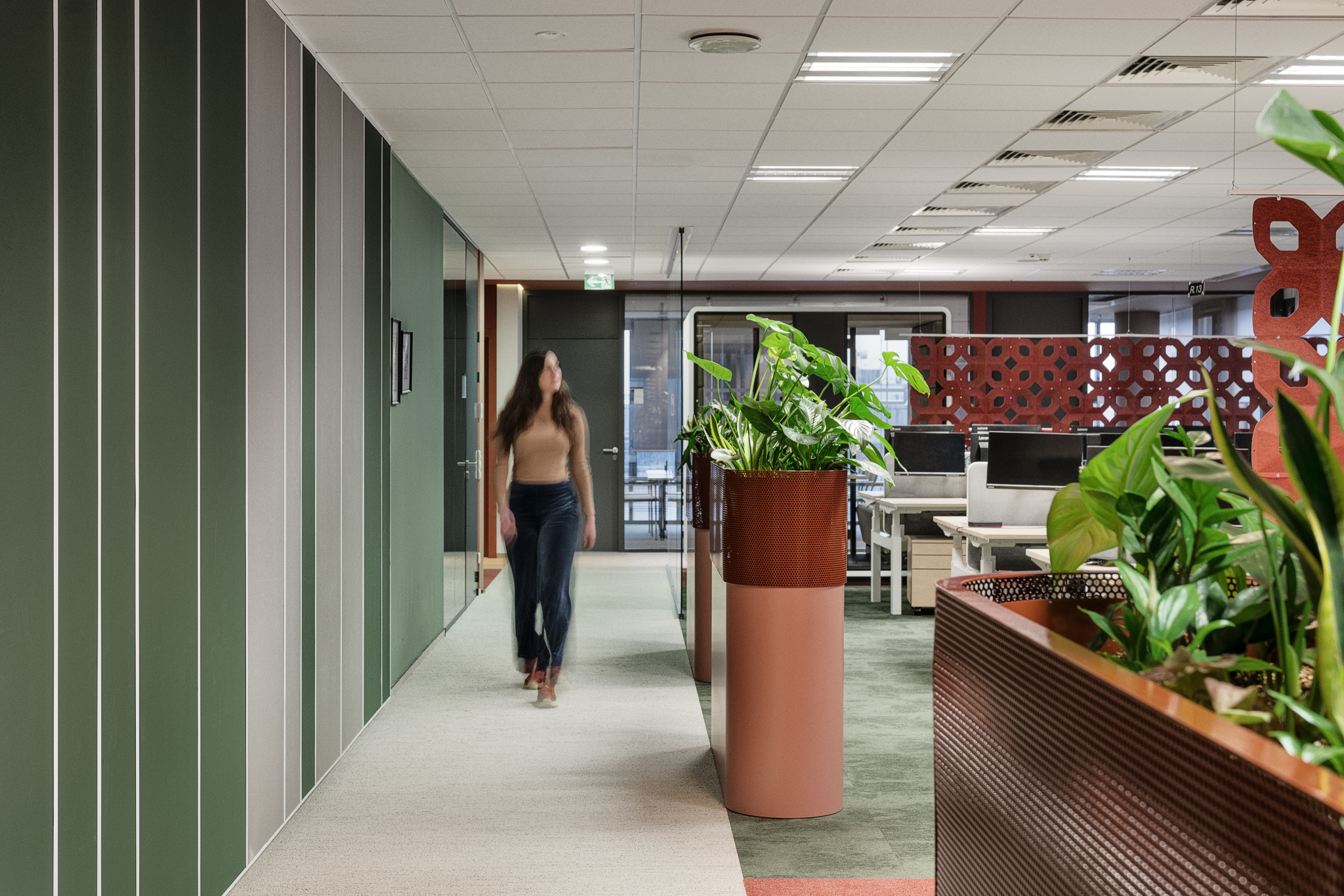
It is a global, well-being-oriented strategy that aims to create a flexible work environment, adapted as best as possible to the changing rhythm of employee activity. Based on the new standard, we have made numerous changes to the functionality of the office, while maintaining the existing layout of walls and ceilings. The open space has been divided into smaller, more intimate zones, which is conducive to effective individual work, but also communication and cooperation in teams. Private offices have been redesigned in favor of more flexible and accessible spaces that are conducive to various forms of work and relaxation. The newly designed spaces include quiet work rooms, relax rooms providing a place to relax and recharge batteries, and snooze rooms allowing employees to take a short nap during the day. All this to improve the comfort of work, concentration and well-being of employees.
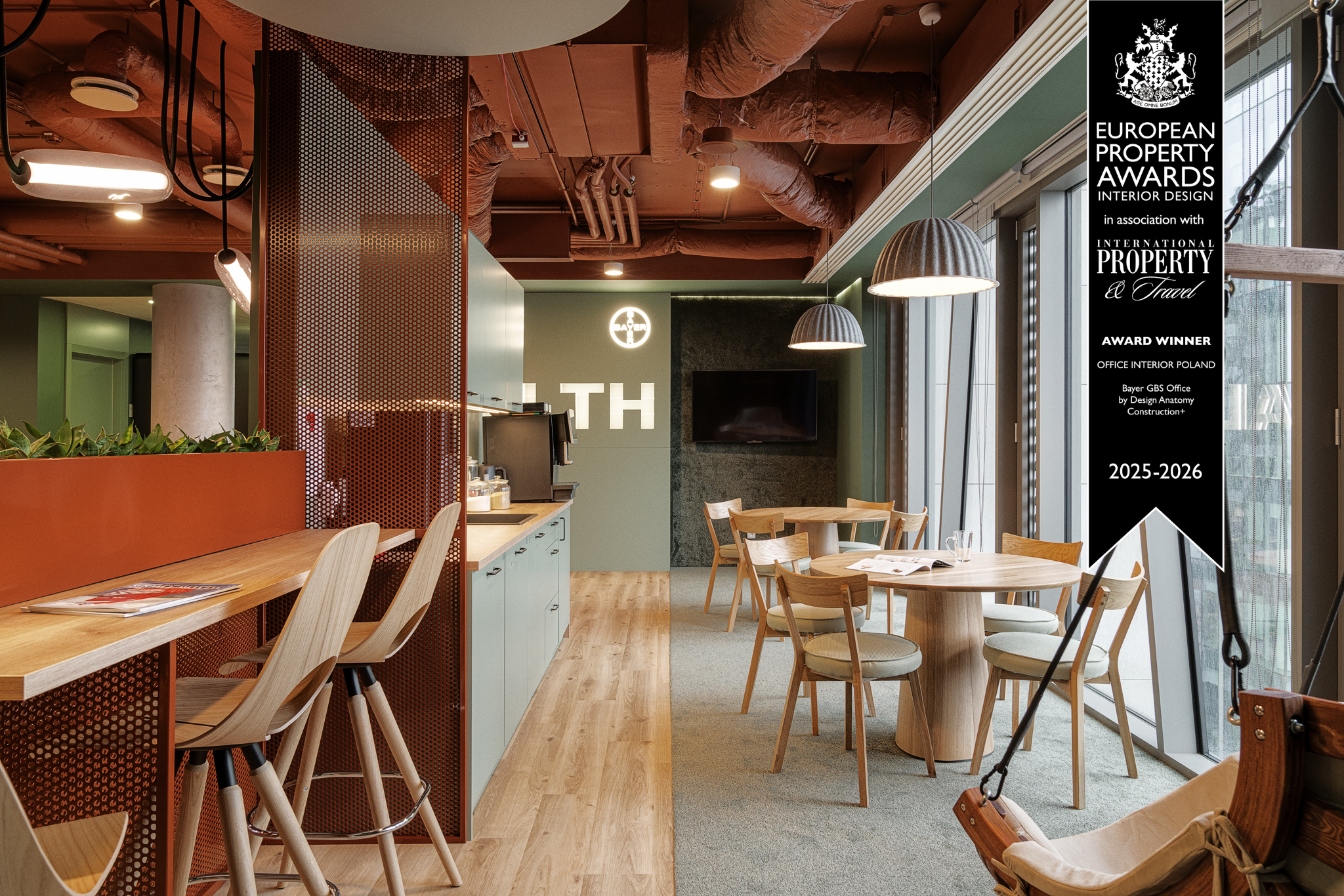
At the same time, the offices have gained a completely new style, related to the place where the offices and the entire Olivia Centre are located.
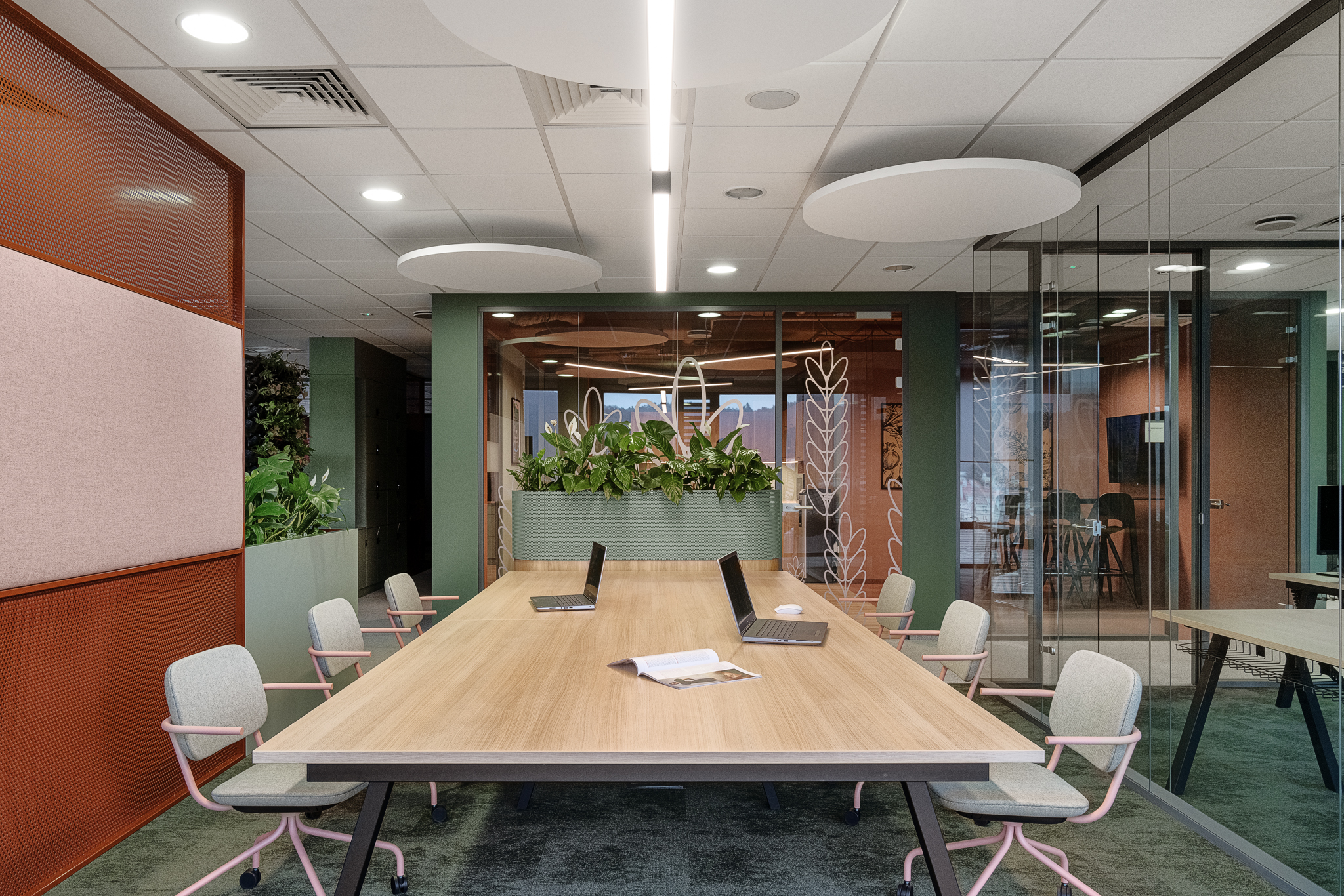
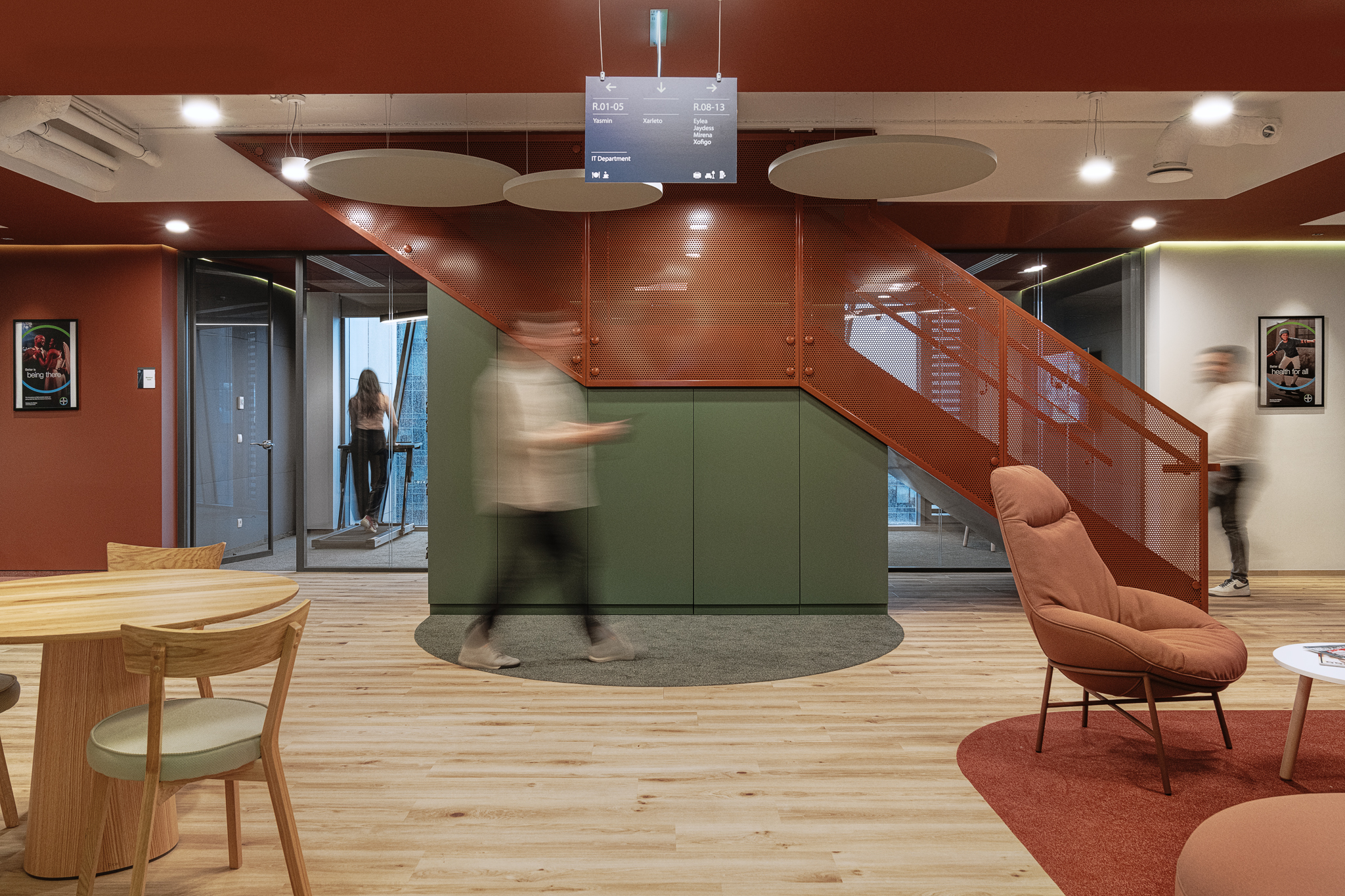
Yes, the main theme of the project is references to the historic Gdańsk district where the office is located. Oliwa is a district full of historical buildings, parks, cobbled streets and tenement houses with terracotta roofs, wooden verandas. That is why we used a wide range of warm reds and greens in the design of the office, referring to the surrounding landscape. We introduced vegetation in custom-designed pots to create soft transitions between zones and give the space an organic rhythm. We took care of solutions that improve the comfort of work, we equipped the space with acoustic booths, wall panels and openwork partitions separating individual work zones or carpets with high acoustic parameters. The office has become more functional, friendly and full of harmony.
One of the most interesting directions of this project is designing in the spirit of less waste. Where did the inspiration for design come from, allowing for the reuse of previously available resources?
We live in a world of increasingly rapid change. We observe the pace at which the style of work is changing, how important it is to be flexible in building teams for specific projects, and thus adapting the workspace. At Design Anatomy, we feel how much responsibility designers and engineers have for the footprint that their projects leave. Less waste is a natural, organic direction for us – resulting from respect for the existing tissue, materials and the environment. That’s why we always analyze each project very carefully, looking for elements that we can reuse and give them new value. In this way, we create spaces that are sustainable, and at the same time as aesthetic and functional as those created from scratch.
So what solutions did you use?
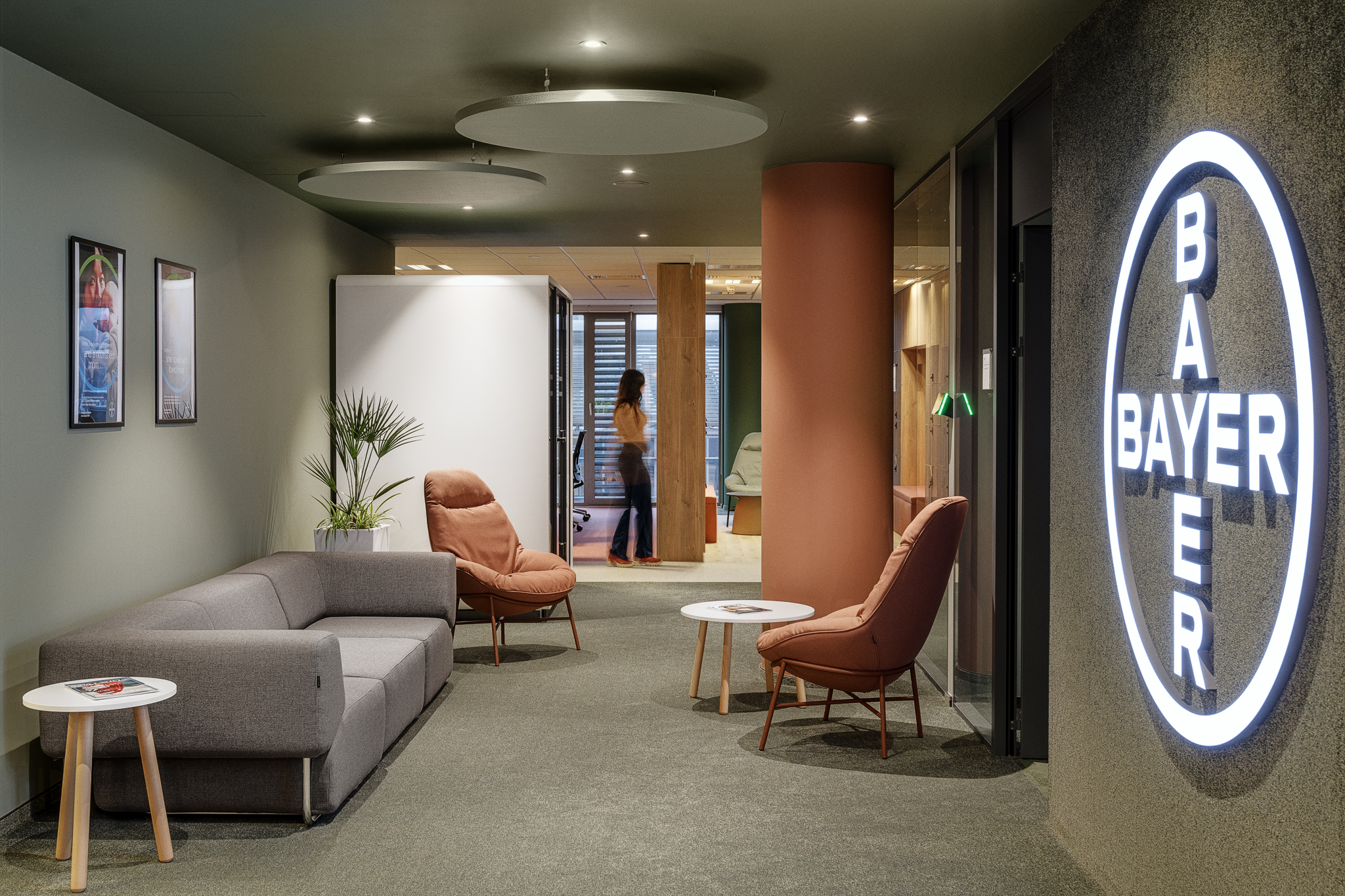
We have kept most of the elements such as walls, ceilings, a significant part of the installation. We refreshed and reused the door joinery, stairs, some of the furniture, acoustic panels. We have introduced modular mobile solutions that allow for future changes, without generating excessive waste. Carefully selected materials – with high durability and natural aesthetics – have given the space a new quality without losing its economical form.
What are the benefits for investors? Can they be translated into numbers? How much more would such a rearrangement cost if it were not made in the spirit of less waste?
I think that in the case of a full replacement of buildings and equipment, the additional costs could reach a dozen or even several dozen percent. But it is worth mentioning that this is not a simple calculation. While the preservation of walls, ceilings and installations brings measurable savings, in the case of elements undergoing renovation or alteration, we often balance on the edge of profitability. They need to be dismantled, taken to a workshop, refurbished, and then brought back and reinstalled. At a time when it is increasingly difficult to find a good professional, the costs of working hours and service are increasing significantly, it could be worthwhile to dispose of the old door and order a new one with delivery. Fortunately, in the less waste philosophy, we do not focus only on financial savings, we look more broadly at caring for the environment, and here the benefits are indisputable.
From the information I have been able to obtain, I know that this project has become a model solution that finds new imitators in other offices?
We receive information that representatives of other companies are very curious about this project and often ask for details during their visits. We even heard from Bayer employees that they have already specialized in touring the office and presenting individual solutions in the spirit of less waste. We are glad that they feel good in the remodeled office and feel better in it. For us, there could be no better feedback. Such assessments make us all the more confident in designing more environmentally responsible workspaces.
What are you working on now?
Currently, we are implementing several projects that continue the direction of responsible design – both offices and public spaces. We explore the subject of modularity and longevity of materials, we work on interiors that correspond to modern work rhythms and the need for closeness to nature. We believe that the future belongs to flexible spaces, created with respect for existing resources – and in this spirit we develop our next projects.
Design Anatomy is an architectural office that has been awarded many times in Polish and international competitions, which has in its portfolio the implementation of projects of over 200 thousand. m.kw. offices, an observation deck on the 32nd floor of Olivia Star, a conference space on its 34th floor, as well as numerous architectural and interior design projects for buildings located throughout the Tri-City.